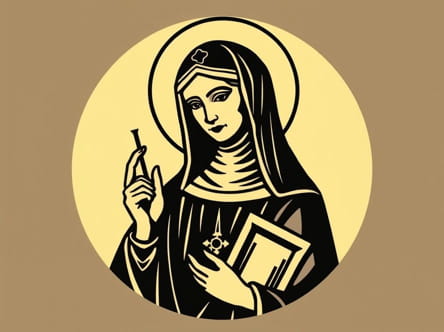
St. Olga of Kiev stands as one of the most remarkable and complex figures in early Eastern European history. Living during the 10th century, she is remembered for her cunning leadership, strategic political moves, and eventual conversion to Christianity. As the first woman to rule Kievan Rus and the first royal to convert to Christianity, her influence extended far beyond her time. Her story is one of vengeance, transformation, and devotion, and it laid the groundwork for the Christianization of a vast and powerful medieval state. This topic explores the life, legacy, and sainthood of St. Olga of Kiev in rich detail.
Early Life and Marriage
Olga was born around 890 or 920 CE, likely of Varangian (Viking) origin. Not much is known about her early life, but she married Prince Igor of Kiev, a ruler of the Rurik dynasty. As princess consort, she supported her husband’s reign and bore a son, Sviatoslav. Her life took a dramatic turn when Igor was killed by the Drevlians, a neighboring tribe, in 945 CE while collecting tribute.
The Drevlians and Olga’s Revenge
The death of her husband could have left Olga politically vulnerable, but instead, it revealed her formidable nature. The Drevlians proposed that Olga marry their prince so they could take control of Kievan Rus. Pretending to consider the offer, Olga invited their envoys to Kiev only to have them buried alive. She later sent a message requesting more dignitaries, who were also killed. In a third act of revenge, she hosted Drevlian leaders at a feast and had them slaughtered while they were drunk.
Her final punishment came when she laid siege to the Drevlian capital, Iskorosten. According to legend, Olga requested three pigeons and three sparrows from the city’s residents as a gesture of peace. Instead, she had her soldiers tie sulfur-soaked cloth to the birds and set them on fire, releasing them to return to their nests in the city. The resulting inferno burned Iskorosten to the ground. These dramatic tales illustrate her strategic mind and ruthless resolve.
Regency and Rule
Following Igor’s death, Olga became the regent of Kievan Rus on behalf of her young son, Sviatoslav. Her rule lasted from 945 until about 960. During this time, she centralized the administration of tribute collection, replacing the haphazard and often violent methods that led to her husband’s demise. She introduced a more organized and standardized system of governance that improved state control and revenue collection.
Administrative Reforms
Some of Olga’s most enduring contributions came from her efforts to strengthen internal governance. She established administrative centers known as ‘pogosts’ and implemented tax reforms that reduced corruption and increased stability in the region. Her policies laid the groundwork for the emergence of a more cohesive and powerful Kievan Rus.
Conversion to Christianity
Perhaps the most transformative part of Olga’s life was her conversion to Christianity. Around 957 CE, she traveled to Constantinople, where she was baptized in the Eastern Orthodox tradition. Byzantine sources state that Emperor Constantine VII himself was her godfather at the ceremony. Her Christian name was Helen (Elena), and she became a strong advocate for the faith upon returning to Kievan Rus.
Challenges of Christianization
Despite her devotion, Olga faced strong resistance from her son Sviatoslav, who remained a committed pagan and refused to convert. As a result, her efforts to spread Christianity were limited during her lifetime. However, her actions set the foundation for future religious change. Her grandson, Vladimir the Great, eventually converted to Christianity and made it the state religion in 988 CE, fulfilling the vision Olga had begun decades earlier.
Legacy and Sainthood
St. Olga’s legacy is profound, both in religious and political terms. She is considered the first saint of Kievan Rus and one of the most important figures in the region’s history. The Eastern Orthodox Church canonized her for her piety and for laying the spiritual foundation that would transform the cultural and religious identity of Eastern Europe.
Titles and Recognition
- She is often referred to as ‘Equal to the Apostles’ due to her role in spreading Christianity.
- Her feast day is celebrated on July 11 in the Eastern Orthodox Church.
- She is venerated as a symbol of wisdom, strength, and religious devotion.
Cultural Impact
St. Olga’s story has been told and retold in Russian, Ukrainian, and Belarusian folklore, religious texts, and modern literature. Her transformation from a brutal avenger to a Christian monarch makes her a fascinating and multi-dimensional figure. Statues and churches have been erected in her honor across the Slavic world, and her story is taught in schools as an example of leadership and resilience.
St. Olga in Modern Times
In today’s context, St. Olga of Kiev remains a figure of great importance in discussions about female leadership, the spread of Christianity in Eastern Europe, and the development of medieval Slavic states. Her dual legacy rooted in both ruthless justice and deep faith continues to captivate historians, theologians, and the general public.
St. Olga of Kiev was a woman of exceptional intelligence, courage, and foresight. Her early reign was marked by decisive and often brutal actions to secure her power and avenge her husband’s death, but her later life reflected a deep spiritual commitment to the Christian faith. As the first ruler of Kievan Rus to embrace Christianity, she laid the ideological and religious groundwork that would be fulfilled by her descendants. Her legacy as a ruler, reformer, and saint continues to inspire and shape historical narratives about leadership and conversion in Eastern Europe.