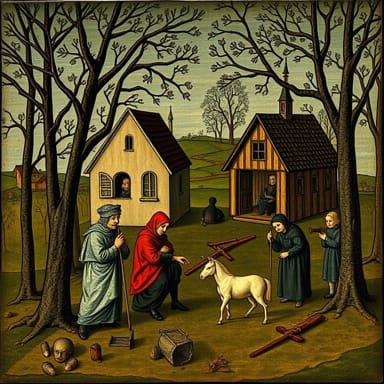
When exploring the landscape of early Netherlandish painting, two towering figures stand out for their visionary style and intricate detail: Pieter Bruegel the Elder and Hieronymus Bosch. These artists, though born a generation apart, are often compared due to their shared interest in morality, human folly, and fantastical imagery. Their works are complex tapestries of symbolism, dense crowds, and surreal forms, offering viewers a glimpse into the cultural and spiritual anxieties of their times. Through paintings that fuse realism with imagination, both Bosch and Bruegel have carved a lasting place in the history of Western art.
Historical Context and Artistic Environment
Late Medieval to Early Renaissance Transitions
Hieronymus Bosch (c. 1450-1516) and Pieter Bruegel the Elder (c. 1525-1569) lived in an era of great social, political, and religious upheaval. The late medieval period was marked by intense religious devotion, fear of sin, and growing disillusionment with the Catholic Church. By the time Bruegel began painting, the Protestant Reformation had taken root across Europe, challenging traditional doctrines and redefining spiritual life. Art during this period was not only a source of aesthetic pleasure but also a vehicle for moral instruction and social critique.
The Northern Renaissance and Detail-Oriented Style
Both artists belonged to the Northern Renaissance, known for its precise attention to detail, love of texture, and focus on domestic scenes. Unlike their Italian counterparts who leaned toward idealized forms and linear perspective, Northern artists like Bosch and Bruegel filled their canvases with minute details and dense compositions. Their art invites viewers to study each corner carefully, as every figure, animal, or object contributes to a larger allegorical meaning.
Hieronymus Bosch: Master of the Grotesque
Visionary Worlds and Religious Allegory
Hieronymus Bosch is perhaps best known for his haunting triptychs, particularlyThe Garden of Earthly Delights. His work is filled with bizarre, dreamlike figures hybrid creatures, tortured souls, and otherworldly landscapes. At first glance, his images may seem chaotic or absurd, but they are rich with religious symbolism and moral lessons. Bosch often depicted the dangers of temptation, the fallibility of mankind, and the horrors of hell.
Signature Elements in Bosch’s Paintings
- Fanciful monsters and hybrid animals
- Dark humor and grotesque exaggerations
- Scenes of sin, punishment, and judgment
- Layered symbolism that combines folklore and theology
Bosch’s work reflects the late medieval obsession with death and salvation. His paintings can be interpreted as visual sermons warning viewers about the spiritual consequences of indulgence and moral failure.
Pieter Bruegel the Elder: Chronicler of Human Folly
Earthly Scenes with Spiritual Undercurrents
While Bruegel drew inspiration from Bosch’s fantastical style, he shifted focus toward more earthly, often rural, scenes. Known for works likeHunters in the SnowandThe Peasant Wedding, Bruegel captured everyday life in meticulous detail. However, beneath the surface of rustic festivities and winter landscapes lie subtle commentaries on human nature, politics, and morality.
Bruegel’s Artistic Techniques and Themes
- Large-scale scenes with dozens of individual figures
- Depictions of peasant life, seasonal labor, and communal rituals
- Use of satire and allegory to critique social norms
- Visual storytelling with moral or philosophical undertones
Unlike Bosch, whose work is deeply mystical and otherworldly, Bruegel’s art remains grounded. Yet, he continues the tradition of using visual allegory to reflect on the human condition, often with a touch of irony or sarcasm.
Comparative Analysis of Their Work
Style and Composition
Bosch’s paintings are fantastical and often surreal, with dreamlike spaces that defy natural logic. Bruegel, on the other hand, focuses on more realistic settings. However, both artists use a panoramic composition style, filling the canvas with a multitude of figures and actions that encourage careful observation. This ‘busy’ aesthetic is one of their signature similarities.
Subject Matter and Symbolism
While Bosch’s themes are more focused on sin, temptation, and divine judgment, Bruegel deals with human folly, societal behavior, and moral ambiguity. Both artists are moralists in their own right but express their concerns through different lenses Bosch through the lens of religious mysticism, Bruegel through social satire and grounded realism.
Influence and Legacy
Bosch had a profound influence on Bruegel. Early in his career, Bruegel created works directly inspired by Boschian themes, such asThe Triumph of DeathandMad Meg. However, Bruegel evolved into a unique voice that moved beyond Bosch’s surrealism to embrace a more observational approach. Both artists laid the foundation for future generations of painters who sought to blend detailed imagery with symbolic meaning.
The Continuing Fascination with Bosch and Bruegel
Modern Interpretations
Contemporary viewers remain fascinated by the works of Bosch and Bruegel, not only for their visual complexity but also for their timeless themes. The fears, desires, and moral questions they explored continue to resonate. In an age of rapid change and uncertainty, their artworks serve as reflections of both past and present human concerns.
Exhibitions and Popularity
Major museums across Europe and the world continue to showcase their masterpieces. Exhibitions often place their works side by side to explore the dialogue between their visions. Art historians and scholars regularly revisit their paintings to uncover new meanings and interpretations, reinforcing their status as intellectual and artistic pioneers.
Pieter Bruegel the Elder and Hieronymus Bosch remain two of the most compelling figures in the history of Western art. Their work captures the paradoxes of human nature our potential for both beauty and depravity, wisdom and foolishness. Through rich symbolism, layered narratives, and meticulous detail, both artists crafted visual worlds that challenge, intrigue, and endure. Whether through Bosch’s eerie creatures or Bruegel’s bustling villages, they invite us to reflect on ourselves and the world we inhabit. Their influence spans centuries, proving that art rooted in moral and philosophical inquiry remains relevant across generations.