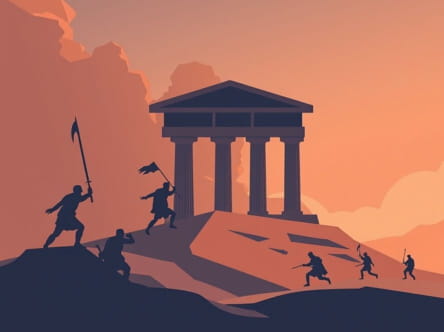
The Battle of Armageddon is one of the most enigmatic and discussed subjects in religious prophecy and eschatology. Often associated with the end times and final confrontation between good and evil, the term ‘Armageddon’ evokes images of epic warfare, divine intervention, and the ultimate destiny of humankind. While it is deeply rooted in Christian theology, especially in the Book of Revelation, the concept has extended its influence into popular culture, literature, and political discourse. Understanding the Battle of Armageddon involves exploring its origins, interpretations, and the significant implications it holds for believers and scholars alike.
Origins and Scriptural Foundation
References in the Book of Revelation
The term ‘Armageddon’ appears in Revelation 16: 16, where it is described as the gathering place for the kings of the earth before the final battle. The passage reads: And they gathered them together to the place called in Hebrew, Armageddon. This verse is part of a broader narrative about divine judgment and the pouring out of seven bowls of wrath upon the earth.
Armageddon is believed to be derived from the Hebrew Har Megiddo, meaning Mount of Megiddo. The city of Megiddo, located in modern-day northern Israel, has historical significance as the site of numerous ancient battles due to its strategic position on trade and military routes.
Symbolism and Interpretation
Literal vs. Figurative Meaning
There has long been debate over whether the Battle of Armageddon should be taken literally or symbolically. Some theologians argue it represents an actual military conflict that will occur at the end of history, while others interpret it as a spiritual struggle between good and evil, not confined to a specific geographical location.
- Literalistsbelieve that armies will physically gather at Megiddo for a climactic battle involving supernatural events.
- Symbolistsinterpret Armageddon as a metaphor for the ongoing battle in the human soul or society between righteousness and corruption.
The Role of Divine Intervention
One of the most compelling aspects of the Battle of Armageddon is the divine involvement described in Revelation. According to the prophecy, Jesus Christ will return to lead the heavenly armies against the forces of evil, ultimately defeating the Beast and the False Prophet. This victory signals the end of Satan’s dominion and the establishment of a new divine order.
This dramatic intervention marks a significant turning point in Christian eschatology. It is not merely a war between nations but a spiritual reckoning led by divine power. This belief reinforces the idea that righteousness, though tested, will ultimately prevail through the power of God.
Historical Context of Megiddo
Ancient Battle Site
Megiddo itself was the site of many ancient battles, including the famous confrontation between Pharaoh Thutmose III and a Canaanite coalition in the 15th century BCE. The strategic location of Megiddo in the Jezreel Valley made it a key battleground throughout antiquity. This historical reality adds weight to its symbolic use in Revelation.
Although there is no mountain at Megiddo today, the biblical text might refer metaphorically to a high place of judgment or perhaps a hill overlooking the battlefield. Scholars have debated this point, but the location’s storied past reinforces its role as a fitting symbol for final judgment.
Modern Interpretations and Popular Culture
Armageddon in Literature and Media
Beyond theology, the term ‘Armageddon’ has found its way into modern culture as a symbol of apocalypse, disaster, or world-ending scenarios. Books, movies, and video games often use the term to dramatize global destruction or ultimate conflict. This has sometimes led to sensationalism, but it also reflects the enduring fascination with end-time narratives.
Writers and filmmakers have drawn from the vivid imagery of Revelation to craft gripping stories about survival, redemption, and cosmic battles. While these representations may not always align with religious texts, they highlight the cultural impact of Armageddon as a concept that transcends its scriptural roots.
Political and Social Implications
Armageddon in Contemporary Discourse
In the modern geopolitical landscape, some groups have linked contemporary conflicts in the Middle East to biblical prophecy. This has sparked concern, especially when such beliefs influence political decisions or public policy. For example, some Christian Zionist movements see the state of Israel’s existence as fulfilling prophecy, with Megiddo playing a key role in the end-times scenario.
While these interpretations are not universally accepted, they show how deeply the idea of the Battle of Armageddon resonates in discussions about war, peace, and global affairs. It raises important questions about how religious beliefs intersect with international relations and the potential consequences of interpreting prophecy in literal terms.
Theological Variations Among Christian Denominations
Premillennialism, Postmillennialism, and Amillennialism
Christian denominations differ in their interpretations of Armageddon, particularly in relation to the millennium a thousand-year reign of Christ mentioned in Revelation 20.
- Premillennialistsbelieve Armageddon will precede the literal reign of Christ on Earth for 1,000 years.
- Postmillennialistsbelieve Christ will return after a golden age of Christian influence.
- Amillennialistsinterpret the millennium symbolically and view Armageddon as a metaphorical battle representing the struggle of good versus evil throughout history.
These theological perspectives influence how believers interpret world events and their expectations for the future.
The Final Judgment and Its Aftermath
According to Revelation, the conclusion of the Battle of Armageddon leads to the final judgment. Satan is bound, the dead are judged, and a new heaven and earth are revealed. This ushers in a time of peace and divine rule, often referred to as the New Jerusalem.
For believers, this represents the fulfillment of God’s promises and the ultimate hope for humanity. The victory at Armageddon is not just about military triumph but the restoration of justice, righteousness, and divine order.
A Battle Beyond the Battlefield
The Battle of Armageddon remains a powerful and complex concept that blends history, prophecy, symbolism, and theology. Whether interpreted literally or figuratively, it speaks to a deep human concern with justice, conflict, and the fate of the world. Its influence extends beyond religious circles into literature, politics, and cultural imagination.
In the end, Armageddon is not merely a battle it is a reflection of humanity’s hopes and fears, our longing for a final resolution, and the belief that good will ultimately triumph over evil. The prophecy invites continual reflection and study, reminding us that while the forces of destruction may gather, the promise of peace endures.