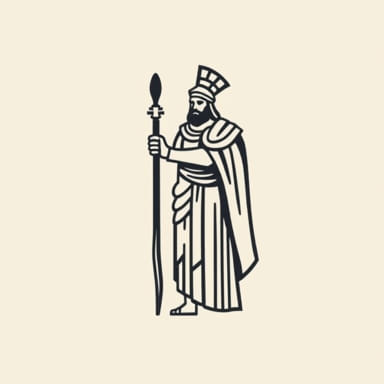
Seleucus Nicator was one of the most important historical figures of the ancient world. Known for his role in the formation of the Seleucid Empire, he was a strong and clever leader who helped shape the future of many lands after the death of Alexander the Great. He is remembered for his military skills, leadership qualities, and contributions to the growth of Hellenistic culture. This topic will help students in Class 6 understand who Seleucus Nicator was, what he did, and why he remains an important name in world history.
Early Life of Seleucus Nicator
Seleucus Nicator was born around 358 BCE in a place called Macedonia, which was part of ancient Greece. His father’s name was Antiochus, and they belonged to a noble family. Seleucus grew up during a time of great change and war, especially under the rule of King Philip II and later his son, Alexander the Great.
Seleucus became a soldier and later a trusted general in the army of Alexander the Great. He was known for his bravery and loyalty during military campaigns. When Alexander set out to conquer the Persian Empire, Seleucus followed him and played a key role in many battles.
Service under Alexander the Great
During Alexander’s massive campaigns, Seleucus proved himself as a capable warrior and leader. He traveled across many regions, including Persia, India, and Egypt. Alexander trusted him with important duties, and Seleucus became one of the elite officers called the Companions.
When Alexander conquered India, Seleucus was part of the campaign and witnessed the meeting between Alexander and the Indian king, Porus. This experience in India would later influence Seleucus’s own rule and diplomatic decisions.
The Rise of the Seleucid Empire
After Alexander the Great died in 323 BCE, his empire broke apart because there was no clear ruler. His generals, known as the Diadochi, fought each other to control different parts of the empire. Seleucus initially controlled Babylon, one of the most important cities in Mesopotamia. However, he had to leave Babylon because of threats from other generals.
Later, with the help of another general named Ptolemy, Seleucus returned to Babylon in 312 BCE and re-established his rule. This year is often marked as the beginning of the Seleucid Empire. He gradually expanded his control over large regions including Persia, parts of Central Asia, and even some areas of India.
Territories Ruled by Seleucus Nicator
- Mesopotamia (modern-day Iraq)
- Persia (modern-day Iran)
- Syria
- Parts of India (after a treaty with Chandragupta Maurya)
- Asia Minor (modern-day Turkey)
Treaty with Chandragupta Maurya
One of the most famous events during Seleucus Nicator’s reign was his treaty with the Indian emperor Chandragupta Maurya. Seleucus had attempted to invade India but later decided to make peace instead of continuing the war. In the treaty, Seleucus gave some parts of his eastern territory to Chandragupta in exchange for 500 war elephants.
This was a smart decision because the war elephants became a powerful addition to Seleucus’s army and helped him win future battles in the west. The treaty also created a peaceful relationship between the Seleucid Empire and the Mauryan Empire.
Founding of Cities
Seleucus was not only a warrior but also a city builder. He founded many cities during his rule to help control his vast empire. The most famous of these was Antioch, located in modern-day Turkey, which became one of the greatest cities of the ancient world.
Another important city he founded was Seleucia-on-the-Tigris, near Babylon, which became a key administrative center of his empire. These cities helped spread Greek culture and language across Asia and encouraged trade, learning, and communication.
Death and Legacy of Seleucus Nicator
Seleucus ruled for many years and was respected for his leadership and achievements. He planned to expand his empire further into Europe but was assassinated in 281 BCE by a man named Ptolemy Ceraunus. Even after his death, his descendants continued to rule the Seleucid Empire for many generations.
His empire was one of the largest of the Hellenistic kingdoms and had a strong influence on trade, politics, and culture. Greek language and customs spread far beyond their original borders because of Seleucus’s efforts. His decisions shaped the course of history in both the West and the East.
Important Contributions of Seleucus Nicator
- Helped divide and manage Alexander the Great’s empire after his death
- Founded the Seleucid Empire, one of the major Hellenistic states
- Made a peaceful and smart treaty with Chandragupta Maurya
- Established important cities like Antioch and Seleucia
- Helped spread Greek culture across Asia
Why Students Should Learn About Seleucus Nicator
Learning about Seleucus Nicator helps Class 6 students understand how history is shaped by leaders, decisions, and battles. His story shows how one person can influence many countries and cultures. He was a bridge between the Greek world and the East, especially India. His treaty with Chandragupta is an early example of diplomacy and peace between different civilizations.
Studying Seleucus also helps young learners appreciate how cities are founded and how empires are managed. Through his life, students can learn about geography, politics, war, peace, and the spread of culture across the world.
Seleucus Nicator was more than just a general; he was a builder of cities, a diplomat, and the founder of a great empire. From fighting in the army of Alexander the Great to creating his own rule across Asia, his life was full of important events and smart decisions. His legacy lived on for centuries and still teaches us valuable lessons about leadership and history. For students in Class 6, learning about Seleucus Nicator is a great way to explore the ancient world and understand how different cultures came together through power, peace, and vision.