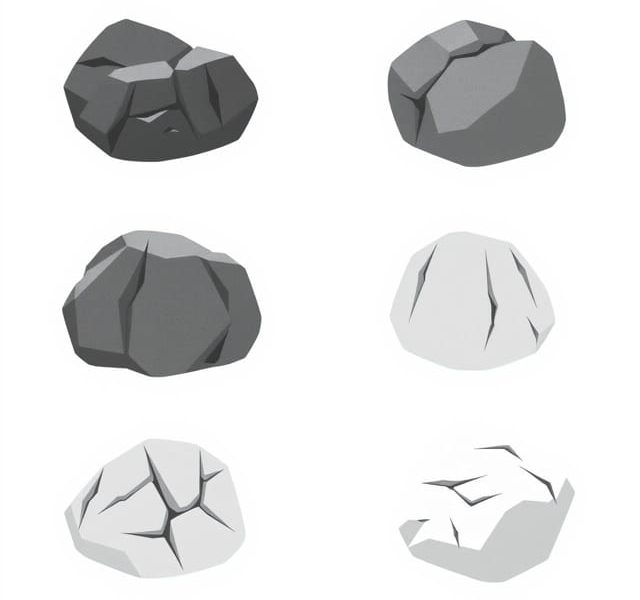
Extrusive igneous rocks are formed when magma erupts from a volcano or fissure and cools rapidly on the Earth’s surface. Unlike intrusive rocks, which cool slowly underground, extrusive rocks solidify quickly, often resulting in fine-grained or glassy textures. These rocks are significant in geology because they provide valuable information about volcanic activity and the composition of Earth’s crust. Understanding examples of extrusive igneous rocks can help us interpret geological events and identify volcanic processes that shape the surface of our planet.
What Are Extrusive Igneous Rocks?
Formation Process
Extrusive igneous rocks originate from lava that cools and crystallizes above the Earth’s surface. Because the cooling happens so quickly, crystals have little time to grow. As a result, these rocks tend to be fine-grained (aphanitic) or even glassy in texture. They may also contain vesicles, which are small holes formed by gas bubbles escaping during solidification.
Characteristics of Extrusive Rocks
- Rapid cooling on or near the Earth’s surface
- Fine-grained or glassy texture
- May contain vesicles or volcanic glass
- Often associated with volcanic activity
Common Examples of Extrusive Igneous Rocks
Basalt
Basalt is the most abundant extrusive igneous rock on Earth. It is a dark-colored, fine-grained rock composed mainly of pyroxene and plagioclase, often with small amounts of olivine. Basalt forms from low-viscosity lava flows, which spread out over large areas before solidifying. It is commonly found at mid-ocean ridges, oceanic islands, and continental flood basalt provinces.
Key features of basalt include
- Dark gray to black color
- Fine-grained texture
- Forms lava plateaus and volcanic islands
- Low silica content and high iron and magnesium
Andesite
Andesite is an extrusive igneous rock that is intermediate in composition between basalt and rhyolite. It typically forms in volcanic arcs above subduction zones. Andesite contains plagioclase along with amphibole, pyroxene, or biotite. Its color ranges from light to dark gray, and its texture is usually fine-grained, though phenocrysts (large crystals) may be present.
Characteristics of andesite
- Intermediate silica content
- Typically forms stratovolcanoes
- Fine-grained with occasional large crystals
- Common in volcanic mountain chains like the Andes
Rhyolite
Rhyolite is a high-silica extrusive igneous rock, often light in color, ranging from pink to light gray. It is the volcanic equivalent of granite and forms from highly viscous lava that flows slowly or even erupts explosively. Rhyolite often exhibits a glassy or fine-grained texture and may include visible quartz and feldspar crystals.
Typical traits of rhyolite
- High silica content (over 70%)
- Associated with explosive volcanic eruptions
- Can contain pumice or obsidian inclusions
- Forms lava domes or ash-flow tuffs
Obsidian
Obsidian is a naturally occurring volcanic glass formed by the rapid cooling of high-silica lava. Its texture is glassy and smooth, and it typically appears black, although variations such as green, brown, or rainbow sheen may occur. Obsidian is extremely hard and was used historically to make cutting tools and weapons.
Important features of obsidian
- Volcanic glass with no crystal structure
- Forms from high-viscosity lava with rapid cooling
- Often found near the edges of rhyolitic lava flows
- Conchoidal fracture pattern when broken
Pumice
Pumice is a light, porous extrusive rock that forms during explosive volcanic eruptions. It is created when high-pressure gas expands in magma, causing it to froth and cool rapidly. This results in a rock with so many gas bubbles that it can often float on water. Pumice is commonly used in abrasives, soaps, and lightweight construction materials.
Key attributes of pumice
- Extremely vesicular and lightweight
- Often pale in color white, light gray, or cream
- Forms from explosive volcanic eruptions
- Common in pyroclastic deposits
Scoria
Scoria is another vesicular volcanic rock, but unlike pumice, it is denser and darker, typically red or black. It forms from basaltic lava with a high gas content and solidifies rapidly. Scoria is commonly found in cinder cones and lava fields and is used in landscaping and drainage materials.
Characteristics of scoria
- Dark, vesicular texture
- Heavier than pumice
- Usually basaltic in composition
- Forms during mildly explosive eruptions
Volcanic Structures Associated with Extrusive Rocks
Shield Volcanoes
Shield volcanoes are large, broad structures formed primarily by basaltic lava flows. These flows are fluid and can travel long distances, creating wide, gently sloping profiles. Mauna Loa in Hawaii is a classic example of a shield volcano composed mainly of basalt.
Stratovolcanoes
Stratovolcanoes, or composite volcanoes, are built from alternating layers of lava flows, ash, and pyroclastic materials. They often erupt andesite or dacite and are commonly found in subduction zone settings. Examples include Mount Fuji in Japan and Mount St. Helens in the United States.
Lava Domes
Lava domes are formed by the slow extrusion of highly viscous lava such as rhyolite. Because the lava is so thick, it does not flow far from the vent, resulting in a steep-sided, dome-shaped structure. These domes can collapse and cause pyroclastic flows, which are hazardous during eruptions.
Significance of Extrusive Igneous Rocks
Geological Indicators
Extrusive igneous rocks are important in interpreting past volcanic activity and tectonic settings. Their mineral content, texture, and location can tell geologists a great deal about Earth’s history and the dynamics of plate tectonics.
Economic Uses
Some extrusive rocks like basalt and pumice are economically valuable. Basalt is used in road construction and as a building material. Pumice is used in abrasives, cement, and horticulture. Obsidian has been historically valuable for tools and decorative objects.
Environmental and Safety Considerations
Understanding where extrusive rocks are located can help identify volcanic hazards. Areas with large deposits of rhyolite, for example, may be prone to explosive eruptions, while basaltic regions may experience lava flows. Recognizing these risks is essential for public safety and urban planning.
Extrusive igneous rocks like basalt, andesite, rhyolite, obsidian, pumice, and scoria are formed by the rapid cooling of lava at or near Earth’s surface. Each type of rock reflects specific volcanic environments and eruption styles, from quiet lava flows to violent explosions. Studying these rocks provides valuable insights into Earth’s geological processes, volcanic history, and natural hazards. Their varied textures and compositions also make them useful in construction, industry, and scientific research. By examining the examples and properties of extrusive igneous rocks, we gain a deeper understanding of how Earth continues to evolve through the power of volcanic activity.