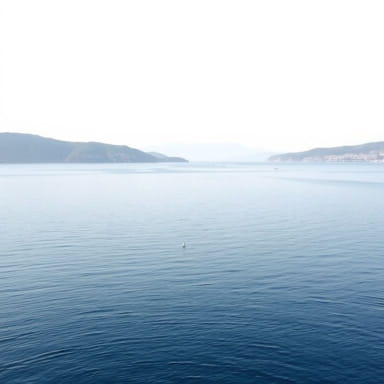
The Bosporus and Dardanelles Straits are two of the most strategically significant waterways in the world. Connecting the Black Sea to the Aegean and the Mediterranean beyond, these straits have played a critical role in trade, military operations, and geopolitical influence for centuries. Control of the Bosporus and Dardanelles has been central to empires, alliances, and modern nation-states alike. Their importance is not only historical but also deeply relevant to contemporary international relations, maritime law, and energy transportation routes.
Geographic and Strategic Importance
The Bosporus Strait, located in northwestern Turkey, separates the European and Asian parts of Istanbul and connects the Black Sea to the Sea of Marmara. The Dardanelles Strait, further south, links the Sea of Marmara to the Aegean Sea, which in turn opens into the Mediterranean. Together, these straits form a natural maritime bridge between Europe and Asia and serve as the only sea route for countries like Russia, Ukraine, and Georgia to access warm-water ports.
Key Features of the Straits
- Bosporus StraitApproximately 30 kilometers long, with a width ranging from 700 meters to 3.5 kilometers.
- Dardanelles StraitAround 61 kilometers long, narrowing to as little as 1.2 kilometers in some places.
- Vital for commercial shipping, energy transport, and naval mobility.
- Surrounded entirely by Turkish territory, giving Turkey a unique geographic advantage.
The geography of these straits not only shapes navigation and trade but also affects military planning and regional security strategies.
Historical Control and Conflicts
Control of the Bosporus and Dardanelles has been contested throughout history. From the Byzantine and Ottoman Empires to modern European powers, many have sought dominance over these crucial waterways. They have served as the gateway for invasions, defenses, and commercial prosperity for thousands of years.
The Ottoman Era
During the Ottoman Empire, the straits were tightly controlled. The Ottomans used their control to tax trade, regulate naval access, and project power into the Mediterranean and the Black Sea. Their dominance over these routes made Istanbul a central hub of politics and commerce for centuries.
World War I and the Allied Powers
In World War I, the Dardanelles Campaign (also known as the Gallipoli Campaign) highlighted the strategic significance of these straits. Allied forces aimed to seize control of the Dardanelles to open a supply line to Russia and weaken the Ottoman Empire. The campaign ended in failure for the Allies, but it solidified the global recognition of the straits’ strategic value.
The Treaty of Sèvres and Lausanne
Following World War I, the 1920 Treaty of Sèvres initially proposed international control of the straits. However, Turkish resistance led by Mustafa Kemal Atatürk resulted in the 1923 Treaty of Lausanne, which restored Turkish sovereignty over the area while keeping the straits open to civilian and commercial shipping in peacetime.
The Montreux Convention of 1936
The most important legal document governing the Bosporus and Dardanelles is the Montreux Convention Regarding the Regime of the Straits, signed in 1936. This treaty remains in effect today and defines how the straits are managed and which naval ships can pass through.
Key Provisions
- Turkey maintains full control over the straits.
- Civilian vessels enjoy freedom of passage in both peacetime and wartime.
- Military vessels from non-Black Sea nations face strict limitations, including tonnage restrictions and time limits in the Black Sea.
- Turkey may restrict military access during wartime or when it perceives itself under threat.
This convention provided Turkey with sovereign rights while also addressing international concerns about access and neutrality. It remains a cornerstone of international maritime law in the region.
Modern Geopolitical Dynamics
Today, control of the Bosporus and Dardanelles continues to carry immense geopolitical weight. Turkey’s position as the sole controller of these straits allows it to influence regional security, global shipping, and diplomatic relationships.
Russia and the Black Sea Fleet
Russia’s access to the Mediterranean through the straits is vital for its naval operations and trade. Any attempt to restrict Russian access would significantly hinder its maritime capabilities. This makes the straits a sensitive issue in times of regional conflict, such as the ongoing tensions surrounding Ukraine and Crimea.
NATO and Strategic Balance
Turkey’s membership in NATO adds complexity to the control of the straits. While it is aligned with Western powers, it must also manage relationships with neighboring countries like Russia. The Montreux Convention serves as a buffer, preventing unrestricted NATO naval presence in the Black Sea, which could provoke tension with Russia.
Energy Transit Routes
The straits serve as a key corridor for oil and gas tankers traveling from the Caspian and Black Sea regions to international markets. Any disruption in this flow could impact global energy prices and supply chains. This economic significance adds another layer to the geopolitical importance of the region.
Environmental and Navigational Concerns
As shipping traffic through the Bosporus increases, so do the risks of environmental hazards. The narrow and winding path, combined with heavy oil tanker traffic, raises concerns about potential spills and accidents. Turkey has implemented measures to manage traffic and protect its coastal cities, especially Istanbul.
Canal Istanbul Project
To reduce the environmental burden on the Bosporus, Turkey has proposed a major infrastructure project called Canal Istanbul, an artificial waterway parallel to the Bosporus. This project is controversial due to its potential impact on the Montreux Convention, environmental risks, and economic feasibility. Nonetheless, it highlights Turkey’s desire to strengthen control over maritime routes and reduce risks in the existing strait.
Legal and Diplomatic Challenges
Any change to the legal regime of the straits would require renegotiation of the Montreux Convention or the establishment of new international agreements. However, most regional and global powers prefer the current balance provided by the convention. Diplomatic friction sometimes arises, especially when naval or political tensions escalate.
Turkey’s ability to close the straits to specific military traffic during wartime, as seen during the Russia-Ukraine conflict, shows the lasting power of the convention’s provisions and the significant leverage Turkey holds in global diplomacy.
Control of the Bosporus and Dardanelles Straits remains a central issue in regional security, global commerce, and international law. These straits are not just natural waterways they are geopolitical chess pieces with far-reaching implications. Turkey’s management under the Montreux Convention continues to maintain a delicate balance between national sovereignty and international navigation rights. As maritime traffic increases and global politics evolve, the strategic value of the straits will only grow. Long-standing treaties, national interests, and environmental factors all combine to make this region one of the most watched and debated maritime zones in the world today.