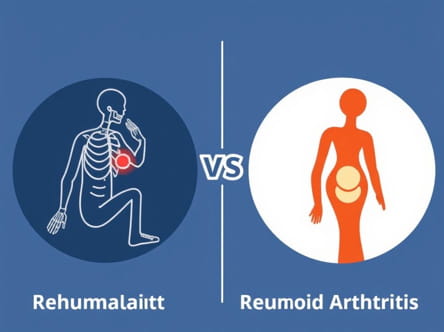
Joint pain and inflammation are common complaints in medical practice, but they can stem from various underlying conditions. Among these, rheumatism and rheumatoid arthritis are often confused due to their similar sounding names and overlapping symptoms. However, they represent distinct medical concepts with different causes, mechanisms, and treatment approaches. Understanding the difference between rheumatism and rheumatoid arthritis is crucial for accurate diagnosis, effective treatment, and patient education. This distinction helps both healthcare providers and patients manage symptoms better and prevent long-term complications.
Understanding Rheumatism
Rheumatism is a broad, non-specific term historically used to describe pain, stiffness, and inflammation in the muscles, joints, and connective tissues. It is not a single disease but rather a descriptive label that encompasses a variety of conditions affecting the musculoskeletal system. Rheumatism can refer to mechanical, degenerative, or inflammatory problems, making it an umbrella term that includes conditions like osteoarthritis, fibromyalgia, and tendonitis.
Symptoms of Rheumatism
Since rheumatism covers a wide range of conditions, its symptoms can vary significantly. Common signs include
- Joint pain and stiffness, often worsening with movement or at night
- Muscle aches and tenderness
- Swelling in affected joints or soft tissues
- Fatigue and general discomfort
Symptoms are often intermittent and may improve with rest or lifestyle changes, depending on the underlying cause.
Causes of Rheumatism
The causes of rheumatism are diverse and depend on the specific condition being described. They can include
- Degenerative changes in cartilage and joints (osteoarthritis)
- Muscle strain or overuse injuries
- Inflammatory responses due to autoimmune conditions
- Age-related wear and tear
Unlike rheumatoid arthritis, rheumatism does not always involve an autoimmune process, and its exact etiology can sometimes remain unclear.
Understanding Rheumatoid Arthritis
Rheumatoid arthritis (RA), on the other hand, is a specific autoimmune disorder characterized by chronic inflammation of the synovial lining of joints. RA is a systemic condition, meaning it can affect multiple organs in addition to joints. The immune system mistakenly attacks healthy joint tissues, leading to pain, swelling, stiffness, and eventual joint destruction if left untreated. Unlike rheumatism, RA is a well-defined disease with diagnostic criteria and measurable markers.
Symptoms of Rheumatoid Arthritis
Rheumatoid arthritis typically presents with specific signs that help distinguish it from other musculoskeletal conditions. Common symptoms include
- Persistent joint pain and swelling, often symmetrical
- Morning stiffness lasting more than 30 minutes
- Fatigue, fever, and general malaise
- Deformities in advanced stages, such as ulnar deviation or swan-neck fingers
RA often starts subtly and gradually progresses, affecting small joints in the hands and feet before larger joints are involved.
Causes and Risk Factors of Rheumatoid Arthritis
Rheumatoid arthritis is caused by an autoimmune dysfunction where the body’s immune system attacks its own joint tissues. While the exact trigger is unknown, several factors increase susceptibility
- Genetic predisposition, particularly certain HLA genes
- Environmental factors, such as smoking or infections
- Hormonal influences, with higher prevalence in women
- Age, as RA often develops between 30 and 60 years
Unlike general rheumatism, RA has specific biomarkers, such as rheumatoid factor (RF) and anti-cyclic citrullinated peptide (anti-CCP) antibodies, which aid in diagnosis and monitoring.
Key Differences Between Rheumatism and Rheumatoid Arthritis
While the terms are sometimes used interchangeably in casual conversation, there are important differences between rheumatism and rheumatoid arthritis
Definition
- RheumatismA broad, non-specific term for joint, muscle, or connective tissue pain and stiffness.
- Rheumatoid ArthritisA specific autoimmune disease causing chronic joint inflammation and systemic symptoms.
Cause
- RheumatismCan result from mechanical, degenerative, or inflammatory processes; not always autoimmune.
- Rheumatoid ArthritisCaused by an autoimmune attack on the synovial joints and surrounding tissues.
Symptoms
- RheumatismPain, stiffness, and swelling can be intermittent and non-specific.
- Rheumatoid ArthritisPersistent, symmetrical joint pain with morning stiffness, systemic fatigue, and possible joint deformity.
Diagnosis
- RheumatismDiagnosis is often based on symptoms and clinical examination; imaging may help but no specific lab markers exist.
- Rheumatoid ArthritisDiagnosis relies on clinical criteria, serological markers (RF, anti-CCP), and imaging to assess joint damage.
Treatment
- RheumatismManagement focuses on symptom relief, lifestyle modifications, and treating underlying causes if identified.
- Rheumatoid ArthritisRequires disease-modifying antirheumatic drugs (DMARDs), biologics, corticosteroids, and physical therapy to prevent joint damage and manage systemic inflammation.
Management Strategies
Effective management for both conditions depends on accurate diagnosis. For rheumatism, strategies may include
- Pain relief using NSAIDs or acetaminophen
- Physical therapy and exercise to maintain mobility
- Lifestyle adjustments, including weight management and ergonomic modifications
For rheumatoid arthritis, treatment is more targeted and intensive
- Early initiation of DMARDs to slow disease progression
- Biologic agents for patients unresponsive to conventional therapy
- Regular monitoring for systemic involvement and joint damage
- Rehabilitation programs to preserve joint function and independence
Although rheumatism and rheumatoid arthritis share similar-sounding names and some overlapping symptoms, they are fundamentally different. Rheumatism is a general term for musculoskeletal pain and stiffness caused by various factors, whereas rheumatoid arthritis is a specific autoimmune disease with well-defined clinical features, diagnostic criteria, and treatment protocols. Understanding these differences is essential for accurate diagnosis, effective treatment, and improving patient outcomes. Educating patients about these distinctions helps in setting realistic expectations, guiding therapy, and emphasizing the importance of early intervention, especially in autoimmune conditions like rheumatoid arthritis. Recognizing the difference also empowers healthcare providers to implement appropriate management strategies, reducing the risk of complications and enhancing overall quality of life for affected individuals.