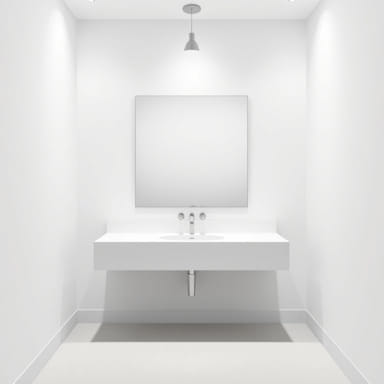
Most people have experienced the strange phenomenon of stepping into a changing room only to find that their reflection suddenly appears worse than expected. The lighting seems harsh, every perceived flaw becomes glaringly visible, and clothes that looked promising on the rack now feel like a poor choice. It’s a shared moment of vulnerability that leads to a common question why are changing room mirrors so unflattering? This topic blends psychology, physics, and retail design in a surprisingly insightful way.
Lighting The Biggest Culprit
Harsh overhead lighting
One of the main reasons changing room mirrors feel unflattering is the lighting. Many fitting rooms are equipped with overhead fluorescent or LED lighting that casts shadows downward. This lighting highlights imperfections, casts uneven shadows on the face and body, and washes out natural skin tones.
Cool vs warm tones
The color temperature of the light also matters. Cool-toned lights (often bluish or white) can make skin appear pale or even sickly, while warm lighting tends to be more flattering. Unfortunately, retailers often choose energy-efficient cool lighting without realizing the psychological impact it can have on shoppers.
Mirror Quality and Positioning
Flat vs curved mirrors
Believe it or not, the shape and quality of the mirror itself can distort your image. While we assume mirrors are perfectly flat, some are subtly concave or convex, which can stretch or compress your reflection. Even a slight imperfection can significantly change the way you see yourself.
Mirror angle and height
The position and angle of the mirror also play a huge role. A mirror that is tilted backward will elongate your legs and make you appear taller, while a forward tilt can compress your figure. In many fitting rooms, mirrors are placed at fixed, unadjustable angles that may not be optimal for a flattering view.
Space and Environment
Cramped spaces
Changing rooms are often small, enclosed spaces. The lack of natural light and the proximity of walls create a claustrophobic environment. This closeness can distort perception and make you feel larger than you are simply because there’s less open space around you.
Color of the room
The wall color and decor can also influence how you perceive yourself. Dark or contrasting colors in the room can cast shadows, while stark white walls reflect light in harsh ways. The result is a setting that is not designed to flatter the person inside it.
Psychological Perception
Already vulnerable
Trying on clothes is often a moment of self-evaluation. People are already in a critical mindset, hoping the clothes will flatter them and potentially worrying that they won’t. This psychological pressure amplifies every perceived imperfection.
Expectation vs reality
We often imagine ourselves looking a certain way in new clothes before trying them on. When the reflection doesn’t meet that mental image, disappointment sets in. Even if the clothes fit well, the mirror might not show what we hoped to see, creating a dissonance that feels unflattering.
Retail Strategies Is It Intentional?
The controversy of bad mirrors
Some believe that unflattering mirrors are a tactic to lower customers’ self-esteem, encouraging them to buy more to fix” the perceived problem. Others argue that stores simply prioritize energy savings and space efficiency over customer experience. While few retailers would admit to purposefully installing poor lighting, the overall setup does little to make customers feel confident.
Different stores, different mirrors
It’s worth noting that not all stores have the same kind of changing rooms. High-end boutiques often offer flattering lighting, full-length mirrors, and cozy environments. Budget retailers, on the other hand, may skimp on mirror quality and lighting to reduce costs, which could contribute to the disparity in customer satisfaction.
Solutions to Improve the Experience
How to counter poor lighting
- Bring a small compact mirror with natural lighting correction.
- Use your phone camera to take a photo from different angles it often offers a more accurate representation.
- Try on clothes near a window or ask if there’s a room with better lighting.
Choosing the right time and mood
- Avoid shopping when tired or stressed, as it skews perception negatively.
- Go shopping when you feel good about yourself to bring positive energy into the experience.
Mirror vs Reality
Trust your own judgment
Ultimately, a single mirror in a poorly lit room shouldn’t define how you feel about yourself or the clothes you try on. Our bodies don’t change between home and store. What changes is the environment. Trust your instincts about how you feel in an outfit rather than relying solely on what the mirror tells you.
Home mirrors vs store mirrors
At home, you’re familiar with your mirror, your lighting, and your comfort. When something looks “off” in a changing room, try to mentally remind yourself that it’s not you it’s the conditions. If possible, bring the clothes home to try them in your normal setting before deciding.
Self-Confidence Beyond the Mirror
Redefining beauty and fit
We live in a world saturated with curated images and idealized standards. Mirrors, especially in changing rooms, are just one more place where unrealistic expectations can show up. Recognizing that these reflections aren’t objective truths can empower you to shop with more confidence.
Affirm your worth
You are more than a fleeting image. Flattering or not, a mirror reflection doesn’t define your value, your beauty, or your strength. The next time you find yourself frowning in a store fitting room, take a deep breath, adjust your perspective, and remember that the mirror doesn’t always tell the full story.
Changing room mirrors often make people feel worse about themselves, but the reasons are mostly technical and environmental poor lighting, bad angles, cramped spaces, and reflective surfaces that distort reality. By understanding the science and psychology behind this phenomenon, you can shop more confidently and be less swayed by what the mirror reflects. You deserve to feel good in your clothes, no matter what kind of lighting you’re standing under.