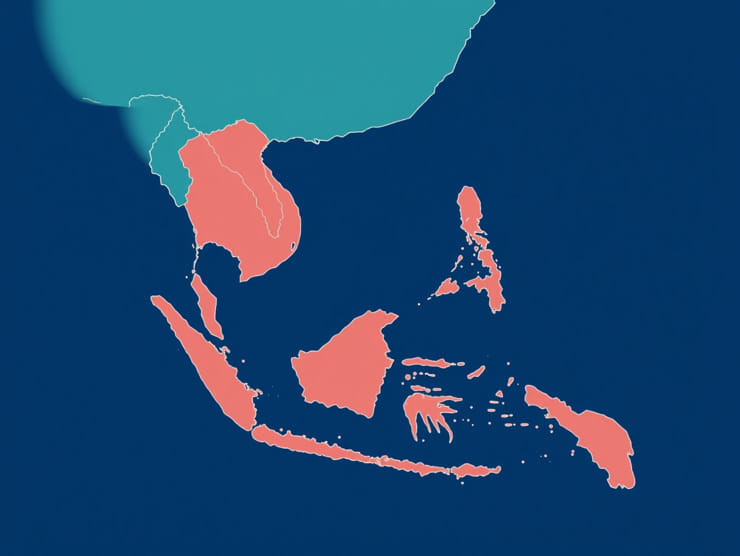
The Pacific Ocean, the world’s largest body of water, stretches across nearly one-third of the Earth’s surface and connects the continents of Asia, Australia, North America, and South America. Countries that are referred to as transpacific typically have coastlines that border the Pacific Ocean and maintain economic, cultural, or strategic ties across it. These nations often participate in transpacific trade, diplomacy, and transportation networks. Understanding which countries are considered transpacific provides valuable insight into global geopolitics, trade routes, and cultural exchange.
Understanding the Term Transpacific”
The term transpacific refers to anything that crosses or spans the Pacific Ocean. In the context of countries, it usually describes nations that engage in direct interactions across the ocean. These interactions may include shipping, air travel, trade agreements, military cooperation, and communication networks.
Key Characteristics of Transpacific Countries
- Geographical location with access to the Pacific Ocean
- Participation in transpacific trade and commerce
- Involvement in regional security and environmental agreements
- Direct cultural or political relationships with other Pacific-bordering countries
Many of these countries are part of international frameworks like the Trans-Pacific Partnership (TPP), APEC (Asia-Pacific Economic Cooperation), or maintain bilateral trade agreements with nations across the ocean.
Countries in Asia That Are Transpacific
Asia has a long Pacific coastline, with several nations actively involved in transpacific affairs. These countries are major players in global trade, technology, and manufacturing.
Examples of Asian Transpacific Countries
- China– With a vast coastline along the East China Sea and the South China Sea, China is a leading force in transpacific shipping and exports.
- Japan– An island nation with extensive trade and defense ties to countries across the Pacific, particularly the United States.
- South Korea– A high-tech economy with major seaports and air routes crossing the Pacific.
- Taiwan– A significant trading partner in the electronics and manufacturing sectors with Pacific partners.
- Vietnam– Emerging as a manufacturing hub with growing connections to North American and Australian markets.
- Philippines– A Pacific archipelago with cultural and economic links to the Americas and Oceania.
- Malaysia– Active in maritime trade with the Americas, often included in broader Pacific economic zones.
- Indonesia– The largest island country with territories spread across the Pacific and Indian Oceans.
These Asian countries are essential to the smooth operation of Pacific shipping lanes, digital infrastructure, and transpacific air traffic.
Pacific Island Nations
The Pacific is dotted with numerous island countries that, although small in landmass and population, are strategically and culturally important in transpacific discussions. They occupy central locations in the ocean, often serving as transit points or diplomatic players.
Major Pacific Island Nations
- Fiji
- Samoa
- Tonga
- Micronesia
- Palau
- Marshall Islands
- Vanuatu
- Papua New Guinea
Many of these island nations maintain close relations with larger transpacific partners like Australia, New Zealand, and the United States. They are often included in transpacific climate, defense, and economic discussions due to their vulnerable but strategic locations.
North American Transpacific Countries
North America faces the Pacific on its western side, making several countries in this region central players in transpacific commerce, military alliances, and environmental cooperation.
Transpacific Nations in North America
- United States– With a Pacific coastline stretching from California to Alaska, the U.S. is one of the most dominant transpacific powers, with strong ties to Asia and Oceania.
- Canada– The province of British Columbia offers major Pacific ports, linking Canada to Asian markets through shipping and air routes.
- Mexico– With coastal cities such as Acapulco and Manzanillo, Mexico engages in Pacific trade, particularly with Asia and the United States.
These countries are essential nodes in transpacific shipping, finance, aviation, and diplomacy. The U.S., in particular, has several military bases and economic agreements that span the Pacific Ocean.
South American Transpacific Countries
Although often overshadowed by other regions, South America has multiple countries with Pacific coastlines that actively participate in transpacific exchanges. These nations are becoming more involved in international trade networks that reach across the Pacific.
Pacific-Facing Countries in South America
- Chile– With a long Pacific coastline, Chile has deep-sea ports and is a participant in trade agreements such as the CPTPP (Comprehensive and Progressive Agreement for Trans-Pacific Partnership).
- Peru– A growing exporter of minerals and agricultural goods, with significant shipping routes to Asia and North America.
- Ecuador– With active Pacific ports and increasing trade with East Asian countries.
- Colombia– Although more focused on the Atlantic historically, it has strategic ports on the Pacific coast as well.
These countries are enhancing their presence in transpacific relations, particularly in the areas of mining, agriculture, and fishing industries that depend on open access to Pacific markets.
Australia and New Zealand
Australia and New Zealand are key players in the South Pacific, serving as bridges between Asia and the Americas. Their economies, foreign policies, and defense strategies are closely aligned with both sides of the Pacific Ocean.
Key Roles of Australia and New Zealand
- Australia– A major exporter of natural resources to Asia, deeply engaged in regional defense cooperation and Pacific development.
- New Zealand– Active in Pacific Island diplomacy and trade, with growing ties to the Americas and Asia-Pacific region.
These nations also support regional security initiatives and collaborate in climate and sustainability efforts across the Pacific.
Importance of Transpacific Countries
Transpacific countries are crucial to global trade, security, and environmental efforts. The Pacific Ocean hosts some of the world’s busiest shipping lanes, and cooperation among transpacific countries ensures stability in this critical area. Whether through formal trade blocs, military alliances, or environmental pacts, these nations share mutual interests and responsibilities.
Key Areas of Transpacific Cooperation
- Maritime security and freedom of navigation
- Climate change adaptation and marine conservation
- Digital connectivity and submarine cable infrastructure
- Economic growth through multilateral trade agreements
- Disaster response and humanitarian aid collaboration
With the rise of Indo-Pacific strategies in international relations, transpacific cooperation continues to gain importance in global geopolitics.
From the bustling ports of Asia to the remote islands of the Pacific and the western coasts of the Americas, transpacific countries form a vast and dynamic network. They are linked not just by geography, but by commerce, culture, and shared challenges. As global economic and political power continues to shift toward the Pacific Rim, understanding the roles and relationships of transpacific nations becomes increasingly vital. Their cooperation, conflict resolution, and sustainability efforts will shape the future of the Pacific region and beyond.