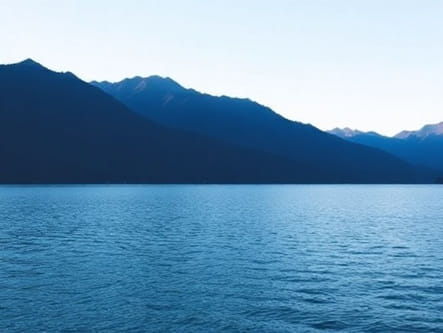
Stretching like a narrow ribbon through the heart of Africa, Lake Tanganyika is one of the most remarkable natural features on the continent. Its sheer size, incredible depth, and ecological importance have made it the subject of many scientific studies, as well as a central feature in the geography of the Great Rift Valley. For anyone interested in physical geography, biodiversity, or African topography, understanding how long Lake Tanganyika is provides a foundation for exploring its broader environmental and geopolitical significance.
Geographical Dimensions of Lake Tanganyika
Overall Length
Lake Tanganyika spans an impressive length of approximately 673 kilometers, or about 418 miles. This makes it the longest freshwater lake in the world. The lake runs in a general north-south direction, bordered by four countries Burundi, the Democratic Republic of the Congo (DRC), Tanzania, and Zambia. Its elongated shape is a result of tectonic activity along the East African Rift System, which continues to shape the landscape today.
Comparative Size
To put its length into perspective, Lake Tanganyika is longer than the distance between New York City and Washington, D.C. It’s more than twice the length of Lake Victoria, despite the latter being larger in terms of surface area. The narrow but long configuration of Lake Tanganyika contributes to its deep basin and unique hydrological characteristics.
Formation and Geological Context
Rift Valley Origin
The lake is located within the western branch of the East African Rift Valley, a massive geological trench formed by the slow pulling apart of the African tectonic plate. Over millions of years, this rifting process has allowed for the accumulation of water in deep basins, with Lake Tanganyika being the deepest and most extensive of these.
Depth and Volume
While this topic focuses on its length, it’s worth noting that Lake Tanganyika is also the second-deepest freshwater lake in the world, reaching depths of approximately 1,470 meters (4,823 feet). Combined with its length, this depth gives the lake a volume of around 18,900 cubic kilometers, making it one of the largest reservoirs of freshwater on Earth.
Political and Environmental Boundaries
Countries Sharing the Lake
- TanzaniaControls the eastern shoreline and has the largest share of the lake’s surface.
- Democratic Republic of the CongoControls most of the western shoreline.
- BurundiOccupies a small section of the northern edge of the lake.
- ZambiaShares the southern tip of the lake, though it has the smallest portion of the shoreline.
This international division means that Lake Tanganyika serves as both a natural resource and a boundary between multiple nations. Because of its length, it plays an important role in regional cooperation, trade, and transportation.
Ecological Importance
Biodiversity Hotspot
Lake Tanganyika’s great length and isolation have contributed to the development of an incredibly diverse ecosystem. It is home to over 350 species of fish, many of which are found nowhere else in the world. The lake is particularly famous for its cichlid species, which display a wide range of colors, behaviors, and evolutionary adaptations.
Climate Influence
Spanning hundreds of kilometers across varying elevations and climates, Lake Tanganyika helps to regulate regional weather patterns. It also serves as a critical freshwater source for the millions of people who live along its shores.
Human Settlements and Economic Activities
Major Cities Along the Lake
- BujumburaThe former capital of Burundi, located at the northern tip of the lake.
- KigomaA major Tanzanian port city on the eastern shore.
- KalemieLocated on the Congolese side, this town plays a key role in local fishing and trade.
- MpulunguZambia’s only port on the lake, situated at the southern end.
The presence of these cities along its long shoreline demonstrates how Lake Tanganyika’s length supports a wide range of human activities, including fishing, shipping, and tourism. Many communities rely on the lake for food, transport, and economic livelihood.
Fishing Industry
Fishing is a vital industry across the lake’s shoreline. Artisanal and commercial fisheries harvest species like sardines (locally known as dagaa”) and Nile perch. The lake’s considerable length allows for distinct fishing zones that vary in productivity and ecological composition, depending on water depth and surrounding vegetation.
Transportation and Navigation
Maritime Routes
Given its linear form and strategic location, Lake Tanganyika functions as a major inland waterway. Ferries and cargo boats navigate the lake, linking towns and cities across different national borders. The length of the lake allows for regional trade routes to flourish, especially between Tanzania and the DRC.
Challenges and Opportunities
While the lake offers immense potential for economic development, its vast length also presents challenges in terms of infrastructure, security, and environmental conservation. Ensuring sustainable use of the lake across its entire length requires cross-border agreements and coordinated efforts among the riparian countries.
Conservation and Management
Environmental Threats
- PollutionUrban runoff and industrial waste threaten water quality.
- OverfishingUnregulated fishing has led to declining fish populations in some areas.
- Climate ChangeAltered rainfall patterns and warming temperatures affect the lake’s ecology.
Regional Cooperation
Several international initiatives focus on protecting Lake Tanganyika’s biodiversity and water quality. Programs like the Lake Tanganyika Authority (LTA) aim to coordinate efforts between the bordering nations. Effective conservation requires recognizing that what happens in one part of the lake given its length can impact ecosystems hundreds of kilometers away.
Scientific Research and Exploration
Global Interest
Lake Tanganyika continues to attract scientists from around the world. Its long sediment record makes it valuable for studying climate change over millennia. Additionally, its depth and isolation have led to the evolution of species that provide insight into biodiversity and speciation.
Key Research Areas
- Paleoclimate studies using sediment cores.
- Evolutionary biology research focusing on endemic fish species.
- Hydrology and limnology examining nutrient cycling and water currents.
Lake Tanganyika is an extraordinary body of water that stands out not just for its beauty, but for its remarkable length stretching 673 kilometers across the heart of Africa. This length shapes the lake’s ecological diversity, economic value, geopolitical significance, and cultural importance. From bustling port towns to remote fishing villages, the lake supports millions of lives and countless species along its shores. Understanding how long Lake Tanganyika is allows us to appreciate its influence, challenges, and the responsibilities shared by all those who benefit from its natural abundance.