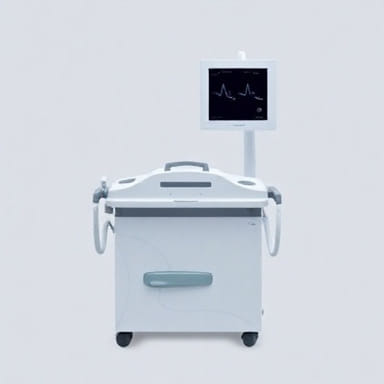
Capsular contracture is a common complication following breast implant surgery, characterized by the abnormal hardening and tightening of scar tissue around the implant. This condition can lead to discomfort, pain, and aesthetic changes, making early detection and accurate diagnosis critical. Ultrasound machines have become an essential tool for evaluating capsular contracture, offering a non-invasive method to assess implant integrity, capsule thickness, and surrounding tissue changes. Healthcare professionals increasingly rely on ultrasound imaging to guide treatment decisions and monitor patients effectively.
Understanding Capsular Contracture
Capsular contracture occurs when the body forms excessive fibrous tissue around a breast implant. This scar tissue, known as a capsule, can contract and distort the implant, sometimes causing pain or visible changes in breast shape. The severity of capsular contracture is often classified using the Baker grading system, ranging from Grade I, where the breast feels soft, to Grade IV, where it is hard, painful, and visibly deformed. Early identification and assessment of this condition are essential for effective intervention.
Causes and Risk Factors
- Infection or contamination during surgery
- Excessive bleeding or hematoma formation
- Implant type, surface texture, and placement
- Radiation therapy or prior breast surgery
- Individual patient factors, including immune response and tissue healing
The Role of Ultrasound in Diagnosis
Ultrasound imaging is a key diagnostic tool for evaluating capsular contracture. Unlike MRI, which can be expensive and time-consuming, ultrasound provides a fast, non-invasive, and cost-effective method for assessing breast implants and surrounding tissue. With high-frequency sound waves, ultrasound machines can produce detailed images of the implant, the capsule, and adjacent structures, enabling clinicians to detect early signs of contracture and other complications.
Benefits of Ultrasound for Capsular Contracture
- Non-invasive and painless procedure
- Real-time imaging for immediate assessment
- Ability to measure capsule thickness accurately
- Detects fluid collections, implant rupture, and tissue abnormalities
- Portable options allow bedside or clinic use
Key Features of Ultrasound Machines for Capsular Contracture
When selecting an ultrasound machine for evaluating capsular contracture, certain features are particularly important for accurate assessment
High-Frequency Transducers
High-frequency probes, typically between 10 MHz and 18 MHz, provide the resolution needed to visualize the thin capsule surrounding the implant and subtle changes in tissue density. These transducers allow clinicians to detect early contracture before significant symptoms appear.
Color Doppler Imaging
Color Doppler can be useful for evaluating blood flow in surrounding tissues, helping to identify inflammation or vascular changes associated with complications. This feature adds diagnostic value in complex cases where pain or swelling is present.
Adjustable Imaging Modes
Modern ultrasound machines offer multiple imaging modes, including B-mode for structural assessment and elastography for evaluating tissue stiffness. Elastography can help quantify the firmness of the capsule, which may correlate with the severity of contracture.
Portability and Ease of Use
For plastic surgeons and breast specialists, portable ultrasound machines provide flexibility for point-of-care evaluations. Lightweight and compact units can be easily transported between operating rooms, clinics, and bedside settings, making routine follow-ups more convenient for patients and clinicians alike.
Procedure for Ultrasound Assessment
Performing an ultrasound examination for capsular contracture involves several steps to ensure accurate and consistent results
Patient Preparation
The patient is typically positioned sitting or lying down, with the breast exposed. A water-based gel is applied to improve acoustic coupling between the transducer and skin.
Scanning Technique
The clinician systematically scans the implant in multiple planes, assessing the capsule, implant surface, and surrounding tissues. Measurements of capsule thickness are taken at several points to evaluate uniformity and detect areas of increased stiffness.
Evaluation of Findings
Ultrasound images are analyzed for signs of capsular contracture, including
- Thickened or irregular capsule surrounding the implant
- Changes in implant shape or displacement
- Fluid collections or seromas
- Implant rupture or fold defects
- Altered tissue echogenicity indicating inflammation or fibrosis
Advantages over Other Imaging Modalities
While MRI and mammography can also assess breast implants, ultrasound offers several advantages for capsular contracture evaluation
- Lower cost and higher accessibility
- No exposure to ionizing radiation
- Real-time imaging allows dynamic assessment of implant movement
- Immediate results facilitate faster clinical decision-making
- More comfortable for patients who may be claustrophobic or sensitive to pressure
Clinical Applications
Ultrasound machines for capsular contracture are used in various clinical scenarios, including
- Routine post-operative follow-up to detect early signs of contracture
- Assessment of symptomatic patients presenting with pain or visible deformities
- Preoperative evaluation for revision surgery or implant replacement
- Monitoring of implant integrity and detecting potential ruptures
- Guiding non-surgical interventions, such as massage therapy or steroid injections
Choosing the Right Ultrasound Machine
Selecting an ultrasound machine for capsular contracture depends on clinical needs, budget, and desired features. Key considerations include image resolution, probe frequency, portability, durability, and availability of advanced imaging modes like elastography. Clinicians should also consider user-friendly interfaces and software for documentation and image storage.
Ultrasound machines play a vital role in the diagnosis and management of capsular contracture following breast implant surgery. Their ability to provide detailed, real-time images of the implant and surrounding tissues makes them indispensable for early detection, monitoring, and treatment planning. High-frequency transducers, color Doppler imaging, and elastography enhance diagnostic accuracy, while portable designs increase convenience for clinicians and patients. By integrating ultrasound assessments into routine follow-up care, healthcare professionals can ensure timely intervention, reduce complications, and improve outcomes for patients with breast implants.