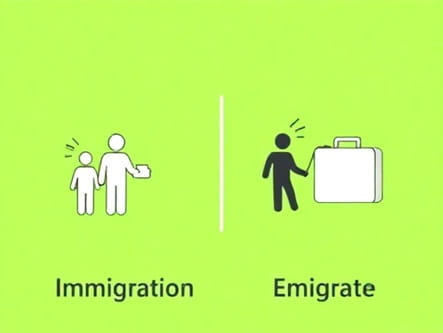
Movement of people across borders is a common feature of human history, shaping cultures, economies, and societies. However, understanding the terminology surrounding migration can sometimes be confusing. Two terms that are often used interchangeably, but actually describe different perspectives, are immigration and emigration. While both involve relocating from one country to another, the distinction lies in the direction of movement and the context from which it is viewed. Appreciating this difference is important for discussing migration policies, demographic trends, and international relations.
Defining Immigration and Emigration
Immigration refers to the act of entering a foreign country with the intention of settling there permanently or for an extended period. From the perspective of the destination country, an immigrant is someone who arrives to live, work, or study, contributing to the social and economic fabric of that nation. Emigration, on the other hand, describes the act of leaving one’s home country to live in another. From the perspective of the origin country, an emigrant is someone who departs, often seeking better opportunities, safety, or a higher quality of life elsewhere.
Key Differences
- PerspectiveImmigration focuses on arrival in a new country, while emigration focuses on departure from the home country.
- Legal and Administrative ContextImmigration involves procedures such as obtaining visas, work permits, or residency status in the host country. Emigration may involve exit permits or notifications in certain nations.
- ImpactImmigration impacts the destination country’s population, economy, and culture. Emigration affects the origin country through changes in workforce, demographics, and sometimes remittances sent back home.
- TerminologyA person can be both an emigrant from their home country and an immigrant in their new country.
Reasons for Immigration
People immigrate for a variety of reasons, often categorized as economic, social, political, or environmental. Economic immigrants move to seek employment opportunities, better wages, or improved living standards. Social reasons include joining family members or pursuing educational opportunities abroad. Political factors, such as escaping conflict, persecution, or unstable governance, also drive immigration. Environmental factors like natural disasters, climate change, or resource scarcity may force people to relocate permanently to safer regions.
Economic Immigration
Economic immigration is one of the most common forms of migration. Skilled workers, professionals, and laborers move to countries where their expertise is in demand. This movement can benefit both the immigrant and the host country, as it fills labor shortages and contributes to economic growth. However, it can also raise challenges related to social integration and competition for jobs.
Political and Social Immigration
Political and social immigrants often face urgent circumstances. Refugees, asylum seekers, or individuals fleeing persecution must navigate complex legal frameworks to gain protection in a new country. Social immigrants may relocate for education, marriage, or family reunification, enhancing cultural exchange and social diversity. These forms of immigration highlight the human dimension of migration, emphasizing personal safety, opportunity, and family bonds.
Reasons for Emigration
Emigration occurs when individuals decide to leave their home country for reasons that may mirror those of immigrants. Economic emigration involves seeking higher-paying jobs, improved career prospects, or better living conditions. Political emigration is often driven by conflict, human rights violations, or oppressive regimes. Social emigration includes joining family abroad or pursuing education in foreign institutions. Environmental emigration may occur due to natural disasters, resource depletion, or climate change, compelling people to seek more habitable regions.
Impact on Origin Countries
Emigration has several effects on the country of origin. Skilled labor may leave, resulting in a brain drain” that can hinder economic development. Conversely, emigrants often send remittances back to their families, supporting local economies and improving living standards. Socially, emigration can influence family structures, community cohesion, and cultural dynamics. Politically, large-scale emigration may draw attention to governance issues or human rights concerns, prompting domestic reforms or international assistance.
Legal and Policy Considerations
Governments approach immigration and emigration differently due to their respective impacts on national interests. Immigration policies often focus on border control, visas, residency, and naturalization. Countries may encourage immigration to attract skilled workers or fill labor shortages, while restricting it to protect domestic employment or security. Emigration policies are less common but may involve exit permits, taxation rules, or legal documentation for citizens leaving the country. Understanding these frameworks is essential for policymakers, migrants, and international organizations.
Challenges and Misconceptions
Confusion between immigration and emigration can lead to misunderstandings in discussions about population trends, labor mobility, and international law. For instance, when media reports highlight the number of immigrants entering a country, it is equally important to recognize that these individuals are emigrants from another nation. Misconceptions can affect public opinion, policy debates, and international relations, making clarity in terminology crucial.
Global Trends and Interconnectedness
Migration today is increasingly globalized. International travel, trade, education, and technology facilitate movement across borders. Countries often experience simultaneous inflows and outflows of people, creating complex demographic dynamics. Understanding the difference between immigration and emigration helps analysts, governments, and organizations track population shifts, plan economic strategies, and design integration programs effectively.
Societal and Cultural Implications
Both immigration and emigration influence cultural exchange, social adaptation, and community development. Immigrants bring new languages, traditions, and perspectives, enriching the host society. Emigrants maintain connections to their home country, often forming diaspora communities that foster trade, diplomacy, and cultural collaboration. Recognizing these dual impacts emphasizes that migration is a two-way process, benefiting both origin and destination countries when managed responsibly.
The distinction between immigration and emigration is fundamental to understanding human mobility. Immigration describes arrival in a new country, while emigration focuses on departure from a home country. Both are driven by economic, social, political, and environmental factors, and each has significant implications for individuals, communities, and nations. Appreciating this difference allows for more informed discussions about migration policies, population trends, and international relations. Ultimately, migration shapes the world by fostering connections, opportunities, and cultural exchange, highlighting the interconnected nature of our global society.
By understanding the nuances between immigration and emigration, societies can better support migrants, optimize economic outcomes, and promote cultural integration. Migration is not just a matter of borders but a reflection of human ambition, resilience, and adaptability. Clear terminology ensures accurate communication, effective policymaking, and a more inclusive approach to global movement, benefiting both origin and destination countries alike.