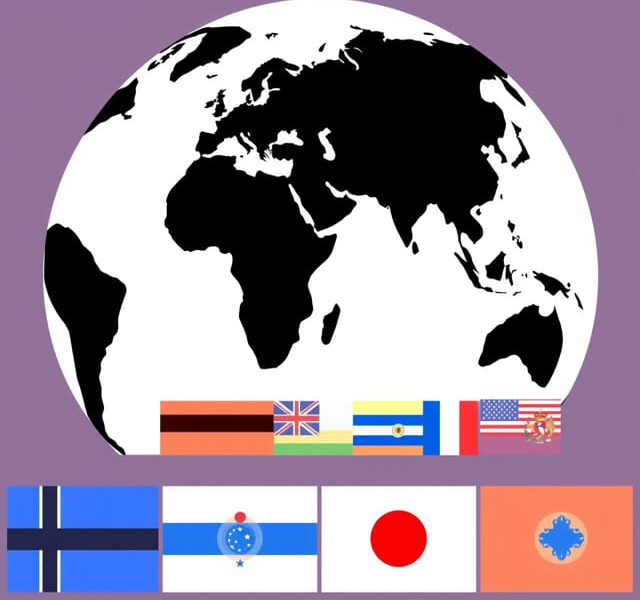
Flags are more than just colorful symbols waving in the wind. They are powerful representations of identity, history, culture, and unity. From national pride to regional uniqueness, flags around the world tell rich stories about the places and people they represent. Each flag has a purpose, a design rooted in symbolism, and a place in the global community. Understanding the flags of the world provides a deeper look into how nations see themselves and wish to be seen by others.
Understanding the Purpose of Flags
National Identity and Unity
One of the primary roles of a national flag is to symbolize a country’s identity. It acts as a visual representation of a nation’s values, history, and aspirations. Flags are flown at government buildings, schools, and international events to inspire unity and pride among citizens. They help distinguish one country from another in diplomatic and sporting contexts.
Historical and Political Significance
Flags often reflect important historical events, such as revolutions, independence, or the merging of different regions. Many flags incorporate symbols or colors that represent struggles for freedom, historical figures, or foundational ideologies. For example, stars and stripes in the United States flag represent the original colonies and states, while the green in Nigeria’s flag represents agriculture and natural wealth.
Common Flag Colors and Their Meanings
Though each flag is unique, certain colors appear frequently and tend to carry common symbolic meanings
- Red– Often symbolizes bravery, revolution, or the blood of those who fought for freedom.
- Blue– Commonly represents peace, freedom, and justice.
- Green– Typically associated with nature, agriculture, or Islam.
- Yellow/Gold– Frequently used to denote wealth, energy, or the sun.
- Black– Can represent determination, ethnic heritage, or remembrance.
- White– Stands for peace and purity.
Unique Flag Designs Around the World
Simple Yet Powerful Japan
The Japanese flag, known as the Nisshōki” or commonly the “Hinomaru,” features a red circle centered on a white background. It represents the rising sun, an important cultural and spiritual symbol in Japan. Its minimalist design is immediately recognizable and carries deep meaning related to the country’s identity.
Stars and Stripes United States
The U.S. flag contains 13 horizontal stripes and 50 white stars on a blue field. The stripes represent the original 13 colonies, while each star stands for a current state. This design has evolved over time as the nation grew, making it one of the most dynamic national flags in history.
Three-Color Harmony France
The French flag consists of three vertical bands in blue, white, and red. Known as the “Tricolore,” it originated during the French Revolution and symbolizes liberty, equality, and fraternity. Many countries later adopted similar designs, inspired by the ideals of the French Republic.
Symbols of Unity South Africa
South Africa’s flag is one of the most colorful and complex national flags. It features a unique design with six colors arranged in a Y-shape. Each element represents unity among the country’s diverse ethnic groups and a new democratic beginning after apartheid.
Flags Representing Religion and Culture
Islamic Nations
Flags of many Islamic countries incorporate green, a color strongly associated with Islam. The crescent moon and star are also common, as seen in the flags of Turkey and Pakistan. These symbols are meant to reflect faith and religious tradition.
Buddhist and Hindu Influence
Nations with strong Buddhist or Hindu heritage, such as Bhutan or Nepal, feature symbols like dragons, temples, or religious emblems on their flags. Nepal’s flag is particularly unique as it is not rectangular it features two stacked triangles, the only national flag with such a shape.
Flags of International Organizations
United Nations
The flag of the United Nations features a world map surrounded by olive branches. It symbolizes global peace and cooperation. This flag is often flown at international events, humanitarian missions, and peacekeeping operations.
European Union
The European Union’s flag is a circle of 12 gold stars on a blue background. Though the EU has more than 12 member states, the stars symbolize unity, solidarity, and harmony. It is a flag of political integration and shared values among European nations.
Changes in Flag Design Over Time
Flag Evolution
As nations undergo political change, their flags often change too. Examples include countries that transitioned from colonial rule to independence, such as many African nations in the 20th century. Sometimes, the change is a complete redesign, while other times it involves minor adjustments.
Rebranding and Modernization
Some nations have opted to redesign their flags to better reflect modern identities. For instance, Malawi changed its flag in 2010 to incorporate a full sun, symbolizing development, but later reverted to the original design. These changes can spark debate over tradition versus modernization.
Flag Etiquette and Protocol
Respecting the National Flag
Flags are often treated with great reverence. Many countries have laws governing how and when their flags can be displayed. For example
- The flag should not touch the ground.
- It must be properly folded and stored.
- Damaged or faded flags must be retired respectfully.
- There are designated national days for flag-raising ceremonies.
International Events and Flag Display
During global events such as the Olympics or the United Nations General Assembly, flags from around the world are displayed together in alphabetical or diplomatic order. This visual celebration of diversity is a reminder of peaceful coexistence and mutual recognition.
Learning from Flags
Educational Tools
Flags are widely used in classrooms to teach students about geography, international relations, and history. They help learners make connections between visual symbols and national identities. Games and quizzes involving flags can also make learning more interactive and fun.
Flags and Tourism
Many travelers become interested in the flags of countries they visit. Collecting flag-themed souvenirs or learning the story behind a country’s flag adds depth to the travel experience. It also enhances cultural appreciation and curiosity about global traditions.
The flags of the world are more than simple pieces of fabric. They are visual stories colorful narratives that capture the essence of a nation’s soul. From the symbolism embedded in every shape and color to their role in diplomacy and identity, flags serve as powerful tools of connection. They unite people within a nation and foster respect among nations across the globe. Whether flying high on a government building or printed in a schoolbook, each flag stands as a proud symbol of heritage, hope, and human unity.