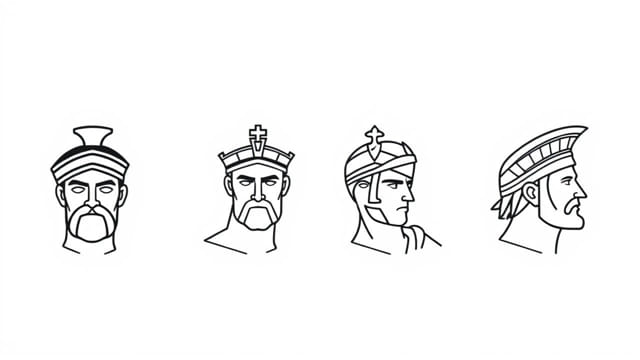
The history of the Roman Empire during the late first and early second centuries AD is marked by the reigns of some of its most influential emperors. Among them, Vespasian, Domitian, Nerva, Trajan, and Hadrian stand out for their distinct leadership styles, achievements, and contributions to Rome’s political, military, and cultural legacy. These rulers helped stabilize the empire after periods of turmoil and expansion, each leaving a unique mark on Roman history. Understanding their reigns provides valuable insight into how Rome evolved during one of its greatest eras.
Vespasian: Founder of the Flavian Dynasty
Vespasian rose to power in AD 69, a year known as the Year of the Four Emperors due to rapid political upheaval. After the chaotic fall of Nero and the short reigns of Galba, Otho, and Vitellius, Vespasian restored stability. He founded the Flavian dynasty and ruled from 69 to 79 AD.
Achievements and Legacy
- Military Success: Vespasian was a successful general, notably leading the Roman invasion of Britain and quelling the Jewish revolt in Judea.
- Economic Reforms: He worked on rebuilding Rome’s finances, which were in poor condition after Nero’s extravagance and civil war.
- Construction Projects: Vespasian began the construction of the Colosseum, originally called the Flavian Amphitheater, which became a symbol of Roman engineering and entertainment.
His reign focused on practical governance, and he was known for his frugality and no-nonsense approach, helping Rome regain strength after years of disorder.
Domitian: The Last Flavian Emperor
Domitian, Vespasian’s youngest son, ruled from 81 to 96 AD. His reign is often viewed with mixed opinions by historians, who describe him as a capable but authoritarian leader.
Key Features of Domitian’s Rule
- Centralized Power: Domitian increased imperial authority, reducing the power of the Senate and emphasizing his role as an absolute ruler.
- Military Campaigns: He strengthened Rome’s frontiers, particularly along the Rhine and Danube rivers, defending against Germanic tribes.
- Building and Cultural Work: Domitian rebuilt temples and public buildings, supporting the arts and restoring Rome’s architectural grandeur.
Despite his efforts to strengthen the empire, Domitian’s harsh treatment of political opponents and paranoia eventually led to his assassination, ending the Flavian dynasty.
Nerva: The Transitional Emperor
Following Domitian’s death, Nerva became emperor in 96 AD, ruling until 98 AD. His reign was short but important as a transition from Flavian to the era of the Five Good Emperors.
Highlights of Nerva’s Reign
- Restoration of Senate Power: Nerva worked to repair relations with the Senate and the elite after Domitian’s autocratic rule.
- Adoption of Trajan: Recognizing his own limited time and need for a strong successor, Nerva adopted Trajan, ensuring a smooth transition.
- Moderate Reforms: He introduced some social welfare policies, including land reforms and support for orphans and the poor.
Nerva’s wise decision to adopt Trajan set the stage for a prosperous period in Roman history.
Trajan: The Empire at its Largest
Trajan, ruling from 98 to 117 AD, is often considered one of Rome’s greatest emperors. His reign marked the peak of the Roman Empire’s territorial expansion and military strength.
Major Accomplishments
- Military Conquests: Trajan led successful campaigns in Dacia (modern Romania), adding vast wealth and resources to Rome.
- Public Works: His building projects included Trajan’s Forum, Trajan’s Market, and extensive road construction across the empire.
- Social Policies: Trajan implemented programs to support poor children and improve urban living conditions.
Under Trajan, the Roman Empire reached its greatest territorial extent, stretching from Britain to Mesopotamia.
Hadrian: The Consolidator
Hadrian, emperor from 117 to 138 AD, shifted focus from expansion to consolidation. Known for his cultural interests and architectural patronage, Hadrian’s reign helped stabilize the empire’s borders and fostered a sense of Roman identity.
Important Contributions
- Hadrian’s Wall: In Britain, he constructed a massive defensive wall marking the northern limit of Roman territory.
- Legal and Administrative Reforms: Hadrian reformed Roman law to be more humane and efficient, improving governance.
- Patron of Arts: He promoted Greek culture and built numerous temples, theaters, and public buildings.
Hadrian’s reign was marked by peace and internal development rather than conquest, setting a model for subsequent emperors.
Summary of Their Impact on Rome
Vespasian, Domitian, Nerva, Trajan, and Hadrian collectively shaped one of Rome’s most stable and prosperous periods. Their leadership styles ranged from military conquest and authoritarian rule to careful reforms and cultural patronage. Together, they helped the empire grow, secure its borders, improve governance, and leave a lasting architectural and cultural legacy.
- Vespasian: Restored order, rebuilt Rome, and began iconic construction projects.
- Domitian: Strengthened imperial power but ruled with an iron fist.
- Nerva: Provided a peaceful transition and set up future success through adoption.
- Trajan: Expanded the empire to its greatest size and supported public welfare.
- Hadrian: Consolidated territories, reformed laws, and promoted culture and architecture.
Studying these emperors offers insight into the complexity of Roman imperial rule and the factors behind the empire’s longevity. Their combined legacies remain central to the story of ancient Rome’s rise and endurance.