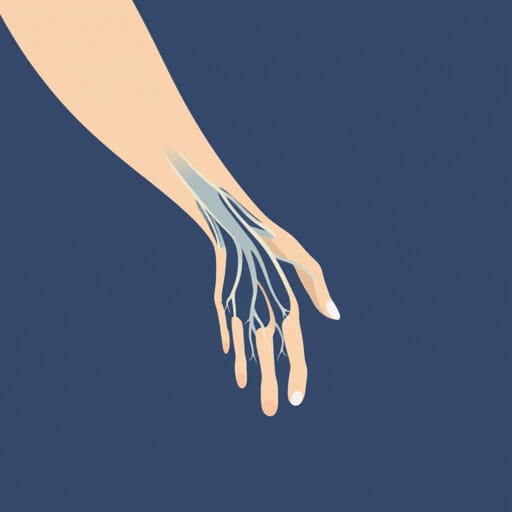
The human arm and hand owe their remarkable movement and sensation abilities to a complex network of nerves, among which the ulnar, median, and radial nerves play central roles. These three major nerves originate from the brachial plexus and travel down the arm to control various muscles and provide sensation to different areas. Whether you’re flexing your fingers, feeling a soft touch on your palm, or extending your wrist, these nerves are responsible. Understanding the structure, function, and clinical significance of the ulnar, median, and radial nerves is key in anatomy, medicine, and physical therapy.
Overview of Arm Nerve Anatomy
Origin from the Brachial Plexus
All three nerves ulnar, median, and radial originate from the brachial plexus, a network of nerves formed by the spinal nerve roots of C5 to T1. The brachial plexus divides into trunks, divisions, cords, and then branches to give rise to these three nerves.
Each nerve serves different muscles and skin regions of the upper limb and is critical for both motor and sensory function.
Ulnar Nerve
Anatomical Pathway
The ulnar nerve arises from the medial cord of the brachial plexus and carries fibers mainly from the C8 and T1 spinal roots. It travels down the medial side of the upper arm, passes behind the medial epicondyle of the humerus (commonly known as the ‘funny bone’), and continues into the forearm and hand.
Motor Function
The ulnar nerve controls several muscles, particularly in the forearm and hand:
- Flexor carpi ulnaris helps flex and adduct the wrist
- Flexor digitorum profundus (medial half) flexes the ring and little fingers
- Most of the intrinsic hand muscles, including the interossei, lumbricals (medial two), and hypothenar muscles
Sensory Function
The ulnar nerve provides sensation to:
- The medial side of the hand (pinky and half of the ring finger)
- The medial portion of the palm and back of the hand
Clinical Relevance
- Ulnar nerve entrapment: Often occurs at the elbow (cubital tunnel syndrome), causing numbness or tingling in the ring and little fingers
- Claw hand deformity: A result of long-term ulnar nerve damage, characterized by hyperextension at the metacarpophalangeal joints and flexion at the interphalangeal joints of the 4th and 5th fingers
Median Nerve
Anatomical Pathway
The median nerve is formed by contributions from both the lateral and medial cords of the brachial plexus (C5T1). It runs down the center of the arm, crosses the elbow in the cubital fossa, passes between the heads of the pronator teres, and continues through the carpal tunnel into the hand.
Motor Function
The median nerve innervates several forearm and hand muscles:
- Most forearm flexor muscles, such as the pronator teres, flexor carpi radialis, and palmaris longus
- Flexor digitorum superficialis and lateral half of the flexor digitorum profundus
- Thenar muscles (for thumb movement) and the lateral two lumbricals
Sensory Function
The median nerve supplies sensation to:
- The lateral palm
- The palmar side of the thumb, index finger, middle finger, and half of the ring finger
- The tips of these fingers on the dorsal side
Clinical Relevance
- Carpal tunnel syndrome: Compression of the median nerve within the carpal tunnel, leading to numbness, tingling, and weakness in the hand
- Ape hand deformity: Caused by loss of thenar muscle function, resulting in inability to oppose the thumb
Radial Nerve
Anatomical Pathway
The radial nerve originates from the posterior cord of the brachial plexus and contains fibers from C5 to T1. It travels down the posterior aspect of the arm, wraps around the humerus in the radial groove, and enters the forearm by crossing the lateral epicondyle. It divides into a superficial (sensory) and a deep (motor) branch in the forearm.
Motor Function
The radial nerve innervates:
- Triceps brachii (elbow extension)
- Extensor muscles of the forearm and wrist, including the extensor carpi radialis, extensor digitorum, and extensor pollicis muscles
- Supinator muscle
Sensory Function
It provides sensation to:
- The posterior arm and forearm
- The dorsal aspect of the hand, especially the thumb side
- The skin over the anatomical snuffbox
Clinical Relevance
- Wrist drop: A classic sign of radial nerve injury, characterized by the inability to extend the wrist and fingers
- Saturday night palsy: Radial nerve compression, often from prolonged pressure on the nerve while sleeping with the arm over a hard surface
Comparative Summary of the Three Nerves
| Nerve | Motor Function | Sensory Areas | Common Injuries |
|---|---|---|---|
| Ulnar | Hand muscles, medial forearm flexors | Medial palm, pinky and half of ring finger | Claw hand, cubital tunnel syndrome |
| Median | Forearm flexors, thenar muscles | Thumb to half of ring finger (palmar side) | Carpal tunnel syndrome, ape hand |
| Radial | Extensors of arm and forearm | Posterior arm, dorsal hand | Wrist drop, Saturday night palsy |
Importance in Clinical Practice
Neurological Assessments
Doctors often test the function of the ulnar, median, and radial nerves during neurological exams. This helps identify nerve damage or compression. Simple tests like checking hand grip, sensation, and reflexes can indicate the health of these nerves.
Rehabilitation and Physical Therapy
Patients with nerve injuries benefit from targeted therapy to restore strength, sensation, and coordination. Therapists use exercises, splints, and sometimes electrical stimulation to aid recovery.
The ulnar, median, and radial nerves are critical for the normal function of the upper limb. Each nerve follows a unique path and serves specific muscles and sensory regions. Damage to any of these nerves can result in weakness, sensory loss, and functional impairment, making early diagnosis and treatment essential. Whether you’re studying anatomy, treating a patient, or recovering from injury, understanding these three nerves helps unlock a deeper appreciation for the complexity and precision of the human nervous system.