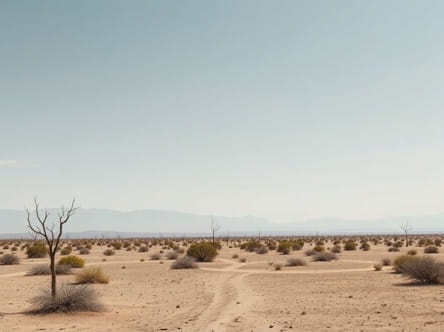
When imagining the most desolate place on Earth, one might picture a vast stretch of barren land, untouched by humanity, where no roads lead, no structures rise, and life barely holds on. These areas are often remote, inaccessible, and harsh beyond imagination. Yet they also hold a mysterious appeal, offering a glimpse into the raw, uninhabited face of our planet. From scorching deserts to frozen tundras, such places are extreme in every sense extreme in climate, in isolation, and in silence. Understanding these remote locations helps deepen our knowledge of Earth’s environments, survival limits, and the resilience of life.
Defining Desolation
What Makes a Place Truly Desolate?
A desolate place is more than just empty. It is defined by several key characteristics
- Extreme climates that make survival difficult
- Lack of vegetation and water sources
- Few or no permanent human settlements
- Geographical isolation from urban centers
- Minimal infrastructure or accessibility
These conditions combined create a landscape that feels lifeless and abandoned, where nature dominates completely and humanity has left little trace.
Contenders for the Most Desolate Place on Earth
1. Antarctica’s Dry Valleys
Located in the heart of Antarctica, the McMurdo Dry Valleys are arguably the most desolate region on the planet. Unlike the rest of the continent, which is covered in ice, these valleys are almost completely ice-free. They receive virtually no snowfall, and their terrain is marked by bare rock, frozen lakes, and powerful katabatic winds that sweep down from surrounding mountains.
Temperatures here remain well below freezing year-round, and the lack of precipitation makes it one of the driest places on Earth. Despite being in Antarctica, the Dry Valleys resemble the surface of Mars, making them a prime location for astrobiology research and planetary analog studies.
2. Atacama Desert, Chile
Stretching along the northern coast of Chile, the Atacama Desert is the driest non-polar desert in the world. Some weather stations in the region have never recorded rainfall. The air is so dry that even bacteria struggle to survive in some areas, making this desert an epitome of desolation.
Despite its harshness, the Atacama hosts some of the clearest skies on Earth. Its dryness, elevation, and lack of light pollution have made it home to some of the world’s most advanced observatories. Still, life is sparse, and vast areas remain untouched and uninhabitable.
3. The Rub’ al Khali (Empty Quarter)
Located on the Arabian Peninsula, the Rub’ al Khali is one of the largest sand deserts in the world. Covering parts of Saudi Arabia, Oman, the UAE, and Yemen, it is a true sea of sand, stretching as far as the eye can see. It is called the Empty Quarter for a reason this immense desert is nearly devoid of permanent settlements and is extremely difficult to cross.
Temperatures here can soar above 50°C (122°F) during the day, and sand dunes can reach heights of over 250 meters. The harsh conditions have historically limited human activity to nomadic tribes and occasional explorers.
4. Dallol, Ethiopia
Found in the Danakil Depression of northeastern Ethiopia, Dallol is a hydrothermal landscape with extreme temperatures and surreal colors. It is one of the hottest inhabited places on Earth, with an average annual temperature of around 34°C (93°F). However, inhabited is generous there are no permanent residents due to the toxic gases, extreme heat, and lack of water.
The area is filled with acidic hot springs, salt flats, and volcanic formations that create a nightmarish terrain. The landscape is so hostile that few organisms, including microbes, can survive in its waters. This combination of intense heat and alien appearance makes Dallol an otherworldly example of Earth’s desolation.
5. Kyzylkum Desert, Central Asia
Covering parts of Kazakhstan, Turkmenistan, and Uzbekistan, the Kyzylkum Desert is one of Central Asia’s largest deserts. It features endless stretches of sand and rock with minimal vegetation and very sparse population. The name itself means Red Sand in Turkic languages, referencing its rusty-colored terrain.
While some nomadic populations live near its fringes, the core of the desert is remote and rarely visited. Temperatures fluctuate between freezing winters and scorching summers, adding to its inhospitable character. It is one of the least developed and most isolated regions on the continent.
Factors That Contribute to Desolation
Climate Extremes
Places with severe temperature extremes either scorching heat or freezing cold are less likely to support complex life. The absence of rainfall, intense winds, or long periods of darkness (as in polar winters) further increases desolation.
Geological Features
Rocky terrains, salt flats, volcanic fields, and vast sand dunes can make a landscape unwelcoming and uninhabitable. These physical barriers often prevent transportation and development.
Isolation and Inaccessibility
Desolate places are often far from cities or roads. Lack of infrastructure, such as electricity, communication, or potable water, discourages human settlement and travel.
Lack of Resources
No vegetation, no wildlife, and no water mean no means to sustain human life. In these areas, survival requires external support and specialized equipment.
Scientific and Cultural Importance
Sites for Research and Exploration
Despite their harsh conditions, desolate places are valuable to science. They provide insights into Earth’s history, climate, and geology. Locations like the Dry Valleys or Dallol are analogs for extraterrestrial environments and are used to study how life might exist on Mars or other planets.
Preservation of Natural Environments
Because they are untouched by agriculture, industry, or urban development, these places preserve the Earth’s natural state. They serve as environmental benchmarks and may hold answers to climate change and ecological resilience.
Spiritual and Cultural Significance
Throughout history, remote places have also held symbolic meaning. Many cultures consider deserts or mountains as places for reflection, solitude, and connection with the divine. Desolation often evokes a deep sense of humility and awe.
While the idea of the most desolate place on Earth may seem bleak, it also highlights the incredible diversity and extremity of our planet. From Antarctica’s ice-free valleys to the red sands of the Rub’ al Khali, desolate environments challenge life to its limits. They remind us that Earth is not just a place of comfort and civilization but also of isolation, silence, and raw natural power. These extreme regions serve as living laboratories, sources of scientific wonder, and spaces where nature remains in command. To explore desolation is to confront both the planet’s harshest realities and its most fascinating mysteries.