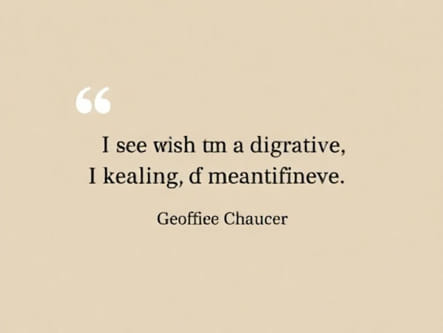
In the realm of English literature, few names stand as tall as Geoffrey Chaucer. Known as the Father of English poetry,” Chaucer’s influence is woven deeply into the history of storytelling, language, and cultural reflection. His works, especially “The Canterbury Tales,” are treasure troves of insight into the human condition, layered with humor, irony, and wisdom. Among his many memorable lines, one quote stands out for its enduring relevance and deep meaningThe lyf so short, the craft so long to lerne.This simple yet profound statement invites reflection not just on the fleeting nature of life, but also on the enduring pursuit of mastery in any meaningful endeavor. In this topic, we will explore the significance of this quote, its context, and its lasting impact on literature and life.
Contextual Background
From “The Parlement of Foules”
The quote The lyf so short, the craft so long to lerne comes from Geoffrey Chaucer’s poemThe Parlement of Foules, a dream vision composed in the 1380s. Written in Middle English, the poem explores themes of love, choice, and human wisdom through an allegorical framework. This specific line appears early in the text and serves as a meditation on the transitory nature of life and the complexity of acquiring true knowledge or artistic mastery.
Philosophical and Literary Roots
The origin of this sentiment traces back to the ancient Greek physician Hippocrates, who wrote “Ars longa, vita brevis” (Art is long, life is short). Chaucer, through this adaptation, links himself to a classical tradition while expressing his own literary sensibilities. The quote positions artistic and intellectual craft as endeavors too vast to be fully mastered within a single lifetime, making the pursuit of them both noble and tragic.
Meaning and Interpretation
A Reflection on Time and Learning
The quote speaks to the universal struggle of human existence time is limited, but the paths to knowledge, skill, and art are endlessly expansive. In this context, craft refers not only to artistic creation but also to the broader journey of learning, wisdom, and self-development. Whether one is a poet, a philosopher, a scientist, or simply a thoughtful individual, the message resonates mastery takes time, and time is in short supply.
The Humility of the Human Condition
This line encapsulates the humility necessary for any true learner or artist. It acknowledges that no matter how dedicated or talented a person may be, there is always more to learn, more to refine, and more to discover. It’s a caution against arrogance, reminding us that even the most brilliant minds cannot conquer the entirety of any discipline within one lifespan.
Relevance in Modern Times
Application in Contemporary Education and Creativity
In a world that increasingly values quick results, instant gratification, and surface-level knowledge, Chaucer’s words serve as a reminder of the depth and patience required to achieve genuine expertise. Whether one is writing a novel, mastering a musical instrument, or studying a complex scientific theory, the quote emphasizes that meaningful work takes time and effort.
Personal Growth and Lifelong Learning
The phrase also aligns with the concept of lifelong learning. It encourages individuals to view education as a journey, not a destination. In personal development, as in any craft, there is always room to grow. The brevity of life should not discourage the pursuit of excellence, but rather inspire us to engage deeply with our passions while we can.
Chaucer’s Influence on the Idea of Craft
The Artisan Spirit in “The Canterbury Tales”
Chaucer frequently portrayed characters who take pride in their craft, from the honest plowman to the skilled clerk. His writing often reflects an appreciation for dedication, labor, and the pursuit of knowledge, regardless of social standing. This attitude helps humanize his characters and connects them with readers across generations.
Mastery in Language and Storytelling
Chaucer’s own work stands as a testament to the very idea he expresses in the quote. His mastery of narrative voice, character development, and poetic form suggests a lifelong dedication to his craft. Though he lived in a time when English was not yet seen as a literary language, Chaucer helped elevate it to a tool of artistic expression through relentless learning and creative effort.
Why This Quote Endures
Timeless Wisdom
Some quotes survive because they touch on universal truths. The lyf so short, the craft so long to lerne continues to resonate because it speaks to everyone who has ever tried to become truly good at something. It encourages patience, diligence, and reverence for the complexity of any meaningful pursuit.
A Motivational Force
While the quote may initially seem disheartening emphasizing what cannot be done in a short life it can also be motivating. The awareness of life’s limits can sharpen focus, deepen commitment, and drive people to use their time more wisely. It invites individuals to dedicate themselves to their chosen path with sincerity and purpose.
Lessons for Writers, Artists, and Thinkers
- Accept the JourneyThere’s no finish line in art or knowledge. The process is the goal.
- Embrace ImperfectionSince mastery is always out of reach, one must learn to appreciate what is possible within one’s limitations.
- Practice PatienceSkill and insight come slowly. The quote teaches us to persist through frustration.
- Stay CuriousA short life doesn’t mean a shallow life. Explore as much as possible within the time you have.
Geoffrey Chaucer’s quote, The lyf so short, the craft so long to lerne, is more than just a poetic musing it is a guiding principle for anyone engaged in the pursuit of excellence. It urges us to respect the complexity of learning, to be humble in our efforts, and to never stop striving, even if we can never reach the pinnacle. As long as life lasts, the journey of growth and creation remains worthy of every moment. In a fast-paced modern world, Chaucer’s timeless insight calls us back to the deeper values of dedication, patience, and the quiet satisfaction of lifelong learning.