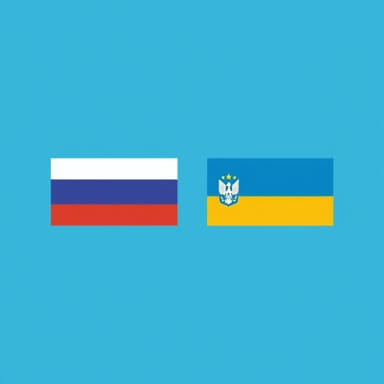
Russian and Ukrainian are two closely related languages that share a common Slavic heritage. Both belong to the East Slavic branch of the Indo-European language family, which means they developed from a shared ancestral language known as Old East Slavic. Because of their shared roots, they have many similarities in vocabulary, grammar, and pronunciation. This has led to the question of whether Russian and Ukrainian are mutually intelligible. The answer is not entirely straightforward, as it depends on factors like exposure, context, and the degree of similarity in specific aspects of the languages.
Historical Connection
The history of Russian and Ukrainian languages begins in the medieval state of Kievan Rus’ around the 9th to 13th centuries. Old East Slavic was the common language of this state, and over time, regional dialects began to diverge. Political, cultural, and geographical influences caused these dialects to evolve into separate languages. Ukrainian developed under strong influence from Polish and other Central European languages due to historical connections with the Polish-Lithuanian Commonwealth. Russian, meanwhile, evolved under influences from Church Slavonic and later from Western European languages.
Impact of Shared Origins
Because they share Old East Slavic as a common ancestor, Russian and Ukrainian still have significant overlap in basic vocabulary, grammatical structures, and sentence patterns. This shared foundation explains why speakers of one language can often recognize words and grasp the general meaning of simple sentences in the other language, even without formal study.
Vocabulary Similarities and Differences
Vocabulary is one of the most noticeable areas where Russian and Ukrainian overlap. Many core words are either identical or very similar in form and meaning. For example
- Russianмама(mama) – Ukrainianмама(mama) – mother
- Russianвода(voda) – Ukrainianвода(voda) – water
- Russianрука(ruka) – Ukrainianрука(ruka) – hand
However, there are also many false friends and unique words. For example
- Russianвопрос(vopros) – question vs. Ukrainianпитання(pytannya) – question
- Russianмагазин(magazin) – store vs. Ukrainianкрамниця(kramnytsya) – store
Loanword Influence
Ukrainian vocabulary has absorbed more words from Polish, Hungarian, and other Central European languages. Russian, on the other hand, has borrowed more from French, German, and English. These differences can create obstacles to mutual intelligibility, especially in specialized or cultural vocabulary.
Grammar and Structure
The grammatical systems of Russian and Ukrainian are largely similar. Both use cases, verb conjugations, aspect distinctions, and gendered nouns. A Russian speaker can often follow the structure of a Ukrainian sentence, even if some of the words are unfamiliar. Still, there are grammatical differences
- Ukrainian preserves some older Slavic case endings that Russian has lost.
- Verb forms for the future tense are different between the two languages.
- Ukrainian often uses a different word order for emphasis compared to Russian.
Pronunciation Differences
Pronunciation is another important factor in mutual intelligibility. Ukrainian pronunciation tends to be softer, with vowel sounds that are closer to Italian or Polish. Russian, in contrast, has more vowel reduction, meaning unstressed vowels change in quality, which can make words sound different to a Ukrainian speaker. Stress patterns also vary between the two languages, which can affect recognition of familiar words.
Mutual Intelligibility in Practice
In real-life situations, mutual intelligibility between Russian and Ukrainian depends heavily on the background of the speakers. Many Ukrainians understand Russian well because of historical exposure, especially during the Soviet era when Russian was a dominant language in media, education, and government. Russian speakers from outside Ukraine, however, may find Ukrainian more challenging because they have had less exposure to it.
Factors That Influence Understanding
- ExposureSpeakers who have heard the other language regularly find it easier to understand.
- Regional DialectsSome Ukrainian dialects are closer to Russian, making them easier for Russians to understand.
- Formality of LanguageInformal conversation with shared vocabulary is easier to follow than formal or technical speech.
- Code-switchingIn some regions, speakers mix elements of Russian and Ukrainian, which can make understanding easier for both sides.
Examples of Partial Understanding
A Russian speaker might hear a Ukrainian news broadcast and grasp the main idea but miss specific details. Similarly, a Ukrainian speaker unfamiliar with Russian might understand a Russian conversation about everyday topics but struggle with specialized vocabulary. This shows that while mutual intelligibility exists to a degree, it is not complete.
Everyday Communication
In areas where both languages are spoken, such as parts of Eastern Ukraine, communication between Russian and Ukrainian speakers often flows without major difficulty. People adapt by simplifying their language, choosing words that are common in both languages, or switching between them depending on the listener.
Political and Social Context
The question of mutual intelligibility is not purely linguistic. Political history, cultural identity, and national pride all play roles in how Russian and Ukrainian speakers view each other’s languages. For many Ukrainians, Ukrainian is a symbol of national identity, and speaking it is a statement of cultural pride. For Russians, Russian is seen as a unifying language across a broad region. This cultural and political context can influence willingness to use or understand the other language.
Changing Language Patterns
In recent years, the use of Ukrainian has increased significantly in Ukraine, especially in media, education, and public life. This shift means that younger generations may have less passive knowledge of Russian than older generations, potentially reducing mutual intelligibility over time.
Mutual Intelligibility Compared to Other Slavic Languages
The level of mutual intelligibility between Russian and Ukrainian is higher than between Russian and Polish, but generally lower than between Ukrainian and Belarusian. This is because Belarusian shares more vocabulary and phonetic features with Ukrainian than Russian does.
Why It Matters
Understanding the similarities and differences between Russian and Ukrainian is important for cross-cultural communication, translation work, language learning, and international relations. It also helps to clarify misconceptions about how similar the two languages really are in practice.
Learning One Language from the Other
A speaker of Russian or Ukrainian will have an advantage when learning the other language due to shared grammar and vocabulary. The learning process is faster than starting from a completely unrelated language, but learners must still study pronunciation differences, false friends, and unique expressions.
Tips for Easier Understanding
- Focus on high-frequency words that are identical or similar in both languages.
- Learn to recognize common sound correspondences between Russian and Ukrainian.
- Listen to media in the other language to get used to pronunciation patterns.
- Practice reading simple texts in the other language to build familiarity.
Russian and Ukrainian share deep historical, cultural, and linguistic ties, which make them partially mutually intelligible. However, mutual intelligibility is not automatic and depends on familiarity, exposure, and context. While many Ukrainians can understand Russian quite well, the reverse is not always true. Despite their similarities, they are distinct languages with unique vocabularies, pronunciations, and cultural meanings. Recognizing these differences alongside the similarities is essential for respectful and effective communication between speakers of the two languages.