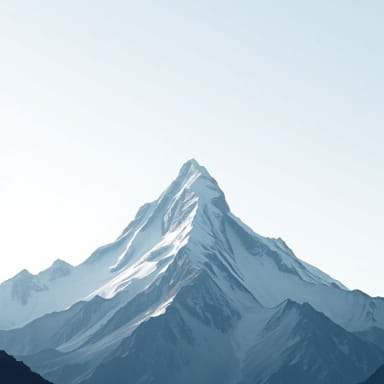
The steep peaks in India must be unnerving not only for climbers but also for those who stand below and gaze up at their towering faces. These high-altitude giants dominate the landscape with jagged cliffs, narrow ridges, and unpredictable weather. The sheer incline of many Himalayan peaks, especially in northern India, evokes both awe and fear. They are beautiful yet treacherous, calling out to adventurers while warning them of the dangers that lie ahead. From spiritual pilgrims to seasoned mountaineers, everyone feels the weight of nature’s raw power when standing before these steep Indian mountains.
The Himalayan Terrain Where India Meets the Sky
A Land Defined by Vertical Majesty
India is home to a significant stretch of the Himalayas, the tallest mountain range in the world. These mountains span several northern states including Jammu and Kashmir, Himachal Pradesh, Uttarakhand, Sikkim, and Arunachal Pradesh. Many of the peaks in these regions are not only high in elevation but incredibly steep, with rocky faces that rise abruptly from the surrounding valleys.
Unlike rolling hills or gentle slopes, these steep peaks offer very little room for error. Their sharp gradients make climbing a highly technical and often risky endeavor. The sense of verticality can be overwhelming, particularly in areas like the Garhwal Himalayas or the Kinnaur range, where cliffs drop thousands of feet without warning.
Why Steep Peaks Are Intimidating
Steep peaks are unnerving for several reasons
- Sheer ExposureClimbers are often left without cover, vulnerable to winds, snow, and sudden drops.
- Altitude SicknessRapid elevation gains in steep terrain increase the chances of acute mountain sickness.
- Unpredictable WeatherStorms can roll in quickly, making descent even more perilous.
- Technical DifficultyMany steep Indian peaks require climbing on ice, snow, or rock with minimal holds.
These elements combine to make steep mountains in India a challenge even for experienced climbers. It’s not just about physical endurance, but also mental resilience and preparedness.
Notable Steep Peaks in India
Nanda Devi
Standing at 7,816 meters, Nanda Devi is the second-highest mountain in India. Its steep flanks and remote location within a biosphere reserve add to its mysterious aura. The climb is known for its difficulty due to vertical rock faces and avalanche-prone sections.
Kangchenjunga
Though the main summit lies in Nepal, Kangchenjunga’s ridges stretch into Sikkim, India. It rises to 8,586 meters and features steep ascents, unstable snowfields, and razor-sharp ridgelines. The mountain is revered and feared, with many expeditions stopping short of the summit out of respect and caution.
Shivling Peak
Located near Gaumukh in Uttarakhand, Shivling is a dramatic and iconic peak. At around 6,543 meters, it is not the highest, but its near-vertical rise makes it one of the most photographed and respected climbs in India. The summit appears like a spear piercing the sky.
Changabang
Famous among technical climbers, Changabang is a rugged mountain known for steep granite faces. Situated in the Garhwal Himalayas, it has earned a reputation for being one of the most technically demanding climbs in India. The steepness of its northern face is especially intimidating.
The Psychological Impact of Steep Peaks
Facing the Abyss
Looking down from a steep cliff can trigger a visceral reaction. Climbers often report feelings of dizziness or fear even if they are experienced. This reaction is natural, as the human body is not accustomed to extreme vertical drops.
Even for non-climbers, witnessing these peaks from below can be overwhelming. The towering height and sudden rise of the terrain create a sense of insignificance and awe. It’s a reminder of how small humans are in the face of nature’s architecture.
The Test of Willpower
Climbing steep peaks in India is as much a mental challenge as a physical one. Each decision must be made carefully. Doubt can be dangerous, and overconfidence can be fatal. Success often comes down to patience, proper acclimatization, and sound judgment.
Spiritual Significance and Cultural Context
Mountains as Sacred Guardians
In Indian culture, mountains are often seen as sacred. Peaks like Nanda Devi and Kailash (the latter located in Tibet but significant to Indian spirituality) are worshipped as divine abodes. Steep mountains are believed to be places where humans and gods meet, inaccessible to the unworthy or unprepared.
This belief adds another layer to their intimidating presence. For many, the steepness is not just a physical barrier but a symbolic threshold. Only those who show respect, humility, and devotion are granted safe passage.
Myths and Legends
Several Indian peaks are surrounded by myths. Tales of sages meditating on narrow ledges or gods appearing in blizzards fuel the mystical reputation of these mountains. Their steepness becomes a metaphor for spiritual ascent difficult, isolating, and transformative.
Climbing Season and Challenges
Best Time to Explore
The climbing season for India’s steep peaks usually runs from late May to early October. However, each peak has its own weather patterns. For example, monsoon rains make some routes inaccessible, while others may be best approached in the post-monsoon window when skies are clearer.
Common Dangers
- AvalanchesParticularly on snow-covered steep slopes.
- RockfallsSteep cliffs are prone to loose stones and debris.
- Altitude IllnessSymptoms like headaches, nausea, and dizziness can impair judgment.
- CrevassesHidden cracks in glaciers pose serious threats, especially on approach routes.
Steep peaks in India are not just geological formations they are towering monuments to the raw power of nature. Their unforgiving gradients, unpredictable climates, and sacred histories make them both thrilling and unnerving. Whether you are an adventurer seeking a challenge, a pilgrim searching for spiritual meaning, or a traveler marveling from afar, these peaks will leave a lasting impression. Understanding their steepness is key to appreciating both their danger and their beauty. In the vastness of the Indian Himalayas, steep peaks stand like eternal guardians, testing the courage of all who dare to climb and inspiring awe in those who simply stand and watch.