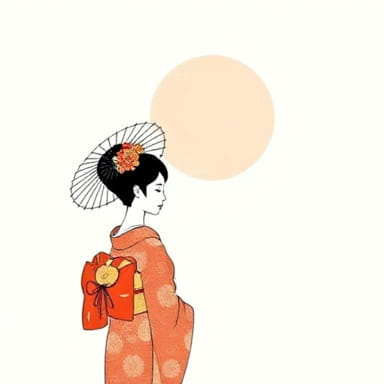
Behind the painted face and elaborate kimono lies a world that few truly understand.The Memoir of a Geishatakes readers on a journey through a hidden culture steeped in tradition, elegance, and silent hardship. Set in early 20th-century Japan, the story follows a young girl’s transformation into one of Kyoto’s most celebrated geisha. With a captivating narrative, emotional depth, and cultural richness, this memoir-style novel reveals more than just beauty and performance it unveils the price of refinement and the weight of destiny. Through the lens of one woman’s life, the tale immerses us in a society shaped by decorum, secrecy, and survival.
The Journey from Childhood to Geisha
The heart ofMemoir of a Geishalies in the character of Chiyo Sakamoto, a poor fisherman’s daughter born in the small village of Yoroido. Her life changes drastically when she is sold to a Kyoto okiya (a geisha boarding house) at a young age. Separated from her family, Chiyo enters a rigid world of discipline and competition. From scrubbing floors to fetching tea for senior geisha, her early days are filled with humiliation and confusion.
But Chiyo is not an ordinary girl. With striking grey-blue eyes and a quiet determination, she draws the attention of key figures in the geisha community. Under the guidance of a renowned geisha named Mameha, Chiyo transforms into Sayuri, a name that marks her new identity as a geisha-in-training. Her journey is marked by intense lessons in music, dance, etiquette, and the subtle art of conversation, all essential for surviving in Gion’s elite circles.
Becoming Sayuri
The metamorphosis into Sayuri is more than physical. It is a complete reshaping of mind and spirit. Sayuri must abandon her past, suppress her personal desires, and embrace the calculated charm expected of a geisha. Her every movement, word, and expression must be rehearsed to perfection. She learns to captivate through the art of illusion never revealing too much, never losing control.
But behind her grace lies a deep loneliness. Sayuri’s life is ruled by others the head of the okiya, her mentors, her patrons. Even her relationships are strategic. Friendship with rival geisha Hatsumomo becomes a dangerous game, while her affection for a man known only as the Chairman becomes a silent obsession, shaping her inner world.
The World of Gion
Gion, the famous geisha district in Kyoto, is depicted with vivid imagery and authenticity. This is not a world of romance or fantasy, but one governed by strict social codes and economic realities. Every kimono worn, every dance performed, and every tea poured has meaning. Wealthy businessmen and politicians attend teahouses not just for entertainment, but to form alliances and establish status. Geisha, though glamorous, are ultimately working women highly trained performers dependent on their patrons’ favor.
The novel does not romanticize the life of a geisha. It explores the hidden struggles behind the silk and powder. The competition is fierce, the rules unforgiving. A single misstep can ruin a reputation. The pressure to maintain youth and charm is relentless. For many geisha, their success hinges on securing a danna, a wealthy patron who will support them financially in exchange for companionship.
Cultural Richness and Symbolism
One of the novel’s strengths is its attention to cultural detail. From the seasonal dances to the ritual of applying white makeup, every tradition is depicted with care. The novel invites readers to appreciate the symbolism embedded in everyday geisha life. The folding of a fan, the pouring of sake, the movement of a hand all become forms of communication, carrying messages that words cannot.
Nature plays a symbolic role throughout the narrative. Water, in particular, reflects Sayuri’s personality graceful, adaptive, and quietly powerful. Her inner resilience, like a stream cutting through stone, becomes a central theme in her survival and success.
Love and Longing
At the core of Sayuri’s story is a love that seems unattainable. Her admiration for the Chairman begins with a simple act of kindness and blossoms into a lifelong hope. But love, for a geisha, is rarely straightforward. Emotional attachment is discouraged, and marriage is often out of reach. Sayuri’s silent longing contrasts with the transactional nature of her world, adding emotional depth and vulnerability to her character.
This theme of forbidden love adds a poignant layer to the novel. Sayuri’s every decision, from her alliances to her performances, is influenced by her desire to one day be with the Chairman. Yet, her role as a geisha demands she serve other men, entertain their advances, and suppress her heart. This tension between duty and desire forms a central conflict in her life.
Historical Backdrop
Set against the backdrop of World War II, the novel captures a changing Japan. The war disrupts Gion’s way of life, scattering geisha, destroying teahouses, and ending many traditions. Sayuri herself is forced into labor during the war, her refined world reduced to survival in a rural factory. Yet even here, her spirit remains unbroken.
Post-war Japan brings new challenges. Western influence grows, and the demand for traditional geisha declines. Sayuri, like many others, must adapt to a world that no longer values the old ways. The novel subtly explores this cultural transition, showing how tradition and modernity collide in a society struggling to redefine itself.
The Memoir’s Narrative Power
The strength ofMemoir of a Geishalies in its first-person narrative style. Written as a fictional autobiography, it immerses readers in Sayuri’s voice calm, observant, and emotionally layered. Her reflections on life, fate, and identity resonate with universal themes, even as her world remains uniquely Japanese.
Sayuri’s tone is never bitter, even when recounting moments of cruelty or betrayal. Instead, she speaks with quiet wisdom, offering insight into the resilience of the human spirit. The memoir reads like a confession and a meditation, drawing readers not just into her life, but into her soul.
Legacy and Reception
Since its publication, the novel has sparked wide interest in geisha culture and Japanese history. It has been praised for its storytelling, emotional depth, and attention to detail. However, it has also faced criticism from some Japanese readers who argue that the portrayal of geisha is more fictional than factual.
Despite these debates, the novel remains a powerful narrative that introduces readers around the world to a complex and often misunderstood tradition. It opens a window into a world where art, sacrifice, and identity intertwine in silent grace.
Memoir of a Geishais more than a story of one woman’s transformation it is a poetic exploration of culture, identity, and endurance. Through Sayuri’s journey, readers witness the quiet strength hidden behind a painted smile and the cost of living a life dictated by beauty and tradition. It is a tale that lingers in the memory, much like the echo of a shamisen in the night a haunting reminder of a world both enchanting and unforgiving.