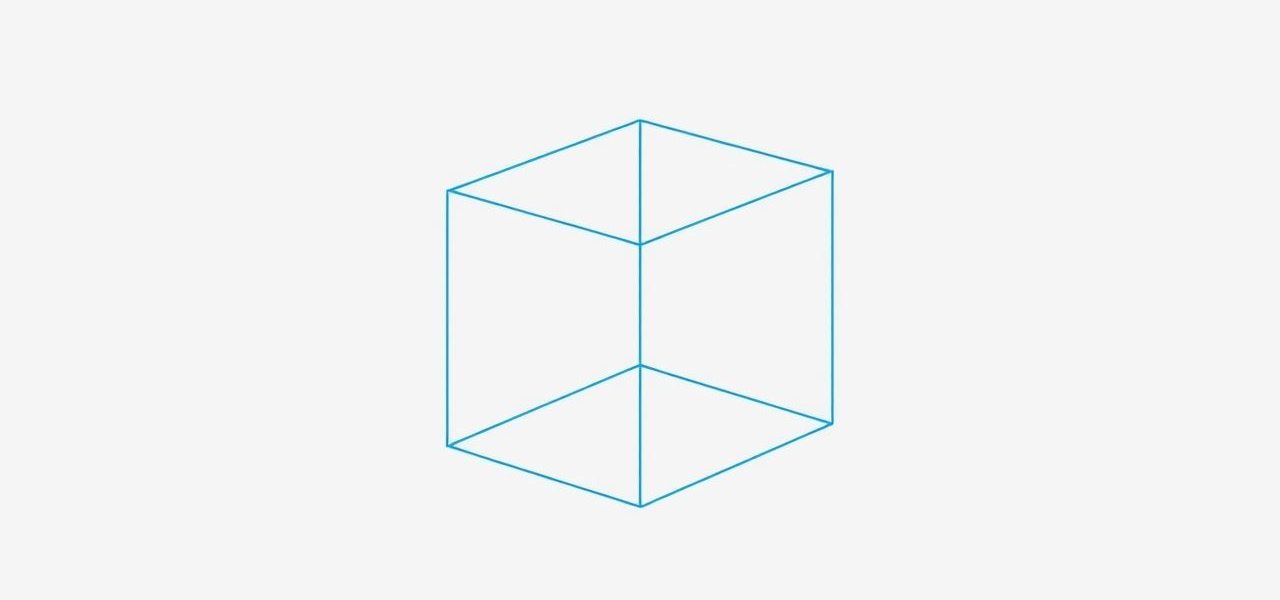
When calculating the total surface area of a lidless cube, you are essentially working out the total area of all its outer faces except for one. A lidless cube is simply a cube-shaped object without a top face. Understanding how to calculate its surface area is useful in various practical situations, such as designing open-top containers, packaging, or storage boxes. By breaking down the geometry step-by-step, we can see how easy it is to find the formula and apply it in real-life applications.
Understanding the Structure of a Lidless Cube
A cube is a three-dimensional shape with six identical square faces. In the case of a lidless cube, one of these six faces is missing typically the top. This means the cube only has five visible faces that contribute to the total surface area.
Key Characteristics of a Cube
- All faces are perfect squares.
- All edges are the same length.
- All internal angles are right angles (90 degrees).
- Opposite faces are parallel and identical in shape.
When one face is removed, as in a lidless cube, the calculation for the surface area changes slightly compared to a complete cube.
Surface Area of a Complete Cube
To understand the lidless version, let’s first look at the complete cube. For a cube with side lengtha, the surface area is calculated as
Total Surface Area = 6 à (a à a) = 6a²
This comes from the fact that there are six identical square faces, each with an area ofa².
Surface Area of a Lidless Cube
Since a lidless cube is missing one face, the total surface area is simply the total surface area of a cube minus the area of that missing face.
Formula for Lidless Cube Surface Area
Total Surface Area (lidless) = 6a² – a²
Simplifying
Total Surface Area (lidless) = 5a²
Example Calculation
If a lidless cube has a side length of 4 cm, then
Area of one face = 4 à 4 = 16 cm²
Total Surface Area = 5 à 16 = 80 cm²
So, the total surface area is 80 square centimeters.
Why Knowing the Total Surface Area is Important
Calculating the surface area of a lidless cube is not just a mathematical exercise it has practical value in many fields. For example
- Packaging designEnsuring you have enough material to construct an open-top box.
- ManufacturingDetermining the amount of paint or coating needed to cover the surfaces.
- ConstructionEstimating material requirements for building cube-shaped containers.
- Art and craftsCreating models or decorative boxes with precise measurements.
Common Mistakes in Calculating the Surface Area
Forgetting to Remove One Face
One of the most common errors is calculating the surface area as if the cube still has all six faces. Always remember that a lidless cube has only five faces contributing to the total surface area.
Mixing Units
Always make sure the side length and the final surface area use consistent units. If the side length is given in meters, the surface area will be in square meters, not centimeters.
Incorrect Side Measurement
If the cube is part of a practical object, ensure you measure the internal or external side length according to the requirement. For example, a container might have walls of a certain thickness, which can affect the outer surface area.
Step-by-Step Method to Find the Total Surface Area of a Lidless Cube
- Measure the side length of the cube (denote it asa).
- Calculate the area of one square facea à a.
- Multiply this by 5, since a lidless cube has five faces.
- Ensure your final answer includes the correct units (e.g., cm², m²).
Worked Example
Imagine you have an open-top cube-shaped box with a side length of 0.5 m.
- Area of one face 0.5 à 0.5 = 0.25 m²
- Total Surface Area 5 à 0.25 = 1.25 m²
The total surface area is 1.25 square meters.
Relating to Real-Life Applications
Consider a situation where you need to paint an open-top cube-shaped container. By calculating the surface area, you can estimate exactly how much paint you will need. If one liter of paint covers 10 m², and your lidless cube has a total surface area of 1.25 m², then you will need only 0.125 liters of paint.
In Packaging
In the packaging industry, determining the surface area helps in calculating the amount of cardboard or other materials required. This ensures cost efficiency and minimizes waste.
In Architecture and Design
Architects might use these calculations when designing decorative elements, storage spaces, or specialized containers that have no top cover.
Extending the Concept Beyond Cubes
While this discussion focuses on lidless cubes, the same logic can be applied to other shapes. For example, a lidless rectangular prism would have a surface area equal to the total area of all its faces minus the area of the missing top face. The concept remains the same subtract the area of the absent face from the complete object’s surface area.
The total surface area of a lidless cube is a straightforward calculation once you understand the geometry of the shape. The key is to remember that you are working with only five square faces, each having the same area. Using the formula5a², you can quickly and accurately determine the amount of material, paint, or coating required for your project. This concept is valuable across multiple fields, from education and design to construction and manufacturing. By mastering this simple formula, you gain a practical tool that can save time, reduce waste, and improve accuracy in real-world applications.