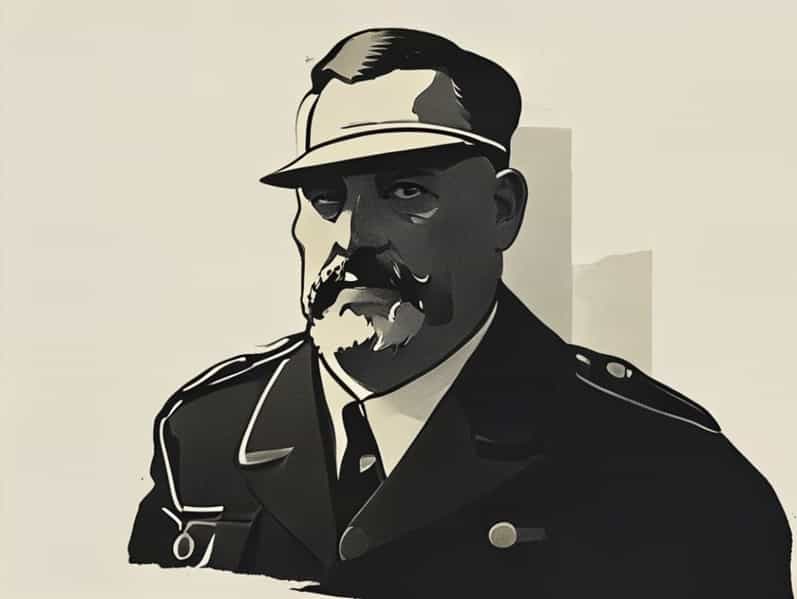
Heinrich Himmler, one of the most notorious figures of the Nazi regime, is widely known for his role as the head of the SS and a principal architect of the Holocaust. As a key political and military leader in Nazi Germany, his communication skills and language proficiency have been the subject of historical inquiry, particularly whether he spoke English. Understanding Himmler’s linguistic abilities sheds light not only on his personal background but also on his interactions with foreign officials, the operational scope of the Nazi regime, and his capacity to engage with intelligence and diplomatic matters outside Germany.
Early Life and Education
Heinrich Himmler was born on October 7, 1900, in Munich, Germany. He came from a middle-class Bavarian family with a strong emphasis on discipline, education, and traditional values. His father, a schoolmaster, placed significant importance on learning, which influenced Himmler’s formative years. Himmler attended local schools in Munich, where his curriculum focused primarily on German language, history, and mathematics, rather than foreign languages. His early exposure to education laid the foundation for his organizational skills but offered limited opportunity to master languages like English or French.
Higher Education and Career Path
Himmler studied agronomy at the Technical University of Munich, preparing for a career in agriculture rather than politics or diplomacy. During this period, he developed a keen interest in Germanic culture, mysticism, and nationalist ideology. While universities often offered courses in foreign languages, there is limited evidence suggesting that Himmler pursued English in depth. His professional trajectory shifted dramatically with his involvement in the Nazi Party and later as the head of the SS, where his focus turned to administrative efficiency, military organization, and ideological indoctrination rather than international linguistic competence.
Himmler’s Language Abilities
Historical records indicate that Himmler’s language skills were modest. He was proficient in German, naturally, and had some understanding of Latin and Greek, which he encountered during his education and personal studies in classical texts. Himmler’s interest in ancient mythology and the occult led him to explore linguistic and cultural studies, but there is scant evidence to suggest he achieved fluency in English. Unlike other Nazi officials such as Joachim von Ribbentrop, who served as foreign minister and had strong English language skills for diplomatic engagement, Himmler operated primarily within the German-speaking sphere.
Interactions with English Speakers
Despite his limited English, Himmler occasionally encountered English-speaking individuals, especially during intelligence operations, negotiations, or when dealing with prisoners of war and occupied territories. In these instances, he likely relied on translators and intermediaries rather than direct communication in English. Historical accounts from Allied intelligence suggest that Himmler’s reliance on interpreters was standard practice, reinforcing the conclusion that his English proficiency was minimal. His focus remained on organizational control, implementation of the SS’s policies, and coordination of the concentration camp system.
Evidence from Historical Documents
Primary sources, including personal correspondence, diaries, and transcripts of speeches, provide further insight into Himmler’s linguistic capabilities. Most of these documents are in German, and there are no verified records of extensive writing or correspondence in English. Intelligence reports from the Allies also confirm that Himmler did not conduct negotiations or correspondence independently in English. Even during high-level meetings with foreign officials, interpreters were present to ensure accurate communication. This lack of direct English usage indicates that while he may have understood basic phrases, fluency was not among his skills.
Comparison with Other Nazi Leaders
Comparing Himmler to other high-ranking Nazi officials highlights his limited engagement with foreign languages. Adolf Hitler, for instance, also had minimal foreign language ability, though he occasionally read in French. Ribbentrop, as mentioned earlier, mastered English and French to serve diplomatic functions. Himmler, in contrast, focused almost exclusively on the internal structure and operations of the SS. His responsibilities rarely required personal communication with English-speaking diplomats, which partially explains why he did not prioritize learning English.
Impact on Nazi Operations
Himmler’s limited English did not hinder the operational effectiveness of the SS, because the organization relied heavily on German-speaking officers and standardized communication protocols. The SS and Gestapo maintained strict hierarchies and used official documents, orders, and instructions predominantly in German. When interacting with foreign intelligence or negotiating prisoner exchanges, interpreters bridged the language gap. Thus, while his lack of English may have constrained direct diplomatic engagement, it did not affect the implementation of SS policies or Himmler’s control over the organization.
Post-War Assessment
After the fall of Nazi Germany, Allied interrogations and investigations into Nazi leadership confirmed that Himmler did not possess significant English skills. Records from British and American intelligence highlight that he required translation for all official communication with English speakers. This information has been corroborated by historians examining wartime documents and personal testimonies from those who encountered Himmler. These findings solidify the understanding that while he was a highly capable administrator and strategist, English was not among his proficiencies.
In summary, Heinrich Himmler, despite his prominence within the Nazi regime and his extensive administrative and organizational abilities, did not speak English fluently. His education, career focus, and operational responsibilities centered on German-speaking environments, and his interactions with English speakers were mediated through interpreters. Historical evidence from documents, intelligence reports, and personal accounts consistently supports the conclusion that Himmler’s engagement with the English language was minimal. Understanding this aspect of his biography provides insight into the internal focus of Nazi leadership, the operational structure of the SS, and the ways in which communication and diplomacy were managed during the Third Reich.