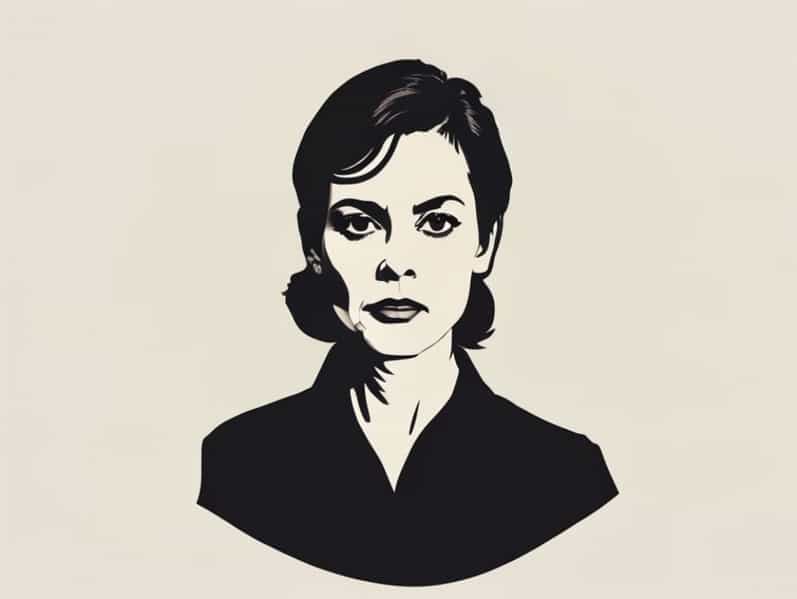
In the landscape of Hollywood cinema, few collaborations have been as memorable and intense as that between Faye Dunaway and Roman Polanski during the making of the 1974 film Chinatown. Both were at the height of their creative powers, and their partnership produced one of the greatest neo-noir films ever made. Yet, behind the scenes, their working relationship was famously turbulent, marked by artistic clashes, personality conflicts, and moments that have become part of Hollywood legend. The story of Faye Dunaway and Roman Polanski is not just about two artists it’s about the collision of passion, perfectionism, and the pursuit of cinematic greatness.
The Setting Hollywood in the 1970s
The 1970s marked a golden era in American filmmaking, often referred to as the New Hollywood period. Directors were given unprecedented creative freedom, and stars like Faye Dunaway were redefining what it meant to be a leading actor. Roman Polanski, already acclaimed for films such as Rosemary’s Baby and Repulsion, was brought on to direct Chinatown, a noir-inspired detective story set in 1930s Los Angeles. The film’s intricate script, written by Robert Towne, offered a complex narrative about corruption, power, and human frailty.
Faye Dunaway was cast as Evelyn Mulwray, a mysterious socialite whose life becomes entangled with private detective Jake Gittes, played by Jack Nicholson. Polanski, known for his precision and uncompromising direction, demanded absolute control over every element of production. From the very beginning, this dynamic set the stage for creative friction between the strong-willed Dunaway and the perfectionist Polanski.
Creative Tension on the Set
Both Faye Dunaway and Roman Polanski were perfectionists, but their approaches were radically different. Dunaway, coming off her success in Bonnie and Clyde, was an actor deeply committed to method preparation. She wanted to understand every psychological layer of her character, often asking detailed questions about Evelyn’s motivations and emotions. Polanski, however, believed that overanalyzing a role could destroy spontaneity. He preferred actors to follow his instructions without delving too deeply into subtext.
This difference in working style led to numerous conflicts on set. Polanski’s direct and sometimes abrasive manner clashed with Dunaway’s emotional intensity. According to crew members, the two often argued about line delivery, character backstory, and even minor details like camera angles or gestures. Yet, paradoxically, this creative tension contributed to the authenticity of Dunaway’s performance. Her portrayal of Evelyn Mulwray is restrained yet emotionally explosive a reflection of the struggle between control and vulnerability that defined her relationship with Polanski during filming.
The Infamous Hair Incident
One of the most well-known stories from the Chinatown set involves Polanski cutting a strand of Dunaway’s hair without her consent. Frustrated by what he saw as an uncooperative attitude, Polanski reportedly took scissors and trimmed her hair himself to get the look he wanted for the scene. The incident highlighted the director’s obsession with detail but also deepened the animosity between them. For Dunaway, this was a violation of personal and professional boundaries; for Polanski, it was simply part of his pursuit of perfection.
Despite the controversy, both later acknowledged that their clashes stemmed from their shared commitment to excellence. The confrontation, while emblematic of their difficult working relationship, also showed the extremes that both were willing to reach for the sake of art.
Faye Dunaway’s Performance A Study in Complexity
Faye Dunaway’s performance as Evelyn Mulwray is often cited as one of her finest. She brought a haunting fragility and poise to the character, turning what could have been a typical femme fatale role into something deeply human. Evelyn’s tragic backstory marked by trauma and secrecy required an actor capable of conveying pain beneath layers of composure, and Dunaway delivered exactly that. Her soft-spoken demeanor, combined with moments of emotional eruption, made her portrayal unforgettable.
Roman Polanski’s rigorous direction helped shape that performance, even if his methods were controversial. He insisted on multiple takes until every detail aligned with his vision. For instance, in scenes where Dunaway’s expression had to shift from control to breakdown within seconds, Polanski would push for subtlety, guiding her through each emotional transition. The result was a character who felt both enigmatic and heartbreakingly real.
The Iconic Scene of Revelation
One of the most powerful moments in Chinatown is the scene where Evelyn reveals the truth about her daughter. Her repeated line, She’s my sister and my daughter, has become one of the most quoted in film history. The emotional intensity of that moment is the culmination of Dunaway’s nuanced performance and Polanski’s masterful direction. It captures everything that made their collaboration both difficult and extraordinary the tension, the vulnerability, and the unrelenting pursuit of truth through art.
Roman Polanski’s Direction and Vision
Polanski approached Chinatown with a clear vision of what he wanted to achieve. His direction emphasized atmosphere, subtle performances, and moral ambiguity. The film’s muted color palette and deliberate pacing reflected the moral decay at its center. For Polanski, every visual detail mattered from the positioning of shadows to the rhythm of dialogue. He believed in total control, often saying that a director’s role was to shape reality into something more meaningful.
Working with strong personalities like Dunaway and Nicholson tested that philosophy. While Nicholson adapted easily to Polanski’s style, Dunaway’s resistance made the process more volatile. However, their creative clashes ultimately contributed to the film’s layered complexity. Polanski himself later admitted that Dunaway’s performance elevated the material in ways he hadn’t anticipated.
Critical Reception and Legacy
When Chinatown was released in 1974, it was hailed as a masterpiece. Critics praised its screenplay, performances, and direction, calling it one of the greatest films ever made. Faye Dunaway received an Academy Award nomination for Best Actress, while Polanski was nominated for Best Director. The film won the Oscar for Best Original Screenplay and went on to become a benchmark for modern noir storytelling.
The legacy of Chinatown endures not only because of its artistry but also because of the creative friction behind it. The partnership between Faye Dunaway and Roman Polanski has since been analyzed as a case study in how conflict can sometimes fuel creativity. Their relationship may have been fraught with difficulty, but it produced a film that continues to inspire generations of filmmakers and actors.
The Human Cost of Perfection
While the collaboration resulted in cinematic brilliance, it also raises questions about the ethics of artistic pursuit. Polanski’s intense methods, including his treatment of actors, have been the subject of ongoing debate. For Dunaway, the experience was both rewarding and traumatic. She has spoken in interviews about the difficulty of working with Polanski, describing him as brilliant but tyrannical. Yet, she has also acknowledged that Chinatown remains one of her proudest achievements.
This duality the blend of admiration and resentment reflects the larger truth about creative partnerships. Art often emerges from tension, and the process can be as destructive as it is transformative. The Dunaway-Polanski collaboration is a reminder that great cinema sometimes comes at a personal cost.
After Chinatown
Following Chinatown, both Faye Dunaway and Roman Polanski continued to have remarkable careers. Dunaway went on to star in Network (1976), for which she won the Academy Award for Best Actress. Polanski directed The Tenant (1976) and later The Pianist (2002), which earned him critical acclaim and an Oscar for Best Director. Despite their individual successes, the shadow of their turbulent collaboration continued to follow them. For many film historians, their time together on Chinatown represents both the brilliance and the brutality of 1970s Hollywood filmmaking.
Influence on Future Generations
The creative energy between Faye Dunaway and Roman Polanski left a lasting mark on cinema. Their work influenced countless directors and actors who sought to balance artistic integrity with emotional authenticity. The dynamic between them has often been compared to other famous director-actor partnerships marked by friction proof that conflict, when channeled through artistry, can yield timeless results.
The story of Faye Dunaway and Roman Polanski during the making of Chinatown is a testament to the power and peril of artistic collaboration. Their relationship was defined by tension, but it also produced one of the most iconic films in history. Through their creative battles, they revealed how passion and conflict can coexist in the pursuit of cinematic truth. While time has recontextualized both of their legacies, Chinatown remains a masterpiece an enduring symbol of what happens when two uncompromising artists collide in the name of storytelling.