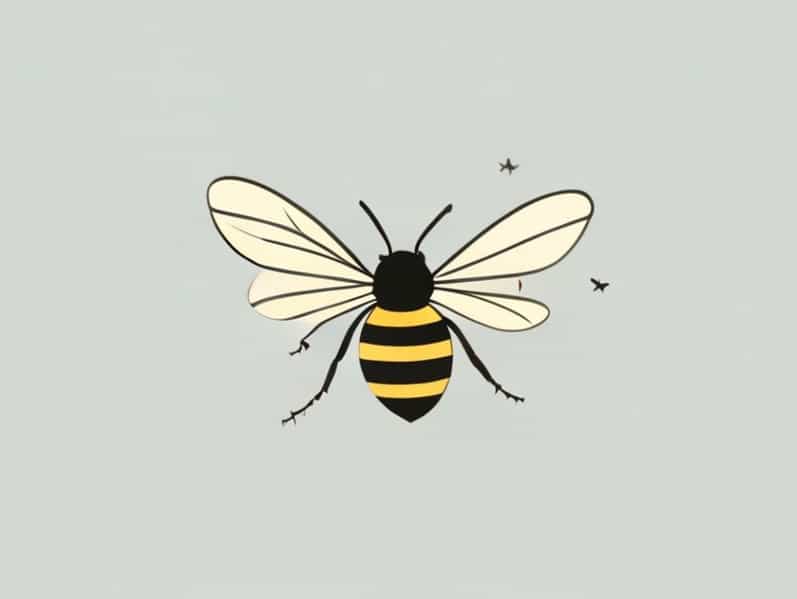
Flies that imitate bees represent one of nature’s most fascinating examples of mimicry, where one species evolves to resemble another for survival advantages. Unlike their stinging counterparts, these flies are harmless yet have evolved striking physical and behavioral traits that closely resemble bees. Their bright yellow and black coloration, fuzzy bodies, and even flight patterns are designed to fool predators into thinking they are more dangerous than they truly are. This phenomenon, known as Batesian mimicry, allows these flies to coexist in environments where predators are more cautious of genuine bees. Observing these flies can be both intriguing and educational, offering insight into the complexity of evolutionary adaptation and survival strategies in the insect world.
Identification and Characteristics
Flies that imitate bees are often called hoverflies or flower flies, belonging primarily to the family Syrphidae. They are typically smaller than most bees, but their bright coloration, striped abdomens, and sometimes even hairy bodies make them easy to mistake for real bees. Unlike bees, these flies have only one pair of wings, whereas bees have two. Another identifying feature is their large, bulbous eyes, which are often more pronounced than those of bees. Hoverflies are agile fliers and can hover in place, dart rapidly between flowers, and even backtrack mid-flight, which further contributes to their deceptive resemblance to bees.
Behavioral Mimicry
Beyond physical appearance, many of these flies also mimic the behavior of bees. They visit flowers to feed on nectar and pollen, often following similar patterns to honeybees or bumblebees. Some species will even fold their legs in a way that mimics the stinger posture of bees when threatened. By replicating both appearance and behavior, these flies significantly reduce their chances of being preyed upon. Predators such as birds and small mammals often avoid them, mistaking them for the stinging insects they imitate.
Ecological Role
Flies that imitate bees play a crucial role in ecosystems, especially in pollination. While they do not produce honey, these flies visit flowers frequently, transferring pollen from one bloom to another and assisting in plant reproduction. Their contribution is particularly important in gardens, meadows, and agricultural settings. In fact, some species are more efficient pollinators than bees in certain conditions because they are more active in cooler or cloudier weather when bees may be less active. This makes hoverflies essential allies for biodiversity and crop production alike.
Different Species of Bee-Mimicking Flies
Several species of flies exhibit bee mimicry, each with unique traits
- Drone Fly (Eristalis tenax)Often mistaken for honeybees, these flies have fuzzy bodies and similar coloration. They are common in gardens and feed on nectar and pollen.
- Volucella zonariaA large hoverfly resembling bumblebees, it is often seen around flowers and sometimes in bumblebee nests, benefiting from their resemblance.
- Syrphus ribesiiSmaller than many bees, these flies have striped abdomens and are important pollinators in temperate regions.
Defense Mechanisms
The primary defense mechanism of these flies is their mimicry itself. By resembling stinging bees, they gain protection without the actual ability to sting. This reduces predation and allows them to forage openly in environments with predators that would otherwise target them. Additionally, some species are capable of rapid evasive maneuvers, making them harder to catch. Their flight patterns and body movements contribute to the illusion of being more formidable than they actually are.
Benefits of Mimicry
Mimicry provides several evolutionary advantages. By imitating bees, these flies can access flowers with less competition and avoid predation. It allows them to exploit similar ecological niches as bees without investing energy in producing a stinger or venom. This strategy has evolved independently in multiple fly species across the world, demonstrating its effectiveness as a survival tactic. Moreover, bee mimicry can sometimes confuse other insects, giving these flies a competitive advantage in feeding and reproduction.
Hoverflies vs. Bees
Although the resemblance between bee-mimicking flies and bees is remarkable, there are key differences. Flies have only one pair of wings, while bees have two. Their antennae are shorter and less segmented compared to those of bees. Hoverflies often have larger eyes and a more pronounced head shape. Behaviorally, while bees carry pollen on their hind legs or body hairs, hoverflies may have pollen on their bodies but do not form pollen baskets. Understanding these distinctions can help gardeners, entomologists, and nature enthusiasts identify these fascinating insects accurately.
Importance for Humans
Flies that imitate bees are beneficial to humans in several ways. As pollinators, they contribute to the growth of flowers, fruits, and vegetables, indirectly supporting food production. Their harmless nature makes them ideal for educational observation, helping children and adults learn about insects, pollination, and mimicry. Additionally, they serve as natural indicators of healthy ecosystems, as their presence often correlates with abundant flowering plants and minimal pesticide use.
Scientific Studies on Mimicry
Researchers have extensively studied bee mimicry in flies to understand evolutionary adaptation and predator-prey dynamics. Studies have shown that birds and other predators often hesitate to attack flies that resemble stinging bees, confirming the protective value of mimicry. Genetic research has also explored how coloration patterns and behaviors are inherited, providing insight into how natural selection shapes species over time. These findings illustrate the complex interplay between appearance, behavior, and survival in the natural world.
Conservation Considerations
Although bee-mimicking flies are generally abundant, habitat loss and pesticide use can impact their populations. Preserving meadows, gardens, and natural flowering areas helps maintain healthy populations. Encouraging the growth of native flowers and reducing chemical pesticide use benefits both flies and genuine pollinators like bees. Conservation efforts ensure that these fascinating insects continue to thrive and support biodiversity in local ecosystems.
Flies that imitate bees are a remarkable example of evolutionary ingenuity, combining visual and behavioral mimicry to survive and thrive in the wild. Their bright coloration, distinctive flight patterns, and harmless nature allow them to coexist alongside stinging bees, benefiting from predator avoidance and efficient foraging. Beyond their defensive strategies, these flies play a vital role in pollination, contributing to both natural ecosystems and human agriculture. Observing bee-mimicking flies offers a unique perspective on the intricate relationships between species, the power of mimicry, and the delicate balance of life in nature. Understanding and appreciating these insects highlights the extraordinary adaptations that enable survival in a world full of challenges and competition.