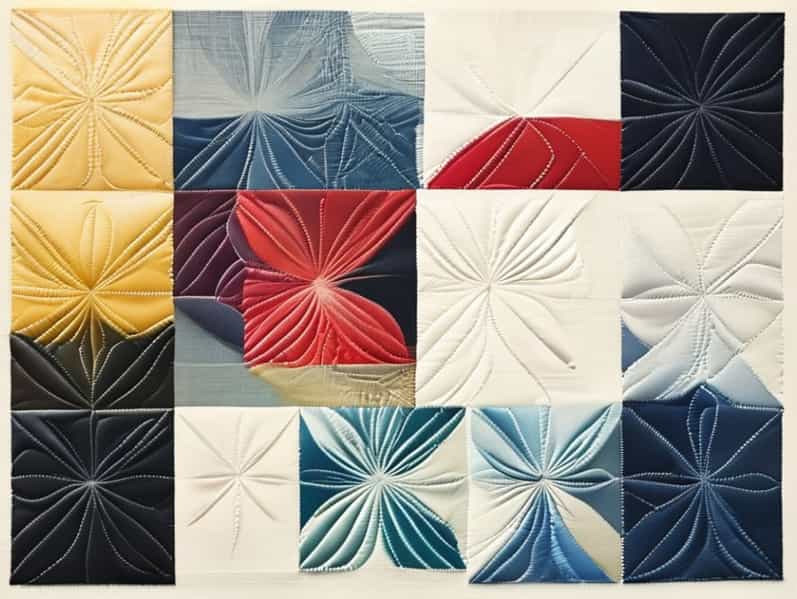
Free motion quilting patterns have become a popular choice among quilters looking to add creativity, texture, and personal style to their quilts. Unlike traditional straight-line quilting, free motion quilting allows quilters to move the fabric freely under the sewing machine, creating unique designs without being restricted to pre-marked lines or grids. These patterns can range from simple motifs to intricate, detailed designs, giving each quilt a custom and artistic touch. Exploring different free motion quilting patterns can enhance both beginner and advanced quilters’ skills, making every project a unique masterpiece.
What is Free Motion Quilting?
Free motion quilting is a technique where the quilter controls the movement of the fabric under the sewing needle, rather than the needle following a fixed path. This method allows for a high degree of creativity, as quilters can design swirls, loops, geometric shapes, and even intricate images directly onto the quilt. The technique requires a specialized sewing machine setup, usually including a free motion foot or darning foot, and sometimes the removal of the feed dogs to allow unrestricted fabric movement.
Benefits of Free Motion Quilting
Using free motion quilting patterns offers multiple benefits for both practical and artistic purposes
- CustomizationQuilters can design unique patterns that reflect their personal style or match a specific theme.
- Enhanced TextureFree motion quilting adds depth and texture to quilts, making them visually appealing and tactilely interesting.
- Skill DevelopmentPracticing free motion quilting improves hand-eye coordination, precision, and creative problem-solving skills.
- FlexibilityQuilters are not limited to straight lines or templates, allowing them to adjust patterns as needed.
Popular Free Motion Quilting Patterns
There is a wide variety of free motion quilting patterns that quilters can experiment with, ranging from basic to advanced designs. Choosing the right pattern depends on the quilt’s style, the quilter’s skill level, and the desired effect.
Simple Patterns
Simple free motion quilting patterns are ideal for beginners who are learning to control fabric movement and develop consistent stitching. Examples include
- MeanderingA random, curvy line pattern that covers the quilt without a specific motif.
- Loops and SwirlsContinuous curves and circular patterns that add a whimsical touch.
- CrosshatchA simple grid-like pattern with intersecting lines for a classic, textured effect.
Intermediate Patterns
Intermediate free motion quilting patterns allow quilters to explore more complex designs and introduce decorative elements. These patterns often require more precision and practice
- FeathersA traditional quilting motif resembling the shape of a feather, often used along borders or in focal areas.
- Stars and FlowersGeometric or floral patterns that can be repeated across the quilt for a cohesive look.
- ScrollsElegant, flowing curves that intertwine to create intricate textures.
Advanced Patterns
Advanced free motion quilting patterns are highly detailed and require significant skill and control. These patterns are often used for show quilts or professional quilting projects
- Pictorial DesignsQuilters can create images, landscapes, or scenes directly onto the quilt.
- Complex MandalasCircular, symmetrical patterns that involve precise stitching and repetition.
- Intricate Geometric DesignsHighly detailed shapes and patterns that require careful planning and execution.
Tips for Successful Free Motion Quilting
Free motion quilting can be challenging at first, but with practice and proper techniques, quilters can achieve professional-looking results. Key tips include
Equipment and Setup
- Use a high-quality sewing machine capable of free motion quilting.
- Attach a free motion or darning foot to allow smooth movement of the fabric.
- Lower or cover the feed dogs to prevent interference with fabric movement.
- Use the right needle and thread for the fabric and batting combination.
Techniques and Practice
- Practice on scrap fabric to develop consistent stitch length and control.
- Use marking tools, like washable pens, for complex designs until confident with freehand stitching.
- Maintain even speed with the sewing machine and smooth hand movements for balanced stitching.
- Experiment with different patterns, textures, and thread colors to enhance the quilt’s visual appeal.
Choosing Patterns for Your Quilt
When selecting free motion quilting patterns, consider the following factors
- Quilt DesignMatch the pattern with the theme, colors, and style of the quilt.
- Skill LevelStart with simple patterns and gradually progress to more complex designs.
- Quilt SizeLarge quilts may require repeating patterns for a cohesive look, while small quilts can accommodate detailed or intricate motifs.
- Texture and Visual ImpactDecide whether you want subtle texture or bold, eye-catching designs that stand out.
Resources for Inspiration
Quilters can find inspiration for free motion quilting patterns from various sources. Online tutorials, quilting books, and social media platforms offer a wealth of ideas and techniques. Attending quilting workshops or joining local quilting groups can also provide hands-on guidance and pattern ideas. Many quilters keep a sketchbook of designs, experimenting with variations before applying them to actual quilts.
Free motion quilting patterns open a world of creativity and artistic expression for quilters of all skill levels. From simple meandering lines to intricate pictorial designs, these patterns allow quilters to personalize their projects, add texture, and enhance the overall appearance of their quilts. With the right equipment, practice, and patience, free motion quilting can transform a simple quilt into a work of art. Exploring various patterns, experimenting with new techniques, and drawing inspiration from different sources can help quilters develop their skills and produce beautiful, one-of-a-kind quilts. By embracing the versatility of free motion quilting patterns, quilters can bring their unique vision to life on every stitch.