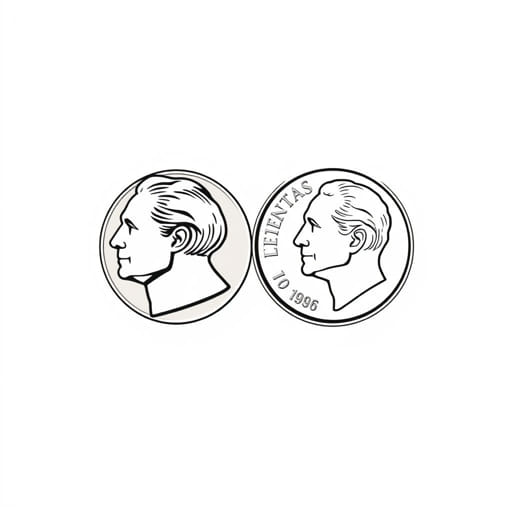
In everyday conversation, the phrase ‘a nickel and a dime’ might seem like a simple reference to small amounts of money five cents and ten cents, respectively. But this modest phrase carries deeper meanings, both literal and figurative, in American culture. Whether it’s used in casual speech, literature, or financial discussions, understanding what a nickel and a dime represent can reveal much about economic habits, societal values, and even linguistic expression. In a time when digital payments dominate, these small coins still hold symbolic weight in discussions about worth, economy, and value.
The Literal Meaning of a Nickel and a Dime
Understanding U.S. Coinage
A nickel and a dime are two of the most common coins in U.S. currency. A nickel is worth five cents, and a dime is worth ten cents. Despite their low individual value, these coins are essential in making change and are frequently used in pricing, particularly in retail settings.
Physical Characteristics
The nickel is larger in size than the dime, although it holds less value. The nickel features Thomas Jefferson on the obverse (front) and Monticello, his home, on the reverse. The dime is smaller and thinner, yet more valuable, and displays Franklin D. Roosevelt on the obverse, with a torch, olive branch, and oak branch on the reverse.
Historical Context of the Coins
The Introduction of the Nickel
The nickel was first introduced in 1866 and replaced earlier versions of five-cent coins like the half dime. Made mostly of copper and nickel, it was part of the U.S. Mint’s move toward more durable coinage during the post-Civil War era.
The Dime’s Origin
The dime has an even older history, dating back to 1796. It was part of the decimal system established by the Coinage Act of 1792. As the smallest in diameter among U.S. coins, the dime has always carried a unique distinction in American currency.
Symbolism and Idioms in Language
A Nickel and a Dime in Common Phrases
Over time, ‘a nickel and a dime’ has become embedded in American idioms. Phrases like ‘nickel-and-dime’ someone or something refer to being overly concerned with small or insignificant amounts, often to the point of being cheap or petty.
- Nickel-and-dime tactics: Refers to making minor charges or demands that add up over time, often used to describe frustrating business practices.
- Don’t nickel-and-dime me: A complaint about being charged or asked for every little thing.
Economic Commentary
The use of nickel and dime language in economic contexts often highlights minimal gains or losses, or a lack of significant investment. For example, a poorly funded project might be described as being run on nickels and dimes, suggesting financial insufficiency.
The Value of Small Change in Everyday Life
Practical Uses
Though digital transactions have grown, coins like nickels and dimes still play a role in vending machines, parking meters, and public transportation systems. For many, these coins are part of daily routines, especially for small purchases and tips.
Teaching Tools for Children
Nickels and dimes are frequently used in teaching young children about money, math, and value. Their simplicity and clear differentiation in worth make them effective tools for early financial education.
Inflation and the Decreasing Power of Small Coins
Impact of Inflation
Over the decades, inflation has significantly reduced the purchasing power of small coins. What once could buy a candy bar now barely counts toward sales tax. This has sparked discussions about whether such coins should still be produced.
Debates Over Coin Elimination
There have been arguments for eliminating pennies and possibly nickels due to their low value and high production costs. However, dimes are seen as more practical, though their relevance has also diminished in an age of electronic payments.
Nickel and Dime in Pop Culture
References in Film and Literature
Pop culture has embraced the phrase in various ways. The expression appears in novels, songs, and movies to represent economic struggle or minimalist lifestyles. For example, the bookNickel and Dimedby Barbara Ehrenreich explores low-wage work in America, using the title to emphasize themes of scarcity and survival.
Music and Lyrics
Musicians have also used the phrase metaphorically. In many songs, nickel and dime serves as shorthand for financial hardship or being underappreciated. The symbolism of small change often reflects larger emotional or social struggles.
The Future of Coins in a Digital Economy
Transition to Cashless Systems
As more people adopt digital wallets and contactless payments, the relevance of coins like nickels and dimes continues to fade. Retailers increasingly round prices to avoid handling small coins, and younger generations may rarely use physical currency at all.
Potential for Retirement
In response to declining usage, policymakers have floated the idea of retiring low-denomination coins. However, there are concerns about accessibility for individuals without access to digital banking, and the role small coins still play in charity donations and small businesses.
Educational and Collectible Aspects
Coin Collecting
For numismatists (coin collectors), nickels and dimes are prized for their historical value. Older versions, such as the Buffalo nickel or the Mercury dime, are highly collectible and can be worth far more than their face value.
Educational Value
Schools often incorporate coin recognition and value comparison into early math curricula. Using nickels and dimes helps children grasp the concepts of addition, subtraction, and budgeting, building foundational financial literacy.
A nickel and a dime may seem like insignificant coins, but their roles in history, economics, culture, and education give them enduring value. From teaching children about money to symbolizing greater economic struggles in literature and daily life, these coins continue to serve multiple purposes. While their physical use may decline with time, the symbolic and practical meaning of a nickel and a dime remains firmly embedded in the American experience. Whether viewed as literal currency or metaphorical commentary, these small coins carry a weight far beyond their face value.