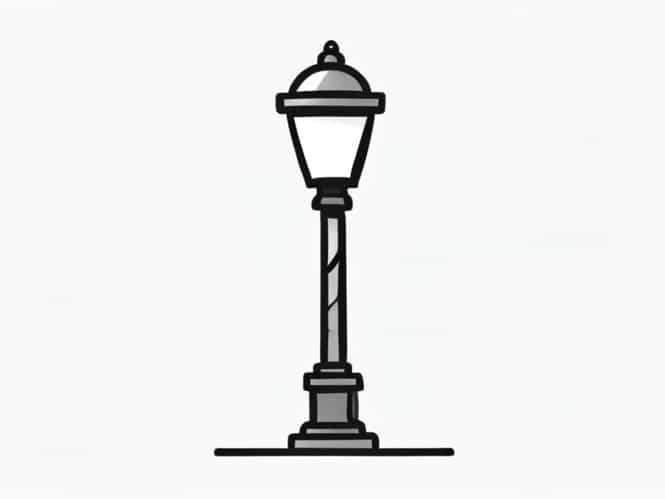
Drawing a street lamp is a simple yet enjoyable project for anyone who wants to improve their sketching skills. Even though a street lamp is a common object, capturing its shape, proportions, and details can help you better understand perspective and vertical structures. The clean lines, smooth curves, and balanced proportions make it a great subject for beginners and experienced artists alike. Whether you plan to draw a classic vintage lamp or a modern urban design, breaking the process into manageable steps makes the drawing easier and more satisfying.
Understanding the structure of a street lamp
Before putting pencil to paper, it helps to understand the general design features that most street lamps have in common. Even though styles vary from traditional to contemporary, the basic structure typically remains the same. Recognizing these elements will guide you as you begin outlining your sketch.
Main components to observe
- A tall pole or post, usually narrow and cylindrical
- A lamp head, which houses the light source
- Decorative details such as curves, ridges, or ornamental caps
- A base that supports the pole and anchors it to the ground
- Smooth or angled transitions between each section
Keeping these features in mind helps you visualize how the entire structure fits together, which is important for drawing accurate proportions.
Materials needed for drawing
There is no need for complicated tools when learning how to draw a street lamp. Many artists prefer starting with a simple set of drawing supplies, though you are free to add more materials as you gain confidence.
Suggested drawing tools
- Pencil for sketching outlines
- Eraser for correcting proportions
- Ruler for straight vertical lines
- Pen or marker for outlining the final drawing
- Colored pencils if you plan to add shading or highlights
A ruler can be especially helpful because the pole section of a street lamp needs to look straight and consistent. Even if you want a more freehand style, checking your line with a ruler keeps things balanced.
Step-by-step guide for drawing a street lamp
Following a simple sequence helps you focus on the construction of the street lamp without feeling overwhelmed. These steps apply to many lamp styles, but you can adjust the details to suit your preferred design.
Step 1 Draw the vertical pole
Begin by drawing a long, straight vertical line. Then create a parallel line beside it to form the pole. The space between these two lines should be narrow enough to look realistic but wide enough to remain visible. This pole serves as the central structure of your street lamp.
Step 2 Sketch the base
At the bottom of the pole, draw a sturdy base. Depending on the style, this base might be a simple rectangle, a rounded pedestal, or a decorative layered shape. Make sure the base appears wider than the pole to give the structure stability in your drawing.
Step 3 Add details to the pole
Many street lamps have smooth poles, but others include ridges, small patterns, or decorative rings. You can add a few horizontal lines or gentle curves to give the pole more character. Avoid adding too many details, especially if you want a clean and modern appearance.
Step 4 Draw the lamp head
The lamp head is the focal point of your street lamp drawing. Start by sketching a rounded or angled shape at the top of the pole. Traditional lamps often have lantern-like tops with tapered edges, while modern ones may have sleek, sharp geometric forms. Keep the size balanced with the pole so it does not appear too small or too large.
Step 5 Add the light enclosure
Inside the lamp head, draw a smaller shape representing the area where the light bulb sits. This may be a rectangular frame, a circular enclosure, or a triangular glass panel, depending on the lamp style you want to illustrate. Make sure this section appears centered and symmetrical.
Step 6 Add supporting arms or curves
Some street lamps include curved metal arms that extend from the pole to support the light. If your design includes this feature, sketch a smooth curve connecting the pole to the lamp head. For modern lamps, this could be a straight horizontal bar instead of a curved arm.
Step 7 Define the final shape
Once the basic structure is sketched, refine the lines to make the drawing cleaner. Erase any unnecessary marks and adjust the proportions to ensure everything looks balanced. This stage transforms your rough sketch into a clear and structured drawing.
Step 8 Add details and textures
To make your street lamp more realistic, include small textures such as panel lines, screws, metal joints, or subtle shading around the edges. These elements give the drawing depth and make it appear three-dimensional. Keep the details light and controlled so the drawing does not become overly busy.
Adding shading and highlights
Shading helps your street lamp look more polished by giving it volume and dimension. Because a street lamp is primarily made of metal, the shading often includes sharp contrasts and reflective surfaces. Adding shadows also provides context and makes your drawing appear grounded in space.
Shading tips
- Use darker shading on one side of the pole to show a light source
- Add subtle gradients to rounded lamp heads
- Shade the base more heavily to emphasize its weight
- Create reflections using faint streaks or lighter patches
Try to keep your shading consistent throughout the drawing. You can also use cross-hatching or parallel strokes to create texture without making the surface look too rough.
Exploring different street lamp styles
Street lamps come in many forms, from vintage lantern designs to sleek modern fixtures. Once you understand the basic structure, you can experiment with different versions to create more variety in your drawings. Exploring different styles also helps you practice curves, angles, and proportions.
Classic street lamp design
This type usually features a tall, ornate pole with curved metal arms and a lantern-like light. It works well for historical themes, parks, or decorative architectural settings.
Modern urban street lamp
These designs often use straight lines, angular lamp heads, and minimal decoration. They tend to be narrow, sleek, and efficient-looking, making them ideal for city streets and contemporary illustrations.
Curved single-arm street lamp
This style features a tall pole with a long curved arm that supports the lamp head. It is common in suburban areas and provides a graceful silhouette for artists to practice drawing flowing curves.
Creating a background for your drawing
Once your street lamp is complete, adding a simple background can give your drawing more depth. You do not need to draw a full scene; even minimal details can help place the lamp in context.
Background ideas
- A sidewalk or pathway beneath the lamp
- A row of trees or bushes
- Buildings or rooftops in the distance
- A night sky with faint shading around the lamp head
Keep the background soft so it does not overpower the main subject. Light shading or simple outlines are often enough.
Practicing and improving your technique
Drawing a street lamp becomes easier with continued practice. Experiment with different perspectives, angles, and styles to develop confidence and control. You can draw the lamp from a low angle to emphasize height or from a side angle to practice depth.
Ways to practice
- Draw multiple versions with different lamp head shapes
- Experiment with shading styles and light direction
- Practice drawing curved arms smoothly
- Create street scenes with several lamps for perspective training
Over time, your lines will become steadier, and your sense of proportion will improve, making your street lamp drawings more precise and expressive.
Learning how to draw a street lamp is a rewarding way to build your understanding of structure, balance, and clean lines. By breaking the drawing into steps—starting with the pole, building the base, shaping the lamp head, and adding details—you can create an illustration that looks neat and realistic. Practicing shading, experimenting with different designs, and adding simple backgrounds will help you grow your skills even further. With time and creativity, drawing street lamps can become a relaxing and engaging part of your artistic routine.