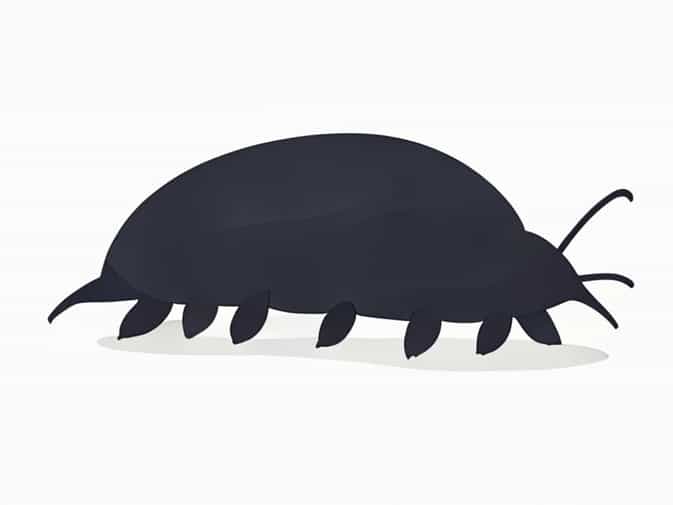
Roly polys, also known as pill bugs or woodlice, are small terrestrial crustaceans that are commonly found in gardens, under rocks, and in damp, dark environments. These fascinating creatures are known for their ability to roll into a tight ball when threatened, a defensive behavior that has captured the curiosity of many nature enthusiasts. One question that often arises when observing roly polys is whether they can see and how their vision influences their behavior. Understanding the sensory abilities of these tiny creatures provides insight into their survival strategies, environmental adaptations, and daily activities.
Roly Polys An Overview
Roly polys belong to the order Isopoda and are part of the broader group of crustaceans, which includes crabs, lobsters, and shrimp. Despite their terrestrial lifestyle, they retain many features characteristic of aquatic crustaceans, such as gills that require moisture to function. They are typically small, ranging from a few millimeters to over a centimeter in length, and have segmented, armored exoskeletons that protect them from predators and environmental hazards. Their ability to curl into a ball, known as conglobation, is a unique adaptation that has fascinated scientists and children alike for generations.
Roly Polys and Vision
The sensory system of roly polys is adapted to their specific ecological niche. They do possess eyes, but these are not like the complex eyes of humans or many other animals. Instead, they have compound eyes composed of numerous small units called ommatidia. Each ommatidium contributes to a portion of the animal’s overall vision, allowing it to detect light, shadow, and movement. However, their vision is relatively limited in terms of detail and color perception compared to vertebrates.
Structure of Roly Poly Eyes
Roly polys’ compound eyes are located on the sides of their head and provide a wide field of view. These eyes are particularly sensitive to changes in light intensity, which helps the animal navigate its environment and detect potential threats. Although they can perceive movement and general shapes, roly polys cannot see fine details or recognize complex objects. Their vision is primarily functional for survival rather than for precise tasks.
Function of Vision in Roly Polys
Despite their limited visual acuity, vision plays a crucial role in the daily life of roly polys. Some of the main functions of their eyesight include
- Detecting predatorsBy sensing changes in light and movement, roly polys can respond quickly to threats by rolling into a ball or seeking shelter.
- NavigationVision helps them avoid obstacles and navigate through complex terrains such as soil, leaf litter, and garden debris.
- Light avoidanceRoly polys are generally photophobic, meaning they avoid bright light. Their vision allows them to detect light sources and remain in shaded, moist areas where they are less vulnerable.
Other Sensory Adaptations
While roly polys can see, their survival relies heavily on other sensory adaptations. They possess sensitive antennae that detect chemical cues, vibrations, and humidity levels. These antennae help them locate food, communicate with other pill bugs, and navigate in low-light conditions where their vision may be less effective. Additionally, they have mechanoreceptors on their legs and exoskeleton that allow them to sense physical contact and changes in their surroundings.
Role of Antennae in Survival
The antennae of roly polys are essential for interpreting their environment. They can detect chemical signals from decaying organic matter, which serves as their primary food source. By combining information from their antennae and their limited vision, roly polys can efficiently find shelter, locate food, and avoid predators.
Behavioral Implications of Vision
The limited eyesight of roly polys influences several key behaviors. Their tendency to remain in dark, damp areas can be attributed to their photophobic response, which is informed by their ability to detect light. Additionally, their defensive conglobation behavior is often triggered by visual cues indicating a nearby predator. Even though they rely more heavily on tactile and chemical signals, the contribution of vision cannot be understated in guiding safe movement and foraging activities.
Environmental Navigation
Roly polys typically move slowly, and their visual system assists them in identifying safe paths through leaf litter, soil, and other debris. They can detect contrasts and shadows, allowing them to move toward favorable environments while avoiding potential threats. While their vision is not detailed, it works synergistically with their other senses to maintain overall awareness of their surroundings.
Common Misconceptions
Many people believe that roly polys are completely blind, likely because their eyes are small and their vision is not sharp. However, scientific studies show that they do respond to light and motion, indicating that vision, while limited, plays a role in their behavior. Another misconception is that they rely solely on their ability to roll into a ball for defense. In reality, their survival strategy is multi-faceted, combining limited vision, tactile senses, chemical detection, and quick physical responses.
Roly polys, despite their small size and unassuming appearance, possess a sophisticated combination of sensory tools that allow them to navigate and survive in their environments. Their compound eyes provide the ability to detect light, shadows, and movement, making it possible for them to respond effectively to threats and environmental changes. While their vision is limited in detail and color, it complements their highly sensitive antennae and mechanoreceptors, creating a versatile sensory system. Understanding how roly polys see and interact with their surroundings provides valuable insights into the behavior, adaptation, and resilience of these remarkable creatures, demonstrating that even the tiniest animals possess complex and efficient survival mechanisms.