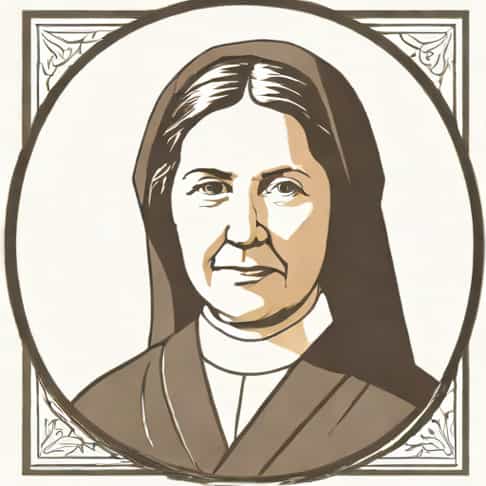
Mary Everest Boole was an influential English mathematician, educator, and author whose life spanned much of the 19th and early 20th centuries. Best known for her creative approaches to teaching mathematics and her marriage to George Boole, a pioneering logician, Boole made significant contributions to educational philosophy and mathematical pedagogy. Her death marked the end of a long life filled with intellectual activity, innovation, and deep involvement in educational reform. Understanding how Mary Everest Boole died helps provide a fuller picture of her life and the legacy she left behind in mathematics and teaching.
Mary Everest Boole A Brief Overview
Mary Everest Boole was born on March 11, 1832, in Wickwar, Gloucestershire, England. Despite the restrictions on women’s formal education in her era, she pursued mathematics with great determination and became a self-taught mathematician. She married George Boole, the creator of Boolean algebra, and supported his work while also developing her own ideas about education, mathematics, and child development. Following her husband’s death in 1864, she continued her intellectual pursuits, becoming a librarian, tutor, and author of progressive teaching methods. Throughout her life, she championed creative and experiential approaches to learning mathematics.
Final Years and Age at Death
Mary Everest Boole lived a long life for her time, reaching the age of 84. She continued writing, teaching, and engaging with intellectual circles well into her later years. Her passion for education and her willingness to explore subjects like psychology, philosophy, and even spiritualism kept her active and involved with contemporary discussions in multiple disciplines. By the early 20th century, her writings and ideas had influenced many educators and mathematicians, and she had become a respected figure in educational reform circles.
Place of Death
Mary Everest Boole died on May 17, 1916, in London, England. At the time of her death, she was living in Notting Hill, a district in the West London area. Her life had taken her from a small Gloucestershire village to the intellectual heart of England’s capital, where she spent her final years surrounded by the ideas and influences she had long promoted.
Cause of Death
The cause of Mary Everest Boole’s death was reported to be a heart attack. In her later years, she experienced the kind of natural decline that often accompanies advanced age, and the strain on her body eventually led to her passing at age 84. Her death from a heart-related event reflected the common health issues faced by elderly individuals, particularly in a period when medical interventions for cardiovascular diseases were less advanced than they are today. According to some sources, she died peacefully at home, succumbing to cardiac failure that naturally accompanied her long life and longstanding intellectual work.
Health and Lifestyle Factors
Living to the age of 84 in the early 20th century was an achievement in itself, especially given the limited medical care available at the time. Boole’s robust engagement in intellectual activities, her continued reading and writing, and her active correspondence with other scholars likely contributed to her mental alertness throughout her life. However, these factors did not prevent the physical effects of aging. Heart disease, which was not well understood or effectively treated at that time, proved to be the underlying cause of her death. Her age and general wear from a long life devoted to scholarship and teaching were key contributors to her passing.
Reactions to Her Death
The news of Mary Everest Boole’s death was met with respect and admiration among those who knew her work. Her contributions to education and mathematics had earned her a reputation as a pioneer in pedagogical thought. Many of her peers and later scholars acknowledged her influence on modern approaches to teaching mathematics, particularly through methods that emphasized hands-on learning and creativity. Publications and obituaries in educational journals and intellectual circles remembered her as a strong and independent thinker whose ideas helped shape mathematics education in England and beyond.
Legacy in Education and Mathematics
Mary Everest Boole’s legacy extended far beyond her death. Her books, including works such as Philosophy and Fun of Algebra and The Preparation of the Child for Science, continued to be read and appreciated by educators who sought more engaging ways to teach mathematical concepts. She advocated for methods that allowed children to discover mathematical ideas through play, movement, and physical engagement. This philosophy anticipated many modern educational practices that emphasize experiential learning and student-centered pedagogy.
Her Life’s Work and Its Influence
Although Mary Everest Boole is sometimes overshadowed by her husband’s fame, she carved out her own distinct place in the history of mathematics education. Her ideas encouraged more imaginative and intuitive approaches to teaching mathematics to children, challenging traditional rote learning and abstract instruction. Her methods included using natural objects, manipulatives, and creative activities like curve stitching to make mathematical concepts tangible and accessible. Her writings on educational philosophy continue to be referenced in discussions of progressive teaching methods.
Publications and Educational Reform
Mary’s publications often focused on how to prepare the mind for scientific thinking. She believed that nurturing a child’s curiosity and imagination was essential for learning mathematics effectively. Her influential texts offered both theoretical perspectives and practical techniques for teachers. She also wrote on a wide range of other topics, including psychology, philosophy, and the intersection of science and spirituality. These works reflect her broad intellectual interests and her commitment to fostering deeper understanding through thoughtful, reflective education.
Personal Beliefs and Activities
Beyond her contributions to mathematics, Mary Everest Boole was involved with discussions on psychology, spiritualism, and philosophy during her lifetime. She engaged with intellectual circles that explored new ways of understanding human thought and learning. Although some of her views, such as her spiritualist beliefs, were controversial at the time, they illustrate her willingness to explore interdisciplinary connections and challenge conventional thinking in multiple areas. These interests added depth to her educational philosophies, which often emphasized holistic development and the integration of different forms of knowledge.
Role as a Woman in Academia
Mary’s achievements are all the more remarkable given the social constraints on women’s education during the 19th century. Denied formal access to higher education, she pursued her mathematical interests through self-instruction and intellectual collaboration. Her success as a tutor, author, and thought leader demonstrated both her personal resilience and her commitment to expanding opportunities for women in intellectual pursuits. Her life story remains a powerful example of overcoming gender barriers in academic fields that were, at the time, heavily male-dominated.
Mary Everest Boole died at the age of 84 on May 17, 1916, at her home in London due to a heart attack, marking the end of a remarkable life devoted to mathematics, education, and intellectual exploration. Her death was a significant moment for the educational community, which had long benefited from her innovative approaches to teaching. Her legacy lives on in the books she wrote, the methods she developed, and the educational philosophies she championed. Boole’s life and work continue to inspire educators and mathematicians, reminding us of the power of creativity, curiosity, and dedication in shaping the ways we learn and teach.