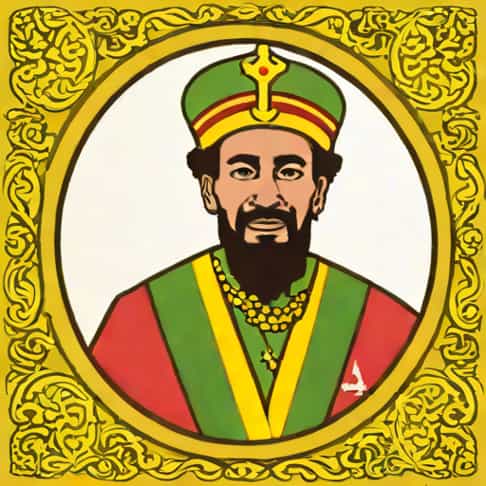
Many people searching for spiritual meaning and historical connections eventually ask the question is Haile Selassie in the Bible? This question often arises because of Haile Selassie’s unique role in history, especially his significance within the Rastafari movement and his connection to biblical language, symbolism, and prophecy. To understand this topic clearly, it is important to explore who Haile Selassie was, what the Bible actually says, and how religious interpretation and belief can differ from historical and textual evidence.
Who Was Haile Selassie?
Haile Selassie I was the Emperor of Ethiopia from 1930 until 1974. Born Tafari Makonnen, he became one of the most influential African leaders of the twentieth century. He was known for modernizing Ethiopia, promoting African unity, and resisting European colonialism.
Haile Selassie held many traditional titles, including King of Kings, Lord of Lords, and Conquering Lion of the Tribe of Judah. These titles closely resemble biblical language, which plays a major role in why people associate him with the Bible.
The Biblical Question Explained
When asking is Haile Selassie in the Bible, it is important to be precise. The Bible was written thousands of years before Haile Selassie was born. As a historical figure of the twentieth century, he is not mentioned by name anywhere in the biblical text.
However, the question often goes beyond literal mention and enters the realm of interpretation, symbolism, and religious belief.
Why Some Believe Haile Selassie Is Connected to the Bible
The Rastafari Movement
The strongest connection between Haile Selassie and the Bible comes from the Rastafari movement. Rastafarians believe Haile Selassie is the returned Messiah or a divine figure prophesied in Scripture.
This belief emerged in Jamaica during the early twentieth century, influenced by colonial history, African identity, and biblical interpretation.
Titles With Biblical Language
Haile Selassie’s royal titles closely resemble phrases found in the Bible, particularly in the Book of Revelation. Phrases like King of Kings and Lord of Lords appear in reference to divine authority.
For believers, these parallels are seen as fulfillment of prophecy rather than coincidence.
The Lion of the Tribe of Judah
One of the strongest symbolic links is the title Lion of the Tribe of Judah. This phrase appears in the Bible and is traditionally associated with kingship and divine authority.
Ethiopian tradition claims that Haile Selassie was a descendant of King Solomon and the Queen of Sheba, linking him to the biblical lineage of Judah.
Ethiopian Christianity and the Bible
Ethiopia has one of the oldest Christian traditions in the world. The Ethiopian Orthodox Church has a unique biblical canon and long-standing connections to biblical history.
This deep Christian heritage influenced how Haile Selassie was viewed, both within Ethiopia and internationally.
What the Bible Actually Says
From a biblical scholarship perspective, the Bible does not refer to Haile Selassie directly or indirectly by name. The scriptures focus on ancient events, figures, and prophecies related to their historical context.
Mainstream Christian theology does not recognize Haile Selassie as a biblical figure or a fulfillment of biblical prophecy.
Interpretation Versus Text
Literal Reading of Scripture
A literal reading of the Bible limits interpretation to the text itself. From this perspective, Haile Selassie is not in the Bible.
Prophecies are generally understood within their original historical and theological frameworks.
Symbolic and Spiritual Interpretation
Some religious movements interpret biblical texts symbolically, applying ancient language to modern figures and events.
Within this framework, Haile Selassie is seen as embodying biblical ideals rather than being explicitly named.
Haile Selassie’s Own View of Divinity
An important part of this discussion is Haile Selassie’s own beliefs. He was a devout member of the Ethiopian Orthodox Church and consistently identified himself as a Christian.
He did not publicly claim to be divine or to fulfill biblical prophecy. In fact, he emphasized faith in Jesus Christ rather than himself.
Why the Question Persists Today
The question is Haile Selassie in the Bible continues to be asked because it touches on identity, faith, and history. For many, it represents a search for dignity, liberation, and spiritual truth.
It also reflects how religious texts can be interpreted differently across cultures and generations.
Common Misunderstandings
Some misunderstandings arise when symbolic interpretation is mistaken for literal biblical reference. While Haile Selassie’s titles resemble biblical phrases, this does not mean the Bible predicted his life.
Understanding the difference between belief and textual evidence helps clarify the issue.
Key Points to Remember
- Haile Selassie is not named in the Bible.
- His association with Scripture comes from interpretation, not direct text.
- The Rastafari movement views him as divinely significant.
- Mainstream Christianity does not recognize him as a biblical figure.
The Role of Faith and Culture
Faith is deeply shaped by cultural experience. The belief in Haile Selassie’s biblical significance reflects historical struggles, hope for redemption, and a desire for spiritual identity.
These beliefs deserve understanding even when they differ from traditional interpretations.
Respecting Different Beliefs
Discussions about Haile Selassie and the Bible should be approached with respect. People hold beliefs that are meaningful and deeply personal.
Respectful dialogue allows for learning without dismissing faith or history.
A Balanced Perspective
Historically and textually, Haile Selassie is not in the Bible. Spiritually and symbolically, some believers see him as connected to biblical prophecy and identity.
Both perspectives exist because faith and interpretation are complex.
The question is Haile Selassie in the Bible cannot be answered with a simple yes or no without context. From a literal and scholarly standpoint, the Bible does not mention Haile Selassie. From a religious and symbolic perspective, especially within the Rastafari movement, he holds deep biblical significance.
Understanding this topic requires recognizing the difference between scripture, interpretation, and belief. By exploring history, theology, and culture together, readers gain a clearer and more respectful understanding of why this question continues to matter to so many people today.