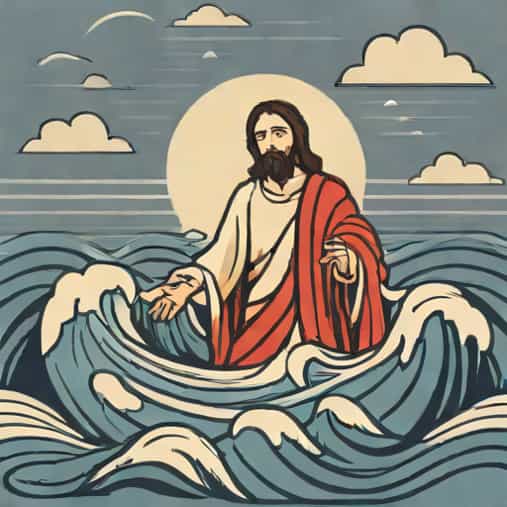
Life often feels unpredictable, filled with moments of calm that can suddenly give way to fear, uncertainty, and emotional turbulence. Many people, regardless of background, can relate to the idea of being caught in a storm they did not expect. The image of Jesus in the midst of the storm has resonated across generations because it speaks to this shared human experience. It reflects fear and faith existing side by side, and the hope that peace is possible even when circumstances feel overwhelming.
The Story Behind the Storm
The idea of Jesus in the midst of the storm comes from a well-known scene where Jesus and his disciples are caught in a violent storm while crossing a body of water. The waves are strong, the wind is fierce, and the disciples believe they are in danger. Meanwhile, Jesus appears calm, even resting, which creates a powerful contrast between divine peace and human panic.
This moment has been retold countless times because it captures a deep emotional truth. People often feel abandoned or confused when facing hardship, especially when help seems silent or delayed.
The Storm as a Symbol of Life’s Challenges
In many interpretations, the storm represents the difficulties people face in everyday life. These challenges may come in the form of illness, financial stress, broken relationships, or inner struggles like anxiety and doubt.
The storm does not discriminate. Just as the disciples were experienced fishermen, people who are capable and prepared can still find themselves overwhelmed. This makes the story relatable to anyone who has ever felt out of control.
Unexpected Trials
Storms often arrive without warning. In the same way, life’s problems rarely announce themselves ahead of time. The presence of Jesus in the midst of the storm suggests that difficulty does not mean abandonment.
Fear and Faith in the Same Boat
One of the most striking elements of the story is that fear and faith coexist. The disciples believe in Jesus, yet they are afraid. This reflects real human behavior. Faith does not automatically remove fear, but it offers a way to respond to it.
The disciples cry out, questioning whether they matter in the midst of danger. This honest reaction makes the story deeply human and emotionally authentic.
Jesus as a Source of Calm
When Jesus addresses the storm, his words bring immediate calm. The wind subsides, and the water becomes still. This moment emphasizes authority over chaos and peace over panic.
For many readers, Jesus in the midst of the storm represents inner calm rather than the removal of all problems. Peace does not always come from changing circumstances, but from changing perspective.
Inner Stillness
The calming of the storm can also be understood as an invitation to cultivate inner stillness. Even when external conditions remain difficult, faith can bring emotional balance and clarity.
Lessons About Trust
The story challenges readers to reflect on trust. The disciples had seen miracles before, yet fear overtook them. This highlights how easy it is to forget past experiences of help when facing new problems.
Trust, in this sense, is not passive. It involves remembering, choosing hope, and believing that calm can emerge even from chaos.
Why Jesus Appears Silent at First
One of the most difficult aspects of the story is the silence. Jesus does not immediately act, which mirrors how people often feel during hardship. Silence can feel like absence.
However, the presence of Jesus in the boat suggests that silence does not equal neglect. Sometimes growth happens in waiting, reflection, and endurance.
The Question of Faith
After calming the storm, Jesus questions the disciples about their faith. This is not a condemnation but an invitation to deeper understanding. Faith is not just belief in calm outcomes, but trust during uncertainty.
The question encourages readers to examine how they respond under pressure and what they rely on when fear arises.
Modern Interpretations of the Storm
In a modern context, the image of Jesus in the midst of the storm continues to offer comfort. People apply this idea to mental health struggles, global crises, and personal losses.
The storm may look different today, but the emotional experience remains similar. The story reassures readers that faith can coexist with questions and doubts.
Hope in the Midst of Chaos
Hope is a central theme in this narrative. Even when the situation appears hopeless, the outcome reveals that calm is possible. This does not promise a life without storms, but it offers reassurance that storms do not have the final word.
Hope, in this sense, is not denial of difficulty but confidence that meaning and peace can still be found.
Spiritual Growth Through Storms
Storms often lead to growth. After the storm, the disciples gain a deeper understanding of who Jesus is. Their fear turns into awe, and their experience reshapes their faith.
This suggests that challenges can deepen spiritual awareness and strengthen trust over time.
-
Storms reveal inner fears and strengths
-
Faith develops through real-life challenges
-
Calm can exist even before circumstances change
-
Trust grows through experience, not comfort
Applying the Message to Daily Life
Many people find comfort in returning to this image during difficult seasons. Remembering Jesus in the midst of the storm can help individuals pause, breathe, and regain perspective.
It encourages reflection on what truly brings peace and how to respond thoughtfully instead of reacting out of fear.
A Timeless Message of Peace
The enduring power of this story lies in its simplicity and depth. It does not offer complex explanations, but a powerful image of calm presence amid chaos.
Across cultures and generations, the idea of Jesus in the midst of the storm continues to speak to hearts seeking reassurance.
Jesus in the midst of the storm is more than a historical or religious scene. It is a reflection of the human journey through uncertainty, fear, and hope. The story reminds readers that storms are part of life, but they do not define its meaning.
By focusing on presence, trust, and inner peace, this message continues to inspire those navigating their own storms. It offers a vision of calm that does not depend on perfect conditions, but on faith that endures even when the waters are rough.