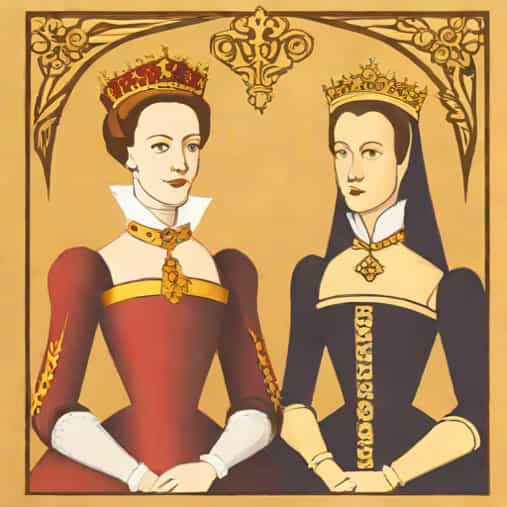
The history of England and Scotland in the 16th century is filled with intrigue, political maneuvering, and religious conflict, but few stories capture the imagination like that of Mary I of England and Mary, Queen of Scots. Both women named Mary faced immense challenges as queens, navigating turbulent political landscapes while striving to maintain their authority. Despite their shared name and royal status, their lives and reigns were markedly different, shaped by distinct personal choices, family dynamics, and religious tensions. Exploring their stories provides insight into the complex world of monarchy, the role of women in power, and the enduring legacy of two of history’s most fascinating queens.
Mary I of England The Early Life and Rise to Power
Mary I, often called Bloody Mary due to her persecution of Protestants, was born in 1516 to King Henry VIII and his first wife, Catherine of Aragon. Her early life was marked by political and religious upheaval. The divorce of her parents and Henry VIII’s break from the Catholic Church led to Mary’s temporary disinheritance and exclusion from the line of succession. Despite these challenges, she remained a devout Catholic, and her faith would become central to her reign. Mary ascended to the throne in 1553 after the brief rule of her Protestant cousin, Lady Jane Grey, and faced the enormous task of restoring Catholicism in a kingdom that had embraced Protestant reform.
The Reign of Mary I
Mary I’s reign lasted only five years, from 1553 to 1558, but it left a lasting impact on English history. Her determination to return England to Catholicism led to the persecution of Protestants, earning her the nickname Bloody Mary. She married Philip II of Spain, a union intended to strengthen Catholic influence and secure political alliances. However, the marriage was unpopular in England and did not produce an heir, leaving her without a successor. Despite her efforts, her reign was plagued by political resistance, economic difficulties, and a devastating loss of Calais, the last English possession in France. Mary I died in 1558, and her half-sister Elizabeth I, a Protestant, succeeded her, ending the attempt to restore Catholicism in England.
Mary, Queen of Scots Childhood and Early Challenges
Mary, Queen of Scots, was born in 1542, the same year her father, James V of Scotland, died, making her queen as an infant. Her early years were spent in France, where she was raised in the French court and eventually married Francis II of France. This marriage tied her to the French crown and strengthened the Auld Alliance between Scotland and France. After Francis II’s death, Mary returned to Scotland, a country embroiled in religious conflict between Catholics and Protestants. Unlike Mary I of England, who had a relatively stable succession, Mary, Queen of Scots, faced constant political challenges and rebellion, as well as the difficulty of asserting authority in a male-dominated society.
The Reign of Mary, Queen of Scots
Mary’s reign in Scotland was marked by turbulence, including disputes with powerful nobles, religious uprisings, and marital controversies. Her marriage to Henry Stuart, Lord Darnley, initially appeared politically advantageous but later turned disastrous. Darnley’s murder, followed by Mary’s controversial marriage to James Hepburn, Earl of Bothwell, fueled suspicion and led to her imprisonment. Mary was eventually forced to abdicate in favor of her infant son, James VI of Scotland, and sought refuge in England, where her cousin, Elizabeth I, faced the dilemma of harboring a rival claimant to the English throne. Mary, Queen of Scots, spent 19 years in captivity in England before being executed in 1587, solidifying her legacy as a tragic figure in European history.
Comparing the Two Queens
Although Mary I of England and Mary, Queen of Scots, shared a name and royal heritage, their lives and approaches to leadership were distinct. Mary I ruled her kingdom directly and attempted to enforce religious conformity, often through harsh measures. Mary, Queen of Scots, struggled to maintain power amid political intrigue, rebellion, and personal misfortune. Both faced challenges as female monarchs in male-dominated societies and dealt with intense pressure to produce heirs and secure political alliances. Their experiences reflect the precarious nature of queenship in a time when women’s authority was often questioned and undermined.
Religious Context
Religion played a central role in the lives of both queens. Mary I’s reign was defined by her efforts to restore Catholicism in England, which led to violent conflicts with Protestants. In contrast, Mary, Queen of Scots, ruled a Scotland divided by religious factions, attempting to navigate a delicate balance between Catholic and Protestant forces. Both queens’ fates were deeply influenced by the religious tensions of the period, and their decisions had long-lasting consequences for their kingdoms.
Political Alliances and Marriages
Marriage was a critical tool for both Marys in establishing alliances and securing their thrones. Mary I’s marriage to Philip II of Spain aimed to strengthen England’s ties with a powerful Catholic nation but proved unpopular and politically challenging. Mary, Queen of Scots, experienced more personal and political turmoil in her marriages, particularly with Lord Darnley and the Earl of Bothwell. These unions affected public perception, fueled rebellion, and ultimately contributed to her downfall.
Legacy and Historical Significance
The legacies of Mary I and Mary, Queen of Scots, continue to intrigue historians and the public alike. Mary I is remembered for her fervent Catholicism and her efforts to reverse Protestant reforms, while Mary, Queen of Scots, is often seen as a tragic figure whose life was shaped by political betrayal and personal misfortune. Both women highlight the complexities of female rule in the 16th century, demonstrating courage, determination, and the limitations imposed by societal and political pressures.
Lessons from Their Lives
- The challenges of female leadership in historical contexts.
- The influence of religion on politics and personal fate.
- The importance of strategic alliances and the risks of political marriages.
- The enduring impact of personal choices on historical legacy.
- The vulnerability of monarchs to political intrigue and rebellion.
The stories of Mary I of England and Mary, Queen of Scots offer compelling insights into the turbulent world of 16th-century monarchy. Despite sharing a name, their reigns and experiences were shaped by different circumstances, challenges, and decisions. Mary I’s efforts to restore Catholicism in England contrast sharply with Mary, Queen of Scots’ struggles to navigate a divided Scotland and maintain her authority. Both queens faced intense scrutiny, political threats, and personal hardships, leaving legacies that continue to captivate historians and inspire public fascination. Their lives remind us of the complexities of power, the impact of religion on governance, and the enduring influence of individual choices on history.