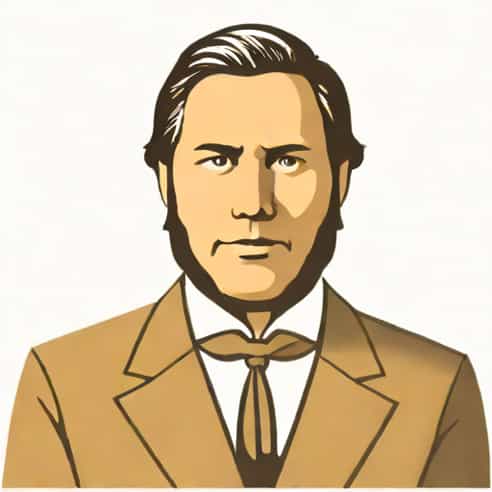
In American religious history, few figures are as debated and closely studied as Brigham Young, the second president of The Church of Jesus Christ of Latter-day Saints. His leadership, his vision in guiding the Mormon pioneers to Utah, and his personal lifestyle continue to attract curiosity and discussion. One of the most frequently asked questions about him is was Brigham Young a polygamist? The topic of polygamy within the early Mormon church is complex and tied to religious belief, cultural practices, and historical context. To understand Brigham Young’s role, it is important to look at his life, his faith, and the way polygamy was viewed in the nineteenth century.
Brigham Young’s Role in Mormonism
Brigham Young became the leader of the Latter-day Saints after the death of Joseph Smith in 1844. He guided thousands of followers across the plains to settle in the Salt Lake Valley, establishing a strong community in what later became Utah. His leadership was both spiritual and practical, as he helped organize settlements, build temples, and defend the faith against opposition. His influence shaped the church for generations, and his personal choices, including his marital practices, became part of his lasting legacy.
The Question of Polygamy
Polygamy, also called plural marriage, was a controversial practice introduced among early Mormons. The idea was based on the belief that men could take multiple wives as part of a divine commandment. Joseph Smith, the founder of the church, had already practiced and taught this principle before his death. After Smith’s passing, Brigham Young not only continued the practice but also publicly defended it, making it a central and visible part of Mormon life in Utah during his leadership.
Did Brigham Young Have Multiple Wives?
The answer is yes. Historical records confirm that Brigham Young was a polygamist. Over the course of his life, he had more than fifty wives. While not all of these marriages were the same in nature-some were for companionship, others for religious duty, and some more traditional-his commitment to plural marriage was undeniable. This fact has made his life both fascinating and controversial in American history.
Why Brigham Young Practiced Polygamy
Understanding why Brigham Young was a polygamist requires looking at the religious and cultural setting of his time. He believed that plural marriage was a commandment from God, revealed through Joseph Smith, and necessary for building up a righteous people. For Young, polygamy was not merely a lifestyle choice but an act of obedience to what he considered divine law.
Religious Motivations
- Plural marriage was seen as a way to follow the will of God.
- It was believed to strengthen family ties and expand the faith community.
- Some Mormons viewed it as a means to achieve exaltation in the afterlife.
Practical Motivations
- Polygamy helped grow the population of the Mormon community in Utah.
- It created strong alliances among families through marriage bonds.
- Women who became widowed or lacked support often found security in plural households.
Public Reaction to Polygamy
When the practice of polygamy became more widely known, it sparked outrage in the United States. Many Americans saw it as immoral and against Christian values. The U.S. government passed laws to ban polygamy, creating decades of conflict between the Mormon community and federal authorities. Brigham Young defended the practice passionately, insisting it was part of God’s plan, even as opposition grew stronger.
Impact on the Church
Under Brigham Young’s leadership, polygamy became a defining feature of the church. However, it also isolated the community from mainstream American society. While many Mormons supported the practice as a sacred duty, critics used it as a reason to attack and distrust the church. The controversy over plural marriage followed the church for decades, long after Young’s death.
Life Within a Polygamist Family
Brigham Young’s polygamist household was large and complex. With dozens of wives and many children, his family life required organization and discipline. He provided homes and support for his wives and children, and his family played an important role in the Mormon community. While not all of his marriages were the same-some were close and others more distant-they formed part of his responsibility as a religious leader.
Children of Brigham Young
Brigham Young fathered over fifty children, many of whom went on to play important roles in Utah and the church. His descendants are numerous, and his legacy as both a religious leader and a father remains visible in the region to this day.
Legacy of Brigham Young’s Polygamy
Today, historians continue to debate the impact of Brigham Young’s polygamy. On one hand, it demonstrates his devotion to his faith and willingness to follow what he believed was a divine command, regardless of public criticism. On the other hand, it remains a controversial aspect of his life, shaping how he is remembered. The question was Brigham Young a polygamist is more than just about his marital status-it also reflects the tension between religious conviction and societal norms.
Modern Reflections
- The mainstream LDS Church officially abandoned polygamy in 1890, decades after Young’s death.
- Brigham Young’s example is studied as part of the church’s early history but is not practiced today.
- Polygamy continues to be a subject of discussion in relation to Mormon history and identity.
Was Brigham Young a polygamist? Yes, he was. His life as a leader, a pioneer, and a husband to many wives reflects the complex history of Mormonism in the nineteenth century. His embrace of polygamy shows both his deep religious commitment and the challenges the church faced in its early years. While modern Latter-day Saints no longer practice polygamy, Brigham Young’s role in shaping the faith, his influence in building Utah, and his controversial marriages ensure that he remains a central figure in American religious history. By examining his life and choices, we gain insight into the struggles of faith, leadership, and community in a time of great change and conflict.