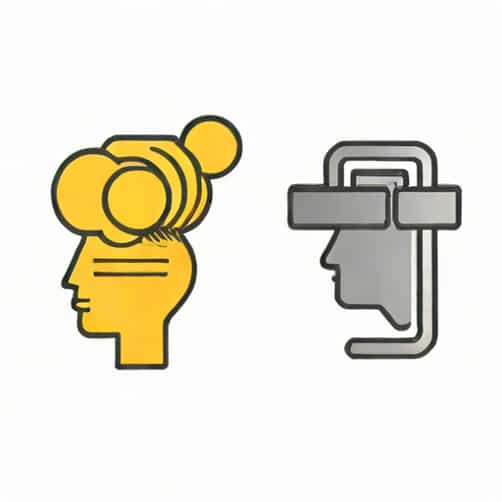
Memory is a fundamental aspect of human cognition, influencing how we learn, interact, and navigate daily life. Understanding how memory works allows us to comprehend behavior, learning processes, and even neurological disorders. Memory is generally divided into different types, with implicit and explicit memory being two of the most important categories. While both are essential for storing and retrieving information, they function in distinct ways, involve different brain mechanisms, and serve unique purposes. Recognizing the differences between implicit and explicit memory is crucial for students, educators, psychologists, and anyone interested in cognitive science.
What is Explicit Memory?
Explicit memory, also called declarative memory, refers to memories that we consciously recall and articulate. This type of memory involves intentional retrieval of information, such as facts, events, and experiences. Explicit memory allows individuals to reflect on past experiences, learn new information, and apply knowledge in a deliberate manner. It plays a critical role in education, problem-solving, and decision-making.
Key Characteristics of Explicit Memory
- Conscious AwarenessInvolves intentional recollection of information.
- Verbal ExpressionCan be described using words or symbols.
- Two SubtypesIncludes episodic memory (personal experiences) and semantic memory (general knowledge).
- Dependent on Brain RegionsRelies heavily on the hippocampus and medial temporal lobe for storage and retrieval.
- PurposeEnables learning, planning, and sharing of information.
For example, remembering your last birthday party, the name of a historical figure, or the capital of a country requires explicit memory. You actively recall these details and can consciously explain them.
What is Implicit Memory?
Implicit memory, also known as non-declarative memory, refers to unconscious memory processes that influence behavior without deliberate recollection. Unlike explicit memory, implicit memory operates automatically, affecting skills, habits, and conditioned responses. It is crucial for performing tasks smoothly, learning motor skills, and responding to familiar stimuli without conscious thought.
Key Characteristics of Implicit Memory
- Unconscious ProcessingFunctions without intentional recall.
- Skill-BasedSupports procedural memory, such as riding a bicycle, typing, or playing a musical instrument.
- Conditioned ResponsesIncludes learned emotional reactions and classical conditioning.
- Dependent on Brain RegionsInvolves structures like the basal ganglia, cerebellum, and amygdala.
- PurposeFacilitates automatic behavior, efficiency, and adaptation to the environment.
For instance, when you type on a keyboard without consciously thinking about each key or tie your shoelaces without recalling the steps, you rely on implicit memory. These skills are ingrained through repetition and practice.
Differences Between Implicit and Explicit Memory
Although both implicit and explicit memory are crucial for daily functioning, they differ in several key aspects, including awareness, types of information stored, brain involvement, and practical applications.
1. Conscious Awareness
- ExplicitRequires conscious effort to recall information.
- ImplicitOperates automatically without conscious thought.
2. Types of Information Stored
- ExplicitStores facts, events, concepts, and general knowledge.
- ImplicitStores skills, habits, and conditioned behaviors.
3. Brain Regions Involved
- ExplicitPrimarily involves the hippocampus, medial temporal lobe, and prefrontal cortex.
- ImplicitInvolves basal ganglia, cerebellum, amygdala, and motor cortices.
4. Methods of Testing
- ExplicitTested through recall and recognition tasks, such as quizzes or interviews.
- ImplicitTested through performance measures, such as skill execution or priming tasks.
5. Development and Learning
- ExplicitLearned through conscious study, reading, or experience-based reflection.
- ImplicitLearned through repetition, practice, conditioning, and exposure over time.
Examples of Explicit and Implicit Memory
Understanding memory types can be enhanced through practical examples.
Explicit Memory Examples
- Recalling the date of a historical event.
- Remembering a friend’s phone number or birthday.
- Learning and explaining a scientific theory.
- Describing a past vacation experience.
Implicit Memory Examples
- Riding a bicycle or driving a car after years of practice.
- Typing on a keyboard without consciously thinking about each key.
- Playing a musical instrument skillfully.
- Automatically responding to a familiar smell or sound with a learned reaction.
Importance in Daily Life and Learning
Both implicit and explicit memory are essential for functioning in everyday life. Explicit memory allows individuals to learn new information, solve problems, and communicate effectively. Implicit memory ensures smooth performance of daily tasks, efficient motor skills, and automatic responses, allowing people to focus on more complex cognitive tasks without being distracted by routine actions.
Applications in Education and Therapy
- Educators can design study methods that enhance explicit memory through active recall and repetition.
- Sports coaches rely on implicit memory to develop athletes’ motor skills and automatic responses.
- Cognitive therapy uses knowledge of memory systems to treat memory loss or rehabilitation in conditions like amnesia or brain injury.
- Marketing and advertising often utilize implicit memory principles to influence consumer behavior through repeated exposure and conditioning.
Summary of Key Differences
| Aspect | Explicit Memory | Implicit Memory |
|---|---|---|
| Conscious Awareness | Yes, involves deliberate recall | No, operates automatically |
| Types of Information | Facts, events, concepts | Skills, habits, conditioned responses |
| Brain Areas | Hippocampus, medial temporal lobe, prefrontal cortex | Basal ganglia, cerebellum, amygdala, motor cortices |
| Learning Method | Conscious study and experience | Repetition, practice, conditioning |
| Testing | Recall and recognition tasks | Performance and priming tasks |
Implicit and explicit memory are two complementary components of human cognition, each serving distinct roles in storing and retrieving information. Explicit memory involves conscious recall of facts and experiences, while implicit memory supports automatic behaviors, skills, and conditioned responses. Both types of memory are essential for learning, decision-making, and daily functioning. Understanding their differences enables researchers, educators, and therapists to design better educational programs, training regimens, and rehabilitation strategies, enhancing cognitive performance and quality of life. Recognizing how these memory systems work together provides a comprehensive perspective on human learning and behavior, highlighting the complexity and efficiency of the brain’s memory processes.