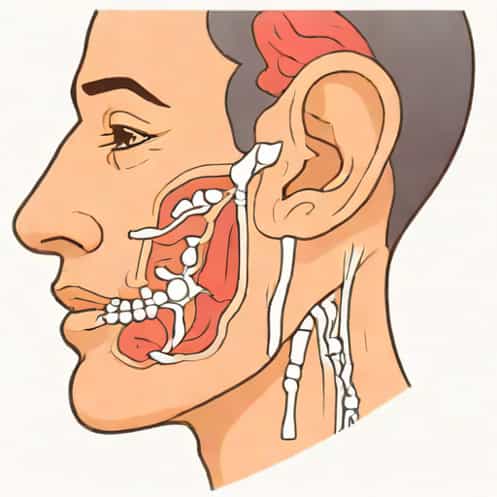
During early human development, the structures of the face and neck form through a complex process involving the pharyngeal arches, pouches, and grooves. When this process goes smoothly, these components fuse and disappear as the embryo matures. However, when there is incomplete obliteration of the pharyngeal groove, small remnants of these early structures remain. These remnants can later lead to developmental anomalies such as branchial cleft cysts, sinuses, or fistulas. Understanding this condition is essential for both students of anatomy and medical professionals who diagnose congenital neck masses.
Understanding the Pharyngeal Apparatus
To understand incomplete obliteration of the pharyngeal groove, it’s important to know what the pharyngeal apparatus is. During the fourth and fifth weeks of embryonic development, six pairs of pharyngeal arches appear on either side of the developing head and neck. These arches are separated externally by pharyngeal grooves (also called clefts) and internally by pharyngeal pouches. Each arch contributes to different structures such as muscles, bones, nerves, and glands of the face and neck.
The first pharyngeal groove, which lies between the first and second arches, is unique because it persists and forms the external auditory meatus (the ear canal). Normally, the second, third, and fourth grooves disappear as the second arch grows downward and merges with tissues below it. This process seals off the lower grooves, forming a structure called the cervical sinus, which later degenerates completely. However, when this degeneration does not occur properly, it leads to incomplete obliteration.
What Is Incomplete Obliteration of the Pharyngeal Groove?
Incomplete obliteration of the pharyngeal groove occurs when parts of the pharyngeal clefts fail to close and disappear during embryonic development. Instead of fusing completely, some epithelial-lined cavities or tracts remain within the neck. Depending on the extent of persistence, this can result in different types of developmental anomalies, including cysts, sinuses, or fistulas along the anterior border of the sternocleidomastoid muscle.
These remnants are collectively known as branchial apparatus anomalies. The condition is most commonly associated with the second pharyngeal groove, as the second arch contributes significantly to the structures that cover and obliterate the lower grooves. The failure of this process leaves small epithelial remnants that may later form fluid-filled cysts or sinus tracts.
Types of Anomalies Caused by Incomplete Obliteration
The anomalies resulting from incomplete obliteration of the pharyngeal groove vary depending on the degree of persistence. The three main types include
- Branchial CystsThese are closed epithelial-lined cavities filled with fluid. They are typically located in the lateral part of the neck, just beneath the skin. They are not connected to the skin surface or the pharynx.
- Branchial SinusesA sinus is an open passage that communicates with either the skin or the pharynx. If the external end remains open, it is called an external sinus. If it opens internally into the pharynx, it is called an internal sinus.
- Branchial FistulasA fistula forms when both the external and internal openings of the pharyngeal tract remain patent, creating a continuous connection between the skin and the pharynx. These are rare but can cause recurrent infections and fluid discharge.
Causes and Embryological Basis
The main cause of incomplete obliteration of the pharyngeal groove is a developmental error during the sixth or seventh week of gestation. Normally, the second arch grows over the third and fourth arches, closing off the lower grooves and forming a temporary cervical sinus. If the overgrowth is incomplete or if the sinus fails to regress, parts of it remain embedded in the tissues of the neck.
This persistence may be due to genetic factors, environmental influences, or random developmental disruptions. Although the exact cause is not always known, these anomalies are generally congenital and not related to any postnatal factors. They can, however, remain asymptomatic until later in life, when infection or trauma causes swelling or drainage from the lesion.
Clinical Presentation and Symptoms
Patients with incomplete obliteration of the pharyngeal groove often present with characteristic symptoms depending on the type of anomaly. Some of the common clinical features include
- A painless, smooth swelling on the lateral side of the neck, often below the angle of the mandible or along the anterior border of the sternocleidomastoid muscle.
- Recurrent swelling or infection in the same area, especially after upper respiratory tract infections.
- Discharge of mucus or pus through a small opening on the neck (in the case of a sinus or fistula).
- Occasionally, difficulty swallowing or mild discomfort if the lesion becomes large or infected.
In infants or young children, these symptoms may appear after repeated infections. Adults may not notice any signs until later in life, when the cyst becomes infected or enlarged.
Diagnosis of Branchial Apparatus Anomalies
Diagnosis of incomplete obliteration of the pharyngeal groove is usually clinical, supported by imaging studies. Doctors often begin with a physical examination to locate the swelling and determine whether there is an external opening. To confirm the diagnosis, imaging techniques such as ultrasound, CT scan, or MRI may be used to visualize the tract and its relation to nearby structures.
In some cases, a contrast fistulogram is performed if there is an external opening. This test helps trace the entire course of the sinus or fistula and identify its connection to the pharynx. Accurate diagnosis is essential before any surgical intervention to prevent incomplete removal and recurrence.
Treatment and Management
The mainstay of treatment for anomalies caused by incomplete obliteration of the pharyngeal groove is surgical removal. Because these cysts or tracts are lined with epithelial cells, they do not regress spontaneously and can recur if not completely excised. The surgical approach depends on the type of lesion
- For cystsComplete excision of the cyst and its epithelial lining is performed once inflammation has subsided.
- For sinuses or fistulasThe entire tract is carefully traced and removed to prevent recurrence. Surgeons often use methylene blue dye to identify the full length of the tract.
Antibiotic therapy is sometimes given before surgery if there is active infection. Once removed, the cyst or tract is usually sent for histopathological examination to confirm the diagnosis.
Possible Complications
If left untreated, incomplete obliteration of the pharyngeal groove can lead to recurrent infections, abscess formation, or chronic drainage from sinus openings. Repeated infections can also make surgical removal more challenging due to scarring and tissue distortion. Rarely, long-standing branchial cysts can undergo malignant transformation, though this is extremely uncommon.
Prognosis and Prevention
With proper surgical management, the prognosis for patients with incomplete obliteration of the pharyngeal groove is excellent. Recurrence is rare when the entire epithelial-lined tract is removed. Because this is a congenital anomaly, prevention is not possible, but early recognition and treatment can prevent complications and long-term discomfort.
Summary of Key Points
- Incomplete obliteration of the pharyngeal groove occurs when parts of the groove fail to close during embryonic development.
- It can lead to branchial cysts, sinuses, or fistulas along the side of the neck.
- The condition most commonly involves the second pharyngeal groove.
- Diagnosis involves physical examination and imaging studies such as ultrasound or CT scans.
- Surgical removal is the definitive treatment, with excellent outcomes when performed correctly.
Incomplete obliteration of the pharyngeal groove illustrates how even a small disruption in embryological development can lead to noticeable effects in later life. Though these anomalies may appear simple, they reveal the delicate balance of human growth and formation. Understanding their origins, presentation, and treatment allows healthcare providers to manage them effectively while deepening appreciation for the intricate processes that shape the human body. With timely diagnosis and surgical care, patients can look forward to complete recovery and minimal risk of recurrence.