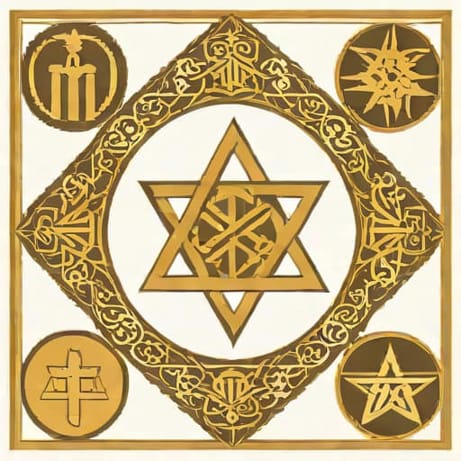
Judaism, Christianity, and Islam are three of the world’s major religions, each deeply rooted in a shared belief in one God. These faiths, collectively known as the Abrahamic religions, emphasize monotheism, the idea that there is a single, all-powerful, and all-knowing deity who governs the universe. Understanding these religions provides insight into their historical development, theological foundations, and cultural impact, as well as the common threads that unite them despite differences in practice and interpretation.
Origins of Monotheism in Judaism
Judaism is the oldest of the three Abrahamic faiths, tracing its roots back over 3,000 years. Its foundation rests on the covenant between God and the patriarch Abraham, considered the first to recognize and worship a single, sovereign God. The Hebrew Bible, or Tanakh, is the primary scripture of Judaism and contains teachings, laws, and narratives that guide Jewish life and belief.
The Concept of God in Judaism
In Judaism, God is understood as eternal, omnipotent, and just. Jewish tradition emphasizes the moral and ethical responsibilities of individuals to follow God’s commandments, known as mitzvot. Monotheism in Judaism is central there is no room for other gods, and God’s unity is absolute.
Practices and Traditions
Jewish practices include observing the Sabbath, celebrating festivals like Passover and Yom Kippur, and following dietary laws known as kosher. Prayer, study of scripture, and ethical living are also essential components of Jewish monotheistic faith.
Christianity and the Development of Monotheism
Christianity emerged in the first century CE as an offshoot of Judaism, centered on the life and teachings of Jesus of Nazareth. While sharing the monotheistic belief in one God, Christianity introduced new theological interpretations, particularly the concept of the Trinity. Christians believe in one God expressed in three persons the Father, the Son, and the Holy Spirit.
The Life and Teachings of Jesus
Jesus is regarded as the Messiah in Christianity, whose life, death, and resurrection provide salvation for humanity. The New Testament contains the teachings of Jesus and the apostles, forming the basis of Christian faith and practice. Monotheism in Christianity is expressed in devotion to God as revealed through Jesus, emphasizing love, mercy, and redemption.
Christian Practices
Christian worship often involves communal gatherings, prayer, reading scripture, and sacraments such as baptism and communion. Festivals like Christmas and Easter celebrate key events in Jesus’ life and are central to Christian religious life.
Islam and Monotheism
Islam arose in the 7th century CE on the Arabian Peninsula through the prophet Muhammad, who is regarded as the final messenger of God. The central tenet of Islam is strict monotheism, or Tawhid, the belief in the absolute oneness of God, known as Allah in Arabic. Islam teaches that God is merciful, just, and all-powerful, guiding humanity through revelation.
The Quran and Islamic Teachings
The Quran, considered the literal word of God, provides guidance for all aspects of life, including morality, law, and worship. Muslims are required to follow the Five Pillars of Islam the declaration of faith, prayer, fasting, charity, and pilgrimage. These practices reinforce monotheistic devotion and the relationship between the believer and Allah.
Islamic Practices
Muslim practices include daily prayers (Salah), fasting during Ramadan, giving to the needy (Zakat), and performing Hajj, the pilgrimage to Mecca. The emphasis on monotheism permeates these acts, ensuring that all worship and obedience are directed solely to Allah.
Common Threads Among Judaism, Christianity, and Islam
Despite historical and theological differences, the three religions share key elements
- Belief in one God who created and governs the universe
- Scriptural texts that provide guidance and law
- Ethical and moral codes emphasizing justice, compassion, and responsibility
- Historical roots in the patriarch Abraham, highlighting a shared lineage
- Prayer, worship, and rituals as expressions of devotion
These commonalities illustrate how monotheism shapes not only theological beliefs but also cultural practices and community life across these religions.
Differences in Monotheistic Expression
While unified by belief in one God, each religion interprets and practices monotheism in distinct ways
Judaism
Judaism emphasizes the singularity of God and adherence to the commandments. God is transcendent, and the relationship with humanity is guided by law and covenantal promises.
Christianity
Christianity introduces the concept of the Trinity, emphasizing the manifestation of one God in three persons. The focus is on salvation and the example of Jesus as the Son of God, integrating divine love and grace into monotheistic belief.
Islam
Islam stresses the uncompromising oneness of Allah and rejects any division of God’s nature. Devotion is expressed through strict adherence to worship and submission to God’s will, highlighting a direct and unmediated relationship with the divine.
Impact of Monotheism on Culture and Society
Monotheism has profoundly influenced the moral, social, and political structures of societies shaped by these religions. Concepts of justice, human dignity, and ethical responsibility stem from the belief in a singular divine authority. Artistic expressions, law codes, literature, and educational systems have been deeply shaped by monotheistic teachings, providing a foundation for both religious and secular cultural development.
Education and Scholarship
Scriptural study in all three faiths encourages literacy, critical thinking, and moral reflection. Schools, universities, and religious academies have been established to preserve and teach sacred texts, fostering intellectual and cultural growth within monotheistic communities.
Interfaith Understanding
Recognizing the shared foundation of monotheism can promote dialogue and understanding among different religious communities. By appreciating common beliefs while respecting differences, interfaith cooperation can encourage peace and mutual respect in diverse societies.
Judaism, Christianity, and Islam represent distinct yet interconnected expressions of monotheism. Each religion emphasizes belief in one God while developing unique theological interpretations, practices, and cultural contributions. Understanding these faiths provides insight into how monotheism shapes morality, community, and individual spirituality. Despite differences, the shared focus on one divine creator highlights a profound commonality that has influenced human civilization for millennia. Learning about these religions not only deepens appreciation for their spiritual teachings but also fosters greater understanding and respect among the diverse followers of monotheism around the world.