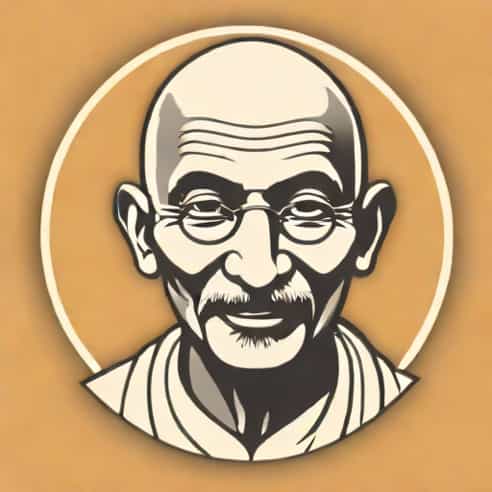
Mahatma Gandhi and the Nationalist Movement Project PDF documents are widely used by students and history enthusiasts to understand the life, philosophy, and leadership of one of the most influential figures in the Indian independence struggle. Mohandas Karamchand Gandhi, commonly known as Mahatma Gandhi, played a central role in transforming the Indian freedom movement into a mass struggle that challenged British colonial rule through unique methods of nonviolent resistance. These project PDFs typically provide structured summaries of Gandhi’s contributions, key campaigns, and the broader context of Indian nationalism, making it easier for learners to grasp complex historical developments in a clear and organized way.
Who Was Mahatma Gandhi?
Mahatma Gandhi was an Indian lawyer, activist, and nationalist leader who became the most prominent leader in India’s struggle for independence from British rule. Born in 1869 in Porbandar, Gujarat, Gandhi studied law in London before practicing briefly in South Africa, where he first developed and refined his philosophy of nonviolent resistance, or satyagraha. His experiences in South Africa shaped his beliefs about civil rights, justice, and nonviolence, which he later applied to India’s freedom movement when he returned in 1915. Gandhi’s leadership combined political strategy with moral and spiritual principles, making him a figure admired not only in India but around the world.
The Roots of Nationalism in India
Before Gandhi’s emergence, the Indian nationalist movement was largely led by educated and elite leaders who focused on petitions, debates, and moderate political action. The movement did not yet have widespread mass support across the country. Gandhi changed this by appealing directly to ordinary Indians-peasants, workers, students, and women. He encouraged self-reliance, local initiatives, and nonviolent protest methods that resonated with people from all walks of life. In this sense, Gandhi’s entry into Indian politics marked a new phase in the nationalist movement, one that was inclusive and deeply rooted in Indian social life.
Key Movements Led by Gandhi
Gandhi’s leadership in the Indian National Movement involved several major campaigns and mass movements that challenged British authority and united diverse groups of Indians in a collective struggle for freedom. Project PDFs on this topic usually highlight these movements, making them accessible for students and researchers alike.
Non-Cooperation Movement
Launched in response to British repression after the Jallianwala Bagh massacre and the passage of the Rowlatt Act, the Non-Cooperation Movement (1920-1922) called for the boycott of British institutions, courts, schools, and goods. Gandhi urged Indians to withdraw cooperation with colonial authorities and instead strengthen indigenous practices, such as wearing khadi (homespun cloth). The movement saw participation from millions of Indians and marked a turning point in the country’s struggle for self-rule.
Salt March and Civil Disobedience
In 1930, Gandhi initiated the Salt March, also known as the Dandi March, to protest the British monopoly on salt production and sales. This 240mile march to the Arabian Sea was a powerful symbolic act of civil disobedience that encouraged Indians to break the unjust salt laws by making salt themselves. The Salt Satyagraha drew widespread attention, both in India and internationally, and became a defining moment in the fight against colonial oppression.
Quit India Movement
During World War II, Gandhi launched the Quit India Movement in 1942, calling for immediate British withdrawal from India. This movement was characterized by mass protests, strikes, and acts of civil disobedience across the country. The British responded with mass arrests, including Gandhi’s, and severe repression. Still, the movement demonstrated the unwavering resolve of Indians to achieve independence and played a crucial role in undermining British authority.
Philosophy of Nonviolence (Satyagraha)
A central theme in project PDFs about Gandhi and the nationalist movement is his philosophy of satyagraha, or truthforce. Satyagraha emphasized nonviolent resistance and civil disobedience, not as passive surrender but as active, principled opposition to injustice. Gandhi believed that true change must come through moral conviction and nonviolent action, which would ultimately win over the oppressor’s conscience. This approach informed all of Gandhi’s major campaigns and distinguished the Indian nationalist movement from other contemporary struggles for independence.
Principles of Satyagraha
- Adherence to truth and moral integrity.
- Nonviolence as a means to resist injustice.
- Selfsuffering as a way to expose the moral wrongs of the oppressor.
- Civil disobedience and noncooperation with unjust laws.
Impact of Gandhi’s Leadership
Gandhi transformed the Indian nationalist movement from a political struggle of elites to a mass movement involving people from all regions and social backgrounds. His ability to mobilize millions of ordinary Indians through nonviolent means was unparalleled. Gandhi’s emphasis on simple living, selfsufficiency, and moral discipline gave the movement a unique character, rooted in indigenous values and cultural identity. Many observers credit Gandhi with creating a sense of national unity and purpose among Indians, which was essential for the achievement of independence in 1947.
Gandhi’s Role in Unity and Social Reform
Beyond political leadership, Gandhi also worked to address social divisions in India. He campaigned against untouchability and worked to bridge gaps between different religious communities. By advocating for harmony between Hindus and Muslims, especially during times of communal tension, Gandhi sought to ensure that the struggle for independence did not give way to internal conflict. His inclusive approach helped broaden the appeal of the freedom movement and inspired many to join the nationalist cause.
Using Project PDFs to Study Gandhi and the Nationalist Movement
For students and educators, project PDFs on Mahatma Gandhi and the nationalist movement are valuable resources. They condense complex historical events, provide key facts in a structured format, and often include timelines, summaries, and character profiles. Such PDFs are particularly useful for preparing for exams, writing essays, or gaining a broad understanding of Gandhi’s methods and contributions.
What These PDFs Typically Include
- Early life and influences of Gandhi.
- Key campaigns and mass movements led by Gandhi.
- Explanation of satyagraha and nonviolent resistance.
- Impact of Gandhi’s methods on Indian society and the nationalist movement.
- Important dates, events, and outcomes related to the freedom struggle.
Legacy of Mahatma Gandhi
Mahatma Gandhi’s legacy extends far beyond India’s independence. His philosophy of nonviolence influenced civil rights movements around the world, inspiring leaders such as Martin Luther King Jr. and Nelson Mandela. Gandhi’s emphasis on peace, justice, and human dignity continues to be relevant in contemporary struggles for equality and freedom. Project PDFs on Gandhi and the nationalist movement help preserve this legacy for new generations, offering accessible insights into his life, principles, and the historic struggle he led.
The study of Mahatma Gandhi and the nationalist movement through project PDFs provides a comprehensive overview of how Gandhi shaped India’s struggle for independence. From his early life and development of satyagraha to his leadership in major campaigns like the NonCooperation Movement, Salt March, and Quit India Movement, Gandhi’s impact was profound. His ability to mobilize masses through nonviolent resistance, his work for social reform, and his vision of a selfreliant India remain central to understanding modern Indian history. Project PDFs help learners organize this rich historical material in a meaningful way, ensuring that Gandhi’s contributions continue to be appreciated, studied, and understood across generations.