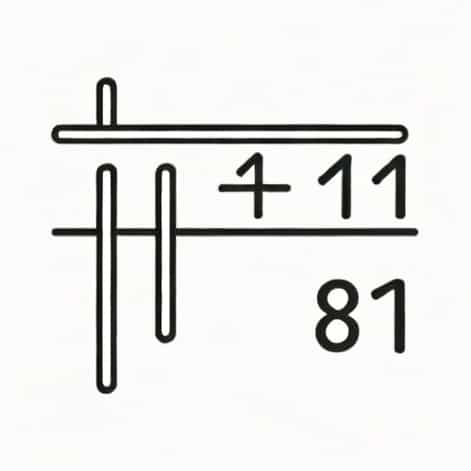
Understanding the decimal expansion of fractions is a fundamental concept in mathematics that allows us to express rational numbers in a form that is easy to work with in calculations, measurements, and real-life applications. One fraction that often comes up in elementary and intermediate math courses is eight elevenths, written as 8/11. Converting this fraction to its decimal form helps illustrate the concept of repeating decimals and gives insight into patterns that emerge when dividing numbers. In this topic, we will explore how to write the decimal expansion for eight elevenths, step by step, and examine the significance of repeating decimals in mathematics.
Understanding the Fraction Eight Elevenths
Definition and Representation
The fraction eight elevenths, or 8/11, represents a division of eight equal parts into eleven portions. In simple terms, it asks the question if eight units are divided equally into eleven parts, what is the value of one part? Fractions like this one are known as proper fractions because the numerator (8) is smaller than the denominator (11), which means the decimal expansion will be less than 1 but greater than 0.
Importance of Decimal Expansion
Decimal expansions allow us to express fractions in a base-ten system, which is more commonly used in everyday calculations. They are essential in financial transactions, scientific measurements, and engineering problems where exact fractions are less convenient. By converting 8/11 into a decimal, we gain a clearer understanding of its magnitude and how it can be applied in practical scenarios.
Step-by-Step Conversion of 8/11 to Decimal
Long Division Method
One of the most straightforward ways to convert 8/11 into a decimal is through long division. Here’s how it works
- Divide 8 by 11. Since 8 is smaller than 11, we start with 0 as the whole number part.
- Add a decimal point and a zero to the dividend, making it 80. Divide 80 by 11.
- 11 goes into 80 seven times, because 11 Ã 7 = 77. Subtract 77 from 80 to get a remainder of 3.
- Bring down another zero, making it 30. Divide 30 by 11.
- 11 goes into 30 two times, because 11 Ã 2 = 22. Subtract 22 from 30 to get a remainder of 8.
- Bring down another zero, making it 80 again, which repeats the previous step.
By continuing this process, we notice that the sequence 72 repeats indefinitely. Therefore, the decimal expansion for 8/11 is 0.727272…, or more formally, 0.72with a bar over 72 to indicate the repeating pattern.
Recognizing the Repeating Pattern
The repeating nature of the decimal expansion occurs because the denominator 11 does not divide evenly into a power of ten. When a fraction is expressed as a decimal, if the denominator contains prime factors other than 2 or 5, the result will be a repeating decimal. In this case, 11 is a prime number not equal to 2 or 5, so dividing by 11 results in a repeating cycle.
Properties of the Decimal Expansion of 8/11
Repeating Cycle Length
The repeating cycle of a decimal is the sequence of digits that repeats indefinitely. For 8/11, the repeating cycle is 72, which is two digits long. This can be contrasted with other fractions like 1/3, which has a repeating cycle of 3, only one digit, or 1/7, which has a repeating cycle of six digits, 142857. Understanding the length of the repeating cycle helps in recognizing patterns in rational numbers and predicting their behavior in calculations.
Converting Repeating Decimals to Fractions
The decimal 0.72can be converted back into the fraction 8/11 using algebraic methods. Let x = 0.727272…, then multiply both sides by 100 to shift the repeating digits 100x = 72.727272… Subtracting the original x gives 99x = 72, so x = 72/99. Simplifying 72/99 by dividing numerator and denominator by 9 yields 8/11, confirming the relationship between repeating decimals and fractions.
Applications of 8/11 in Real Life
Financial Calculations
Fractions like 8/11 are useful in financial contexts. For example, if someone needs to divide a payment of $88 among 11 people, each person would receive 8/11 of the total amount per unit of $11, which is approximately $7.27 per person. Understanding the decimal expansion helps in providing accurate monetary distribution without rounding errors.
Measurement and Engineering
In engineering, precise measurements often involve fractions. Converting 8/11 into a decimal ensures compatibility with measurement tools calibrated in decimal units, allowing engineers to make accurate calculations in design, construction, and scientific research. The repeating decimal 0.7272… may be rounded to an appropriate number of decimal places depending on the required precision.
Mathematical Insights
Patterns in Repeating Decimals
Repeating decimals, such as 0.72for 8/11, illustrate interesting mathematical properties. The periodic nature of these decimals can be used in number theory to study divisibility, modular arithmetic, and rational number properties. Recognizing repeating patterns helps mathematicians predict the outcome of calculations and understand the structure of fractions.
Comparison with Other Fractions
Comparing 8/11 to fractions with different denominators highlights how denominator factors influence decimal expansions. Fractions like 1/2, 1/4, and 3/5 produce terminating decimals because their denominators are powers of 2 or 5. In contrast, 8/11 results in a repeating decimal, showing the broader principle that only denominators with factors of 2 and 5 yield terminating decimals.
Writing the decimal expansion for eight elevenths demonstrates both a practical and theoretical aspect of mathematics. Through long division, we find that 8/11 equals 0.72repeating, highlighting the concept of repeating decimals. Understanding the patterns, properties, and applications of such decimals is crucial in finance, engineering, and pure mathematics. Recognizing the repeating cycle allows for accurate calculations and provides insight into the behavior of rational numbers. By studying fractions like 8/11 and their decimal expansions, students and professionals alike can appreciate the elegance and utility of mathematical conversions and patterns.