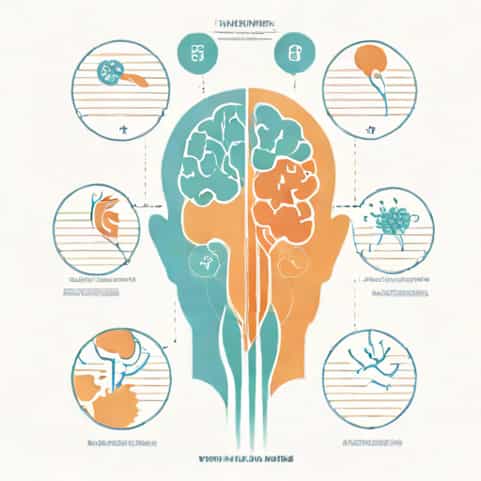
The cranial nerves are a set of twelve paired nerves that originate in the brain and brainstem, playing crucial roles in sensory and motor functions of the head and neck. They control everything from facial expressions and eye movements to taste, hearing, and swallowing. Memorizing the names, order, and functions of these cranial nerves can be challenging for students and healthcare professionals. To simplify this process, mnemonics have been widely used as effective memory aids. A cranial nerves mnemonic is a creative tool that helps individuals remember the sequence and characteristics of the twelve nerves, making learning faster, more efficient, and more enjoyable.
Introduction to Cranial Nerves
The human body contains twelve pairs of cranial nerves, each with specific functions. These nerves are categorized as sensory, motor, or both. Sensory nerves carry information from sensory organs to the brain, motor nerves control muscle movements, and mixed nerves have both sensory and motor functions. Knowing the order and purpose of these nerves is essential for medical students, neurologists, and other healthcare practitioners. The cranial nerves are typically numbered using Roman numerals I through XII, and each nerve has a unique name and function.
List of Cranial Nerves
For clarity, here is a list of the twelve cranial nerves in order
- I – Olfactory responsible for the sense of smell.
- II – Optic responsible for vision.
- III – Oculomotor controls most eye movements and pupil constriction.
- IV – Trochlear controls the superior oblique muscle of the eye.
- V – Trigeminal responsible for facial sensation and chewing movements.
- VI – Abducens controls the lateral rectus muscle of the eye.
- VII – Facial controls facial expressions and taste sensations in the anterior two-thirds of the tongue.
- VIII – Vestibulocochlear responsible for hearing and balance.
- IX – Glossopharyngeal controls taste in the posterior third of the tongue and some swallowing muscles.
- X – Vagus involved in heart rate, digestion, and parasympathetic control.
- XI – Accessory controls muscles of the neck and shoulders.
- XII – Hypoglossal controls tongue movements.
Purpose of a Cranial Nerves Mnemonic
Memorizing all twelve cranial nerves in order can be daunting, particularly for students who are new to neuroanatomy. A cranial nerves mnemonic provides a simple, memorable phrase or sentence in which the first letter of each word corresponds to the first letter of each nerve. This technique allows learners to recall the sequence easily, reinforcing retention and enhancing long-term memory. Mnemonics can also be adapted to help remember whether the nerves are sensory, motor, or both, adding another layer of utility for medical education.
Popular Cranial Nerves Mnemonics
Several mnemonics have been created over the years, each catering to different learning styles. Here are a few widely used examples
- For nerve orderOh, Oh, Oh, To Touch And Feel Very Green Vegetables, AH! – each word represents Olfactory, Optic, Oculomotor, Trochlear, Trigeminal, Abducens, Facial, Vestibulocochlear, Glossopharyngeal, Vagus, Accessory, and Hypoglossal.
- For nerve function (sensory, motor, or both)Some Say Marry Money, But My Brother Says Big Brains Matter Most. – each word corresponds to the type of nerve Sensory, Motor, or Both.
Benefits of Using a Mnemonic
Using a cranial nerves mnemonic offers multiple benefits for learners at different levels of medical and health education. It simplifies complex information, reduces cognitive load, and accelerates the memorization process. Additionally, mnemonics encourage active recall, a learning strategy shown to improve retention and understanding. By converting abstract or technical data into an easy-to-remember phrase, students can focus more on understanding the functions and clinical significance of each nerve rather than simply memorizing names.
Enhanced Learning Efficiency
A mnemonic allows learners to remember all twelve cranial nerves in a single, cohesive sentence rather than memorizing each name individually. This method streamlines study sessions, enabling students to devote more time to understanding neuroanatomy and clinical applications.
Improved Clinical Application
Medical professionals often need to recall cranial nerve order and functions quickly during clinical assessments or neurological examinations. Mnemonics provide a reliable mental shortcut, ensuring accurate recall under time-sensitive conditions. This can enhance diagnostic efficiency and improve patient care.
Engagement and Motivation
Mnemonics make studying neuroanatomy more engaging and less intimidating. Creating or using memorable phrases adds an element of fun to the learning process, motivating students to continue practicing and reviewing the material regularly.
Tips for Creating Your Own Cranial Nerves Mnemonic
While there are many established mnemonics, creating a personalized mnemonic can further enhance memory retention. Here are some tips
- Use words or phrases that are familiar and meaningful to you.
- Keep the sentence short and simple to make it easy to recall.
- Include humor or vivid imagery to make the mnemonic more memorable.
- Practice recalling the mnemonic in sequence to strengthen long-term memory.
- Combine mnemonics for nerve order and function to create a comprehensive learning tool.
Applications Beyond Education
While primarily used in medical education, cranial nerves mnemonics also have practical applications in clinical practice. Neurologists, nurses, and other healthcare professionals can use these memory aids during patient assessments, ensuring accurate identification of nerve-related issues. Mnemonics can also support continued learning and professional development, helping practitioners refresh their knowledge quickly when needed.
Use in Examinations
For students preparing for exams such as the USMLE, NCLEX, or medical school practical assessments, mnemonics are an invaluable tool. They enable rapid recall of essential anatomical information, contributing to higher accuracy in answering questions and performing clinical tasks.
Clinical Communication
Mnemonics can also aid in communication among healthcare teams. By recalling cranial nerves accurately, professionals can describe neurological findings more clearly and efficiently during patient consultations or case discussions.
The cranial nerves mnemonic is an essential tool for anyone studying neuroanatomy or working in the healthcare field. By providing an easy-to-remember framework for the order and function of the twelve cranial nerves, mnemonics simplify learning, enhance retention, and support clinical practice. Whether used for exam preparation, clinical assessments, or professional development, these memory aids help learners and practitioners recall crucial information efficiently and accurately. Creating personalized mnemonics, practicing active recall, and understanding the underlying functions of each nerve ensure that the study of cranial nerves becomes more manageable, effective, and even enjoyable, ultimately improving knowledge retention and practical application in real-world scenarios.