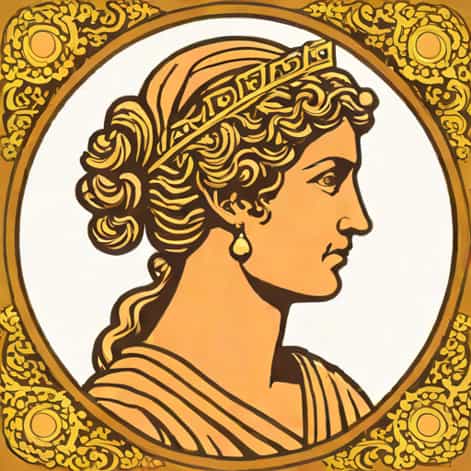
Agrippina the Elder was one of the most influential women of the early Roman Empire, known for her political ambitions, her strong character, and her close connections to the imperial family. Born into a prominent lineage, she was the daughter of Marcus Vipsanius Agrippa, a trusted general of Augustus, and Julia the Elder, the only biological child of Emperor Augustus. Agrippina’s life was marked by her involvement in political intrigue, her devotion to her family, and her resilience in the face of adversity. She remains a significant historical figure whose life exemplifies the power and dangers of being part of the Julio-Claudian dynasty.
Early Life and Family Background
Agrippina the Elder was born in 14 BC into one of the most prestigious families of Rome. Her father, Marcus Vipsanius Agrippa, was a loyal supporter and general under Augustus, playing a key role in securing the emperor’s power. Her mother, Julia the Elder, connected Agrippina directly to Augustus, making her a prominent figure within the imperial family from birth. Agrippina had several siblings, including Gaius Caesar, Lucius Caesar, and Agrippa Postumus, all of whom played crucial roles in the early succession plans of Augustus.
Marriage to Germanicus
In AD 5, Agrippina married Germanicus, a popular general and nephew of Emperor Tiberius. Their union strengthened the ties between key branches of the Julio-Claudian dynasty, ensuring political stability. Germanicus was well-loved by the Roman people and the army, and his career flourished under Tiberius’ rule. Agrippina and Germanicus had nine children, although only six survived to adulthood. Their family became a symbol of virtue, loyalty, and the continuity of the imperial line, with their children including future Emperor Caligula and Agrippina the Younger, who would later become the mother of Emperor Nero.
Political Influence and Public Life
Agrippina the Elder was not merely a passive figure in her husband’s career. She was actively involved in politics, demonstrating intelligence, ambition, and a deep understanding of Rome’s power dynamics. Known for her public speeches and appeals to soldiers, she often accompanied Germanicus on military campaigns, earning respect from the army. Her presence on the frontlines and her involvement in administrative matters reflected her commitment to both her husband and the empire.
Challenges with Tiberius
Despite her prominence, Agrippina’s relationship with Emperor Tiberius became increasingly strained. Following Germanicus’ mysterious death in AD 19, Agrippina openly accused Gnaeus Calpurnius Piso, a senator and Tiberius’ associate, of poisoning her husband. This confrontation placed her in direct opposition to Tiberius, who saw her influence and outspokenness as a threat. Agrippina’s willingness to challenge the emperor demonstrated her courage but also made her vulnerable to political retaliation.
Exile and Struggles
Following Germanicus’ death, Agrippina faced immense personal and political challenges. Tiberius viewed her as a potential threat due to her popularity and her children’s connections to the imperial succession. In AD 29, she was accused of treason and other charges, which led to her banishment to the island of Pandateria, a remote and harsh location used for political prisoners. During her exile, she endured significant hardships, including deprivation and isolation, but she remained resolute and continued to protect the interests of her children.
Children and Legacy
Agrippina the Elder’s legacy is inseparable from her children, who continued to shape the Roman Empire. Her son, Caligula, became emperor in AD 37, although his reign was marked by controversy and instability. Her daughter, Agrippina the Younger, would later play a critical role in Roman politics as the mother of Emperor Nero. Through her children, Agrippina the Elder’s influence persisted long after her death, demonstrating the enduring impact of her family connections and political acumen.
Death and Historical Assessment
Agrippina the Elder died in AD 33 under circumstances widely believed to be orchestrated by Tiberius, who sought to eliminate potential threats to his rule. Her death marked the end of a turbulent life filled with political struggle, personal loss, and unwavering determination. Historians often portray her as a strong-willed and courageous woman who navigated the dangerous world of Roman imperial politics with intelligence and persistence.
Historical Significance
Agrippina the Elder is remembered as a symbol of resilience and power within the male-dominated society of ancient Rome. Her life highlights the roles women could play in shaping political events, particularly within the imperial family. Through her actions, speeches, and influence over her children, she left an indelible mark on Roman history, demonstrating that even in a patriarchal society, women could wield significant authority and impact the course of the empire.
Agrippina the Elder remains a remarkable figure in Roman history, celebrated for her political engagement, family devotion, and personal courage. Born into the Julio-Claudian dynasty, married to the esteemed general Germanicus, and mother to influential children, her life intersected with some of the most critical events of the early Roman Empire. Despite exile and eventual death under politically motivated circumstances, her legacy persisted through her children and the historical record. Agrippina’s life provides valuable insights into the power dynamics, challenges, and roles of women in ancient Rome, highlighting her as a figure of enduring importance and fascination.