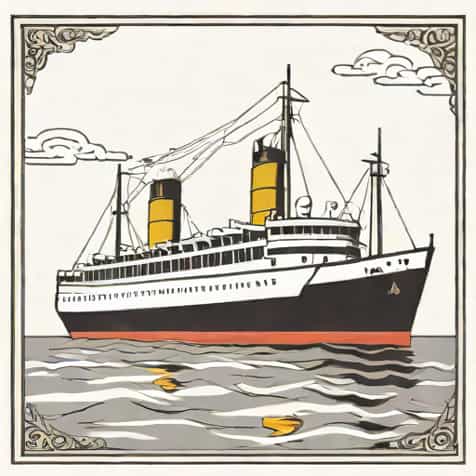
The SS Californian is a ship that has gone down in history not for its voyages or cargo, but for its controversial role during one of the most famous maritime disasters of all time the sinking of the RMS Titanic in 1912. Known as the ship that many believe could have helped save hundreds of lives, the SS Californian has become a subject of debate, criticism, and reflection. To truly understand what the SS Californian was, one must look at its design, its purpose, and above all, its actions on the night of April 14, 1912, when Titanic struck an iceberg.
The Construction and Purpose of the SS Californian
The SS Californian was a British steamship built in 1901 for the Leyland Line, a shipping company primarily engaged in cargo and passenger services. Unlike luxury liners such as the Titanic or Lusitania, the Californian was designed as a medium-sized vessel that specialized in transporting goods, especially cotton, across the Atlantic. It was about 6,223 gross tons and capable of carrying a limited number of passengers alongside its freight.
Specifications
While not glamorous, the SS Californian was a reliable and practical ship for its time. Its maximum speed was around 12 knots, which was slower than many larger passenger liners. It was equipped with wireless telegraphy, though this technology was still relatively new and not always used efficiently. Its size and speed placed it firmly in the category of working cargo steamers rather than prestigious transatlantic liners.
The Role of the SS Californian in the Titanic Disaster
The SS Californian’s place in history is inseparable from the Titanic disaster. On the night of April 14, 1912, the Californian was en route from London to Boston, carrying a cargo of cotton, wool, and other goods. The ship encountered heavy ice in the North Atlantic and decided to stop for the night rather than risk traveling through the dangerous ice field.
Close Proximity to the Titanic
What made the SS Californian so significant was its proximity to Titanic when the luxury liner struck an iceberg. Estimates suggest the Californian was somewhere between 5 to 20 miles away, much closer than any other ship. Because of this, many historians argue that it could have provided assistance much sooner than the Carpathia, which eventually rescued the survivors hours later.
The Missed Signals
As Titanic began to sink, its crew sent out distress calls and fired rockets into the sky. Crew members on the Californian reported seeing rockets but failed to interpret them as signals of distress. At the same time, the wireless operator on the Californian had turned off his equipment for the night and gone to bed, leaving the ship unaware of Titanic’s urgent radio messages. This decision has been one of the most criticized aspects of the event.
Debate Over Responsibility
The question of what the SS Californian could have done differently has fueled debate for over a century. While some argue that the crew should have recognized the distress rockets and taken immediate action, others point out that maritime communication standards at the time were inconsistent and that confusion was common during night operations in icy waters.
Official Inquiries
After the Titanic disaster, both British and American inquiries examined the role of the Californian. The U.S. Senate inquiry heavily criticized Captain Stanley Lord, the Californian’s master, for failing to act on the rockets and for not maintaining radio communication through the night. The British inquiry was less harsh but still concluded that the Californian could have responded more effectively and possibly saved lives.
Defending Captain Lord
Captain Lord has remained a controversial figure. Supporters argue that he followed reasonable safety procedures by stopping his ship in dangerous ice conditions and that the distance to Titanic was farther than some estimates suggest, making an immediate rescue more difficult. Critics, however, maintain that his failure to investigate the rockets and to keep radio contact active directly contributed to the scale of the disaster.
Legacy of the SS Californian
The legacy of the SS Californian is deeply tied to lessons about responsibility, communication, and maritime safety. The ship itself continued operating after the Titanic tragedy but was forever overshadowed by the controversy. It was eventually sunk by a German submarine in 1915 during World War I, ending its career in another dramatic episode of history.
Impact on Maritime Laws
The controversy surrounding the SS Californian influenced changes in maritime law and practices. One of the most important reforms was the requirement for ships to maintain 24-hour wireless communication so that no distress call would go unanswered. In addition, international standards for interpreting rockets and distress signals were clarified to prevent future misunderstandings.
A Symbol of Missed Opportunity
Today, the SS Californian is often remembered as a symbol of missed opportunity. While the Carpathia is celebrated as the heroic rescuer of Titanic’s survivors, the Californian is remembered for what it did not do. Its story has become a cautionary tale about vigilance, responsibility, and the consequences of hesitation in moments of crisis.
The Human Side of the Story
Beyond the technical and legal debates, the story of the SS Californian also highlights the human side of maritime life. The wireless operator who turned off his set was simply following the ship’s routine, while Captain Lord’s decision to stop for the night was motivated by safety concerns. These choices, while understandable in context, had devastating consequences in hindsight. It shows how human decisions, shaped by uncertainty and limited knowledge, can alter the course of history.
Public Perception
Public opinion has not been kind to the SS Californian. For many, it embodies the idea of inaction in the face of tragedy. Books, documentaries, and films about the Titanic often emphasize the ship’s failure to respond, cementing its reputation in popular memory as the ship that stood still while disaster unfolded nearby.
The SS Californian was, by itself, an ordinary cargo steamship with nothing extraordinary about its construction or service. Yet, on the night of April 14, 1912, it became forever linked to one of the greatest maritime tragedies in history. Its failure to respond to the Titanic’s distress signals has made it a subject of criticism, debate, and study for over a century. While some argue that Captain Lord and his crew were victims of circumstance, others insist that quicker action could have saved hundreds of lives. What is certain is that the story of the SS Californian serves as a lasting reminder of the importance of vigilance, responsibility, and communication at sea. By exploring what the SS Californian was, we also confront the human capacity for both caution and error in moments of crisis that change history forever.