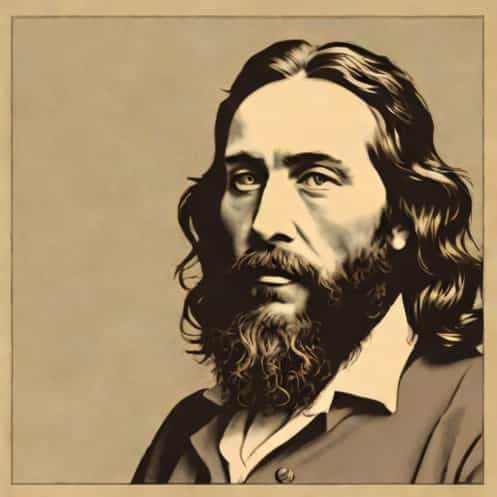
Gustave Courbet was a revolutionary French painter whose work challenged traditional artistic conventions in the 19th century. Known as a leading figure of the Realist movement, he emphasized depicting ordinary life with unflinching honesty, rejecting the idealized images favored by academic art. Courbet’s bold approach, controversial subjects, and political engagement made him both admired and criticized during his lifetime. Understanding facts about Gustave Courbet offers insight into a man who reshaped modern art and influenced generations of artists who came after him.
Early Life and Background
Gustave Courbet was born on June 10, 1819, in Ornans, a small town in eastern France. He grew up in a middle-class family with some financial stability, which allowed him access to education and exposure to culture. His rural upbringing significantly influenced his later work, as he often depicted landscapes and scenes from country life with a sense of authenticity and respect for the natural world.
From a young age, Courbet showed artistic talent. He studied drawing and painting locally before moving to Paris to pursue formal artistic training. Unlike many of his contemporaries, he resisted strict academic rules, preferring to explore subjects and techniques that reflected his personal vision and the realities around him.
Artistic Training and Influences
In Paris, Courbet studied under several established artists and attended the Ãcole des Beaux-Arts briefly. He was exposed to Romanticism and the traditional academic style, but he found these approaches limiting. Instead, he drew inspiration from nature, rural life, and contemporary society. Artists such as Jean-Baptiste-Camille Corot and 17th-century Dutch painters influenced his focus on realism, attention to detail, and dedication to representing the world as he saw it.
The Realist Movement
Gustave Courbet became the leader of the Realist movement, which emerged in France during the mid-19th century. Realism sought to depict everyday life and ordinary people rather than idealized historical or mythological scenes. This approach was revolutionary at the time, as academic art dominated Paris and promoted lofty, often unattainable subjects.
Major Works
Several of Courbet’s paintings became landmarks of Realist art. These works often caused controversy for their frank depiction of labor, poverty, and the human body.
- The Stone Breakers (1849)This painting shows two laborers breaking stones on a road, highlighting the harshness of manual work. It was considered politically charged because it emphasized the struggles of the working class.
- A Burial at Ornans (1849 1850)Depicting the funeral of a common townsman, this monumental painting broke tradition by giving ordinary people the scale and dignity previously reserved for historical or religious figures.
- The Origin of the World (1866)Perhaps his most infamous work, this painting boldly portrays a close-up view of female genitalia, challenging social norms and censorship.
Courbet’s focus on realism and controversial subjects often placed him in conflict with the art establishment and critics, but it also cemented his role as an innovator who expanded the boundaries of what could be considered fine art.
Political Engagement
Beyond painting, Gustave Courbet was politically active. He held strong republican beliefs and became involved in the Paris Commune of 1871, a radical socialist government that briefly controlled Paris. Courbet supported social reforms and participated in efforts to democratize culture and the arts.
The Paris Commune and Exile
During the Paris Commune, Courbet was appointed to oversee the city’s museums. He proposed dismantling the Vendôme Column, a symbol of imperial power, which led to his arrest and imprisonment after the Commune was suppressed. Following his release, Courbet faced fines and political persecution. Unable to pay, he went into exile in Switzerland, where he lived until his death in 1877.
Techniques and Style
Courbet’s artistic style is marked by bold brushwork, strong realism, and attention to the physicality of his subjects. He often painted with thick, textured layers, creating a sense of depth and materiality. His landscapes capture the ruggedness of nature, while his portraits convey character and individuality.
Focus on Ordinary Life
One of Courbet’s defining contributions to art was his choice of subject matter. He rejected romanticized visions of nobility, mythology, or biblical themes, preferring instead to depict farmers, laborers, and daily life in rural France. This focus on ordinary people gave his art a democratic quality and inspired future generations to explore social realities through visual art.
Impact on Modern Art
Gustave Courbet’s influence extends far beyond the Realist movement. By challenging academic conventions, he paved the way for Impressionists and later modernist painters to experiment with subject, technique, and composition. His insistence on depicting truth and authenticity resonates with artists seeking to address social and political issues through their work.
Legacy and Recognition
Today, Courbet is celebrated as a pioneer of Realism and a bold innovator in art history. Museums worldwide, including the Musée d’Orsay in Paris, display his works and recognize his impact on 19th-century painting. Art historians continue to study his techniques, themes, and political engagement to understand his role in shaping modern art.
Interesting Facts about Gustave Courbet
- He was largely self-taught in many aspects of painting despite brief formal training.
- Courbet often faced censorship and controversy due to his realistic and sometimes provocative depictions.
- He had a deep connection to his hometown of Ornans, frequently using it as a setting for his paintings.
- Courbet’s work challenged both artistic norms and societal expectations, influencing not only painters but writers and critics of his time.
- He spent his final years in exile in Switzerland due to political persecution.
Gustave Courbet remains one of the most important figures in the history of art. His dedication to realism, bold subject matter, and political engagement redefined what painting could express. From depictions of everyday laborers to provocative explorations of the human body, Courbet’s works continue to inspire discussion and admiration. Facts about Gustave Courbet highlight a life dedicated to truth, authenticity, and innovation, leaving a legacy that shaped the course of modern art and challenged generations to see the world differently.