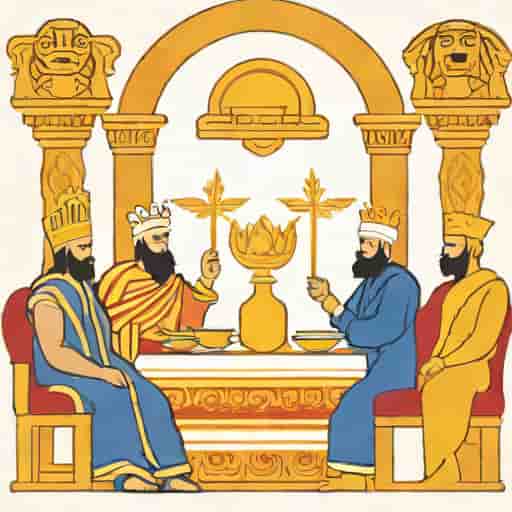
The Banquet of Ashurbanipal is a remarkable artifact of ancient Mesopotamian civilization, offering a vivid glimpse into the royal life and cultural practices of the Assyrian Empire. Ashurbanipal, who reigned from 668 to 627 BCE, was one of the most powerful kings of Assyria, known not only for his military campaigns but also for his patronage of art, literature, and architecture. The banquet scenes associated with his reign provide critical insight into the social, political, and ceremonial aspects of Assyrian society. These depictions, found in the reliefs of the North Palace of Nineveh, showcase not only the opulence of the royal court but also the intricate symbolism and hierarchical order of the empire. Understanding the Banquet of Ashurbanipal helps historians, archaeologists, and enthusiasts appreciate the sophistication and grandeur of ancient Assyria while highlighting the significance of ritual, diplomacy, and display in reinforcing royal authority.
Historical Context of Ashurbanipal’s Reign
Ashurbanipal ruled during a period of remarkable expansion and consolidation for the Assyrian Empire. His reign saw the empire reach its greatest territorial extent, encompassing parts of modern-day Iraq, Syria, Iran, and Turkey. Known for his military prowess, Ashurbanipal led campaigns against Elam, Babylon, and Egypt, securing the empire’s dominance in the region. Beyond military achievements, Ashurbanipal was also an intellectual king, establishing one of the earliest known libraries in Nineveh, where he collected clay tablets containing literature, scientific texts, and administrative records. The Banquet of Ashurbanipal must be understood within this broader context of imperial power, cultural sophistication, and the assertion of authority through ceremonial grandeur.
The Purpose of Royal Banquets
In Assyrian culture, royal banquets served multiple purposes. They were occasions for political alliance, social display, religious observance, and cultural exhibition. By hosting elaborate feasts, Ashurbanipal demonstrated the wealth, power, and organizational capabilities of his court. Banquets also reinforced loyalty among officials, generals, and foreign dignitaries, serving as a stage for political negotiation and the exhibition of hierarchy. The Banquet of Ashurbanipal was not merely a meal but a carefully orchestrated event designed to project authority, reinforce social norms, and celebrate both divine favor and imperial success.
Artistic Depictions of the Banquet
The most significant visual evidence of Ashurbanipal’s banquets comes from the palace reliefs discovered at Nineveh. These bas-reliefs are finely detailed, showing the king seated on a throne, surrounded by attendants, musicians, and guests. The scenes capture the richness of Assyrian court life, from the elaborate clothing and jewelry to the ceremonial arrangement of food and drink. Animals such as lions and exotic birds sometimes appear in the reliefs, symbolizing royal power, divine protection, and the king’s dominion over nature. These artistic depictions were designed not only as decoration but as propaganda, reinforcing the king’s status and the ideological foundation of his rule.
Symbolism and Social Hierarchy
The Banquet of Ashurbanipal conveys symbolic messages about social order and hierarchy. The king occupies the central position, elevated on a throne, emphasizing his supreme authority. Surrounding him are officials and nobles, seated or standing according to their rank. Musicians and servants, often depicted in more subdued postures, highlight the structured nature of the court. The arrangement of guests, the depiction of lavish foods, and the ceremonial objects all reinforce the idea of an ordered, divinely sanctioned society where the king serves as the ultimate authority. This visual narrative communicates both the sophistication of Assyrian culture and the centrality of the king within it.
Food, Drink, and Ceremony
Although precise details of the menu at Ashurbanipal’s banquets remain uncertain, the reliefs provide clues about the types of food and drink served. Scholars suggest that the banquets included meats such as lamb, beef, and poultry, accompanied by bread, fruits, and honey-based sweets. Wine and other fermented beverages were likely served, emphasizing luxury and abundance. Ritual drinking vessels and ceremonial serving techniques were used to display wealth and refinement. These feasts were more than nourishment-they were performances, showcasing the empire’s resources, the king’s generosity, and the cultural sophistication of the court.
Music and Entertainment
Music and performance were integral to the banquets, as depicted in the reliefs. Musicians playing harps, lyres, and drums provide a lively atmosphere, highlighting the role of art and entertainment in royal life. Dancers, singers, and other performers may also have been present, adding spectacle to the event. This combination of food, music, and ceremonial display created an immersive experience that reinforced the grandeur of Ashurbanipal’s reign and the cultural prestige of the Assyrian elite.
Political and Diplomatic Significance
Royal banquets were not only social gatherings but also political instruments. By inviting foreign dignitaries, ambassadors, and local elites to these feasts, Ashurbanipal reinforced alliances, displayed military might, and showcased the stability and wealth of his empire. Banquets also provided an opportunity for the king to reward loyalty, honor achievements, and communicate expectations to officials. The Banquet of Ashurbanipal thus functioned as a strategic tool, blending hospitality, ceremony, and diplomacy in a way that strengthened the king’s control and projected power across the empire.
Religious and Ceremonial Aspects
Assyrian banquets often had religious undertones. Offerings to gods and blessings invoked divine favor for the king and the empire. The reliefs sometimes depict sacred symbols or priests, indicating the integration of spiritual and ceremonial elements. By linking royal authority to divine approval, Ashurbanipal reinforced the legitimacy of his rule and emphasized the sacred nature of his position. Banquets thus served as both cultural and religious performances, underscoring the interconnectedness of political power and spiritual sanction in Assyrian society.
Legacy of the Banquet
The Banquet of Ashurbanipal remains a vital source for understanding Assyrian civilization. The reliefs preserve intricate details of royal life, social hierarchy, and ceremonial practice. Modern historians, archaeologists, and museum visitors gain insight into the sophistication of the Assyrian court and the role of public display in consolidating power. Beyond their artistic and historical value, these depictions highlight universal themes of leadership, wealth, and the use of ritual to strengthen social cohesion. The banquet scenes continue to inspire study, interpretation, and appreciation of one of the ancient world’s most powerful empires.
Influence on Art and History
The banquet reliefs of Ashurbanipal influenced later artistic traditions, illustrating the importance of narrative, symbolism, and ceremonial imagery. Museums around the world, including the British Museum, preserve these reliefs, allowing contemporary audiences to engage with Assyrian culture. Scholars analyze these scenes to reconstruct courtly life, understand Assyrian political structures, and explore the cultural priorities of one of history’s most advanced ancient civilizations.
The Banquet of Ashurbanipal provides a window into the power, sophistication, and ceremonial life of the Assyrian Empire. Through detailed artistic reliefs, it reveals the king’s authority, the social hierarchy of the court, and the political, religious, and cultural significance of royal feasts. Beyond its historical importance, the banquet illustrates how food, music, and ceremony were used to project power and maintain social order. Studying Ashurbanipal’s banquets helps modern audiences appreciate the complexity of ancient Mesopotamian civilization and the enduring legacy of one of its most famous rulers.