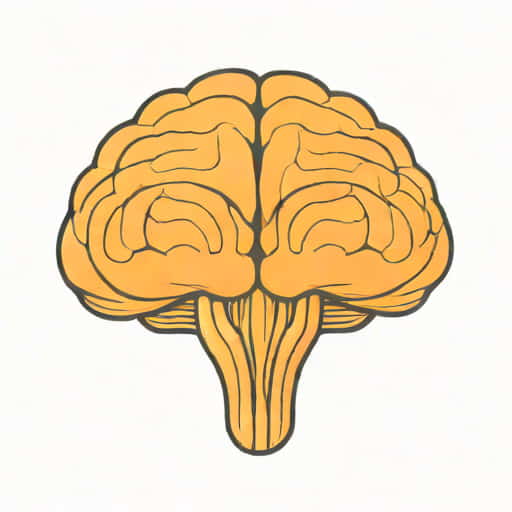
The cerebellum, a critical structure located at the back of the brain, is widely recognized for its highly convoluted surface. This intricate folding pattern, characterized by numerous ridges and grooves called folia, is far more elaborate than that of many other parts of the brain. The convolutions of the cerebellum are not merely an anatomical curiosity; they play a fundamental role in enhancing the organ’s functional capacity. By increasing the surface area of the cerebellar cortex without significantly enlarging the overall volume, these folds allow for a dense packing of neurons, which is essential for the cerebellum’s role in coordinating movement, balance, and fine motor control. Understanding why the cerebellum has such a convoluted surface sheds light on the evolution of complex motor functions and the remarkable efficiency of the human brain.
Structure of the Cerebellum
The cerebellum is divided into two hemispheres connected by a central structure called the vermis. Each hemisphere is further segmented into lobes and lobules, with the folia giving the surface its highly folded appearance. These convolutions are crucial for increasing the cortical surface area, which accommodates the vast number of neurons necessary for processing the intricate information required for motor coordination. The cerebellum’s structure can be broadly categorized into the cerebellar cortex, the underlying white matter, and deep cerebellar nuclei, each playing specific roles in motor control and cognitive processes.
Folia The Key to Convolution
The primary structural unit responsible for the cerebellum’s convoluted surface is the folium, a narrow, leaf-like ridge of cerebellar tissue. Folia are arranged in parallel and separated by shallow grooves called sulci. This configuration allows a large amount of neural tissue to be compactly packed into the cerebellum’s relatively small volume. The arrangement of folia is critical for the organization of neural circuits that integrate sensory inputs and coordinate precise movements. The folding pattern not only maximizes neuron density but also ensures efficient connectivity between different regions of the cerebellum and other parts of the central nervous system.
Functions Supported by the Convoluted Surface
The convoluted surface of the cerebellum is closely linked to its functional capabilities. The dense packing of neurons within the folia allows the cerebellum to perform several key tasks
- Motor CoordinationThe cerebellum processes input from the motor cortex, sensory systems, and spinal cord to ensure smooth, coordinated movements.
- Balance and PostureBy integrating vestibular information from the inner ear, the cerebellum helps maintain equilibrium and proper posture during movement.
- Fine Motor ControlThe precise timing and modulation of muscle contractions necessary for activities such as writing, playing instruments, and other skilled tasks rely heavily on cerebellar function.
- Motor LearningThe cerebellum contributes to learning new motor skills by adapting and refining movement patterns through repeated practice.
Cognitive and Emotional Roles
While traditionally associated with motor control, recent research has highlighted the cerebellum’s involvement in cognitive and emotional processes. Its convoluted surface supports extensive neural networks that interact with the prefrontal cortex and limbic system. Functions such as attention, language processing, planning, and even emotional regulation have been linked to cerebellar activity. The large surface area provided by the folds allows for the integration of diverse types of information, enabling the cerebellum to influence both motor and non-motor domains effectively.
Evolutionary Significance
The cerebellum’s highly folded surface is a result of evolutionary pressures to maximize computational power within a limited cranial volume. In humans and other primates, the increased complexity of movement, tool use, and social interaction required a more efficient and powerful cerebellum. The convolutions allowed for the accommodation of a massive number of Purkinje cells, the primary output neurons of the cerebellar cortex, which are essential for processing motor and sensory information. Comparative studies show that animals with more complex motor behaviors tend to have more convoluted cerebellar surfaces, highlighting the adaptive advantage of this structural feature.
Comparisons with Other Brain Regions
While the cerebral cortex also exhibits significant folding, the cerebellum is even more densely folded relative to its size. The ratio of surface area to volume is remarkably high, enabling an extraordinary concentration of neurons. Unlike the cerebral cortex, which primarily handles higher-order cognitive functions, the cerebellum’s convolutions are optimized for rapid processing and integration of sensorimotor information. This structural specialization underscores the importance of folding in maximizing neural efficiency and functionality.
Clinical Relevance
The convoluted surface of the cerebellum has implications for medical research and clinical practice. Damage to the cerebellar folia, whether through trauma, stroke, or degenerative diseases, can lead to ataxia, a disorder characterized by uncoordinated movements, balance problems, and difficulty with fine motor tasks. Additionally, understanding the folding patterns can aid neurosurgeons in planning precise interventions and minimize risks to critical cerebellar regions. Advanced imaging techniques, such as MRI, allow for detailed visualization of cerebellar folia, assisting in both diagnosis and treatment planning.
Disorders Associated with Cerebellar Convolutions
- Cerebellar AtaxiaResulting from degeneration or injury to the cerebellum, leading to impaired coordination and balance.
- Developmental DisordersAbnormal cerebellar development or reduced foliation can contribute to motor and cognitive deficits.
- Neurodegenerative DiseasesConditions like spinocerebellar ataxias specifically target cerebellar neurons, disrupting the intricate circuits supported by the folia.
Research Insights
Recent studies have focused on understanding how the convoluted surface of the cerebellum contributes to its computational power. Researchers use computational models to simulate the effects of folia folding on neuronal connectivity and signal integration. These studies reveal that the intricate patterns of the cerebellar surface allow for parallel processing of sensory and motor signals, enhancing learning speed and movement accuracy. This ongoing research not only deepens our understanding of brain function but also informs the development of artificial neural networks inspired by cerebellar architecture.
The cerebellum’s highly convoluted surface is more than a remarkable anatomical feature; it is central to the organ’s functional capacity. The extensive folding maximizes surface area, allowing for dense packing of neurons essential for motor coordination, balance, and fine motor control, while also supporting cognitive and emotional processes. Evolutionary pressures have optimized the cerebellum’s structure to meet the demands of complex behaviors, tool use, and social interaction. Clinically, the integrity of these convolutions is vital for normal function, and their study continues to provide insights into both health and disease. Understanding the cerebellum’s intricate surface highlights the sophistication of brain design and underscores the interdependence of structure and function in neural systems.