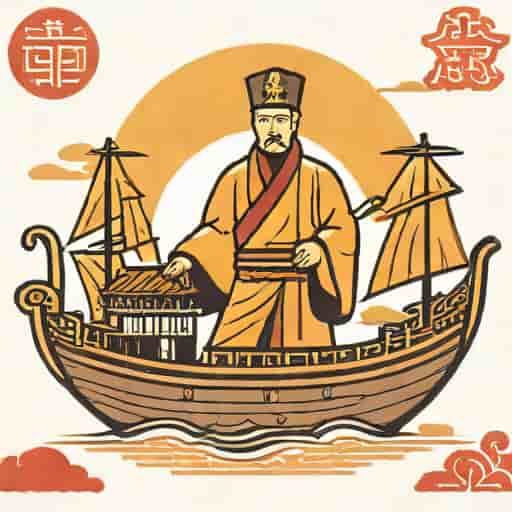
Zheng He, a Chinese explorer, diplomat, and fleet admiral during the early Ming Dynasty, remains one of the most significant figures in world history due to his extensive maritime voyages that expanded China’s influence across the Indian Ocean. Born in 1371, Zheng He was originally named Ma He and later given the surname Zheng by the emperor. His journeys, which took place between 1405 and 1433, involved a massive fleet of treasure ships and thousands of sailors, establishing trade routes, diplomatic relations, and cultural exchanges that had a lasting impact on Asia and beyond. The significance of Zheng He lies not only in his achievements as a navigator but also in his role in demonstrating China’s technological, economic, and cultural power during a period when maritime exploration was still in its infancy globally.
Early Life and Background
Zheng He was born in Yunnan province to a Muslim family of modest means. He was captured by Ming forces during a military campaign and later castrated, becoming a eunuch in the service of the imperial court. Despite these early hardships, Zheng He rose to prominence due to his intelligence, leadership skills, and loyalty to the Ming emperors, particularly Emperor Yongle, who recognized his potential and entrusted him with commanding China’s massive naval expeditions. His early experiences shaped his resilience and ability to navigate both political and practical challenges during his voyages.
Training and Rise to Power
As a court eunuch, Zheng He received extensive education in administration, navigation, and diplomacy. His training allowed him to manage large crews, coordinate complex logistics, and engage with foreign rulers effectively. By the time he led his first expedition in 1405, Zheng He had gained a reputation as a skilled and trustworthy leader, capable of executing ambitious projects that required both strategic planning and adaptability to unfamiliar environments.
The Maritime Voyages
Zheng He’s voyages are legendary due to their scale and scope. Over nearly three decades, he led seven major expeditions that reached Southeast Asia, South Asia, the Middle East, and East Africa. His fleet, known as the Treasure Fleet, included hundreds of ships, with the largest vessels reportedly measuring over 120 meters in length, carrying valuable goods, soldiers, and diplomats. These expeditions were unprecedented in their organization, size, and diplomatic ambition, highlighting China’s advanced shipbuilding, navigation, and maritime capabilities at the time.
Destinations and Trade
- Southeast AsiaZheng He established trade networks with kingdoms in present-day Indonesia, Malaysia, and Thailand, exchanging silk, porcelain, and other Chinese goods for local spices and precious materials.
- South AsiaVisits to India allowed for the establishment of diplomatic relationships with rulers, the exchange of gifts, and the promotion of trade in textiles, gemstones, and other commodities.
- Middle EastZheng He visited ports in modern-day Saudi Arabia, Yemen, and Oman, strengthening China’s maritime presence and fostering mutual recognition with Islamic states.
- East AfricaExpeditions reached the Swahili Coast, including cities such as Mogadishu and Malindi, introducing Chinese goods and collecting exotic items to bring back to China.
Diplomatic Significance
Zheng He’s expeditions were not only commercial but also diplomatic. The voyages carried imperial gifts, emissaries, and ambassadors to foreign courts, aiming to establish China’s presence as a dominant power and cultivate political alliances. By projecting China’s strength through naval displays and exchanging gifts, Zheng He facilitated peaceful relations, expanded China’s influence without military conquest, and enhanced the prestige of the Ming Dynasty. These diplomatic missions helped position China as a central player in the Indian Ocean trade network and fostered a sense of mutual respect among distant states.
Influence on International Relations
Through his voyages, Zheng He helped integrate various regions into a broader economic and cultural system. Local rulers recognized the importance of maintaining friendly relations with China, which often led to favorable trade agreements and the exchange of technology and knowledge. His expeditions promoted a model of diplomacy based on mutual benefit and ceremonial recognition, influencing international relations in the region for decades.
Cultural and Technological Impact
Zheng He’s journeys also had lasting cultural and technological effects. His expeditions facilitated the exchange of ideas, art, and technology between China and distant lands. Chinese innovations in shipbuilding, navigation, and cartography were showcased to other cultures, while foreign knowledge of astronomy, geography, and trade practices enriched China’s understanding of the wider world. Additionally, the voyages helped spread Chinese culture, including art, cuisine, and religious ideas, contributing to a shared maritime heritage across the Indian Ocean.
Legacy in Navigation
Zheng He’s achievements demonstrated the advanced state of Ming-era navigation and maritime engineering. His fleet’s size and complexity were unmatched globally at the time, highlighting the technological capabilities of 15th-century China. The voyages also inspired subsequent generations of explorers, both in Asia and beyond, and provided a model for the organization and logistics of long-distance maritime expeditions.
Economic Significance
The economic impact of Zheng He’s voyages was substantial. By establishing trade networks, he helped stimulate commerce, both domestically and internationally. Goods such as silk, porcelain, spices, and precious metals circulated widely, enriching local economies and reinforcing China’s role as a leading trade power. These exchanges contributed to cultural diffusion and the development of global trade patterns long before the European Age of Exploration.
Enhancement of Maritime Commerce
Zheng He’s expeditions encouraged the growth of ports and trading centers along the Indian Ocean. Merchants, both Chinese and foreign, benefited from increased trade opportunities, while cities visited by the Treasure Fleet often experienced economic prosperity due to the influx of goods and diplomatic engagement. This integration of trade, diplomacy, and maritime exploration helped lay the foundation for sustained commercial relationships across the region.
Historical Significance and Legacy
Zheng He remains a symbol of China’s maritime prowess and the potential of peaceful exploration. His voyages demonstrated how strategic navigation, diplomacy, and trade could expand influence without warfare, offering lessons for both historians and modern policymakers. Today, Zheng He is celebrated in museums, monuments, and scholarly research, highlighting his role in shaping global maritime history and fostering cross-cultural connections.
Modern Recognition
- Commemorative statues and museums in China honor Zheng He’s contributions.
- Academic studies emphasize the historical importance of his voyages for trade, diplomacy, and cultural exchange.
- His legacy inspires modern initiatives in maritime exploration, international trade, and cultural diplomacy.
The significance of Zheng He extends far beyond his role as an explorer. His voyages were a demonstration of Ming China’s power, technological sophistication, and diplomatic skill. By connecting China with distant lands across the Indian Ocean, he facilitated trade, cultural exchange, and peaceful international relations that influenced global history. Zheng He’s achievements continue to be celebrated for their visionary approach to exploration, diplomacy, and commerce, making him one of the most important figures in the history of maritime navigation. Understanding his legacy provides insight into the ways human ingenuity and cooperation can shape the world, leaving a lasting impact on both regional and global scales.