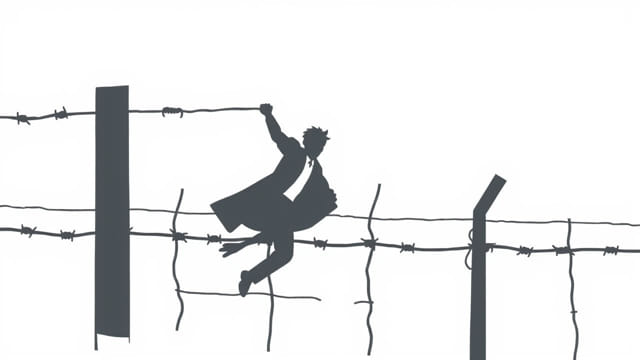
Auschwitz, the most infamous Nazi concentration and extermination camp, became a symbol of the Holocaust and the systematic genocide carried out during World War II. Located in occupied Poland, it was part of a network of camps established by the Third Reich. With barbed wire fences, armed guards, and brutal conditions, the thought of escaping Auschwitz seemed nearly impossible. Yet, despite the odds, a small number of determined individuals managed to escape the horrors of Auschwitz and share their stories with the world. Their courage and defiance remain etched in history as a testament to the human spirit’s will to survive.
The Structure and Security of Auschwitz
Auschwitz was designed to break the body and spirit of its inmates. Comprised of three main parts Auschwitz I, Auschwitz II-Birkenau, and Auschwitz III-Monowitz the camp was fortified with electric fences, watchtowers, and heavily armed guards. Prisoners were under constant surveillance, and any hint of escape was met with immediate punishment, not just for the escapee but for others as well. Escape attempts risked triggering mass executions, as the Nazis often killed ten prisoners for every one who managed to flee.
Despite the extreme security, the harsh conditions inside the camp drove many prisoners to seek escape. Hunger, forced labor, disease, and random executions were daily realities. Escaping was not only an act of self-preservation but, for some, a desperate attempt to inform the outside world of the atrocities occurring within.
Documented Escapes from Auschwitz
While most prisoners never had the opportunity to escape, several successful attempts were recorded. These escapes were often well-planned, involved multiple individuals, and required extraordinary bravery. The following are some of the most notable escape stories from Auschwitz:
Rudolf Vrba and Alfred Wetzler
In April 1944, two Slovak Jews, Rudolf Vrba and Alfred Wetzler, executed one of the most famous escapes from Auschwitz. Disguised among a woodpile near the camp’s perimeter, they hid for three days before slipping into the surrounding forests. They eventually reached Slovakia and compiled a detailed report, known as the Vrba-Wetzler Report, which described the mass killings at Auschwitz. This document played a significant role in alerting the Allies and the world to the horrors of the Holocaust.
Jerzy Tabeau
Another early escapee, Polish medical student Jerzy Tabeau, fled in November 1943 by changing into civilian clothes and escaping during a work detail. Like Vrba and Wetzler, he later contributed to detailed reports that described the extermination process inside Auschwitz. His testimony helped shape early Allied responses to Nazi war crimes.
Tadeusz Wiejowski
The first recorded escape from Auschwitz occurred in July 1940 when Polish prisoner Tadeusz Wiejowski managed to flee with the help of five civilian workers. Although he succeeded in escaping, his action triggered brutal reprisals. The Nazis executed dozens of prisoners in response, a pattern that would be repeated following many escape attempts.
The Sonderkommando Uprising
In October 1944, members of the Sonderkommando Jewish prisoners forced to work in the gas chambers launched a violent revolt. Although the uprising itself failed, a few prisoners managed to escape amid the chaos. The revolt was an act of defiance and an effort to destroy the gas chambers. Their actions, though ultimately unsuccessful in escaping en masse, were symbolic of the refusal to submit quietly to extermination.
Factors That Enabled Escape
Several elements increased the chances of escape from Auschwitz, although none guaranteed success. Some of these factors included:
- Knowledge of the Camp: Prisoners who worked outside the fences or in administrative roles had a better understanding of the camp’s layout and routines.
- Outside Help: Escapees often relied on assistance from civilians, resistance groups, or sympathetic workers.
- Disguise and Documentation: Those who obtained civilian clothing or false papers stood a better chance once outside the camp.
- Timing: Successful escapes were often timed during distractions, weather changes, or shifts in guard patrols.
Even with these advantages, escape was extraordinarily dangerous. Many who attempted to flee were caught and executed. The cost of failure was high, not just for the individual but often for fellow prisoners as well.
Aftermath and Impact of Escapes
The escapees of Auschwitz did more than just save their own lives. Their testimonies played a crucial role in exposing Nazi atrocities. The information they provided was among the first credible reports reaching the outside world, detailing the existence of gas chambers, mass killings, and the scale of genocide being committed.
These escapees were often aided by underground resistance networks or sympathetic civilians who risked their lives to help. The impact of their bravery helped shape public opinion, influence international leaders, and contribute to post-war justice efforts.
The Role of Allied Forces
Although the Allies were aware of atrocities occurring in Nazi-occupied territories, the detailed testimonies from Auschwitz escapees added urgency and clarity to the situation. Unfortunately, the full liberation of Auschwitz only occurred in January 1945 when the Soviet Red Army arrived and discovered the remnants of the camp and its few surviving prisoners.
The Legacy of Escapees
The individuals who escaped Auschwitz are remembered not only for their courage but also for their determination to bear witness. Their stories continue to educate future generations about the Holocaust. Museums, books, and educational institutions often highlight these escape narratives to personalize the history of the Holocaust and illustrate the resilience of those who endured it.
In recent decades, survivors like Vrba and Wetzler have spoken publicly about their experiences. Their efforts to ensure that the horrors of Auschwitz are never forgotten have had a lasting impact on Holocaust education and human rights advocacy.
Yes, people did escape from Auschwitz. Though rare and fraught with danger, these escapes were acts of profound resistance and courage. They helped inform the world about the Holocaust and became symbols of hope and perseverance. The legacy of those who fled Auschwitz lives on in the history they revealed, reminding us of the strength of the human spirit even in the darkest moments of history.