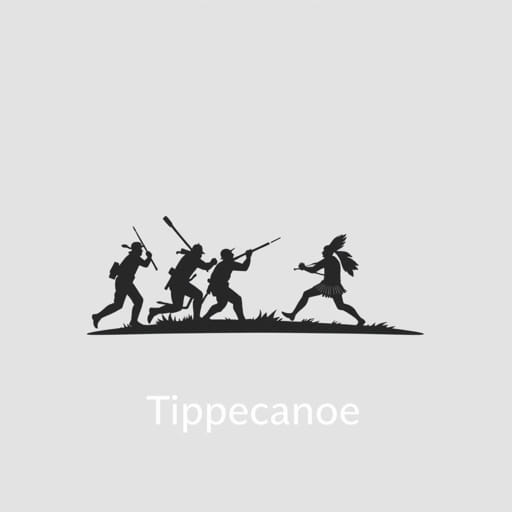
In the Battle of Tippecanoe, which took place on November 7, 1811, United States forces led by Governor William Henry Harrison faced off against a Native American confederation formed under the spiritual and political leadership of Tecumseh and his brother, the Prophet Tenskwatawa. The battle occurred near Prophetstown in present-day Indiana and was a pivotal moment in early American frontier history. It was more than a clash of arms it represented a broader struggle over land, sovereignty, and survival as Native peoples resisted the relentless westward expansion of the United States.
Historical Context of the Battle
Leading up to the battle, tensions were rising in the Indiana Territory. American settlers were moving westward into lands traditionally held by Native American tribes. Tecumseh, a Shawnee chief, worked tirelessly to unite tribes from the Great Lakes to the Gulf of Mexico into a single confederation. He aimed to resist further encroachment by the U.S. government and to reclaim Native lands.
Prophetstown and the Native Confederation
The village of Prophetstown, established near the junction of the Tippecanoe and Wabash Rivers, became the center of this Native alliance. It was not just a political base, but a spiritual one as well, where the Prophet preached a message of cultural revival, urging tribes to return to traditional ways and reject European influences, especially alcohol, manufactured goods, and Christianity.
William Henry Harrison’s Motives
As governor of the Indiana Territory, Harrison viewed the growing power of Prophetstown as a direct challenge to U.S. authority. While Tecumseh was away in the South trying to rally additional tribal support, Harrison saw an opportunity to weaken the confederation. He led roughly 1,000 men north to confront the Prophet’s forces before Tecumseh could strengthen his alliance.
The Battle of Tippecanoe Unfolds
On the night of November 6, 1811, Harrison’s troops set up camp near Prophetstown. Despite attempts at negotiation, the Prophet, hoping to strike first and rally Native morale, ordered a surprise attack at dawn. The battle erupted in the early morning hours and was intense but short-lived.
Combat and Casualties
Despite the surprise, Harrison’s well-armed and disciplined soldiers managed to hold their ground. After several hours of fighting, the Native warriors retreated, and U.S. forces claimed the battlefield. Prophetstown was later burned by the Americans. Casualties included over 60 U.S. soldiers killed or wounded, while Native casualties were believed to be higher, though exact numbers remain uncertain.
Aftermath of the Battle
Though not a crushing defeat, the loss at Tippecanoe was a serious blow to the morale and unity of the Native confederation. The destruction of Prophetstown reduced the strategic and symbolic power of Tecumseh’s alliance. Many tribes became discouraged, while some broke away from the movement entirely. The Prophet lost much of his influence as his prophecy of victory failed to materialize.
Broader Implications of the Battle
The Battle of Tippecanoe had implications that extended far beyond the immediate conflict. It became a catalyst for broader geopolitical shifts and helped set the stage for future conflict in the region.
Connection to the War of 1812
The battle deepened suspicions in the United States that Great Britain, still occupying Canada, was supporting Native resistance. Although British involvement at Tippecanoe was limited, the perception that Native tribes were acting as proxies for British interests fueled calls for war. Just months later, in June 1812, the United States declared war on Britain, beginning the War of 1812.
Tecumseh’s Continued Resistance
Despite the setback at Tippecanoe, Tecumseh returned and continued to lead Native forces. He formally allied with the British and played a key role in several battles during the War of 1812. His death at the Battle of the Thames in 1813 marked the collapse of organized Native military resistance in the Northwest.
Impact on American Politics
William Henry Harrison leveraged his role in the battle to boost his political career. Though the military victory was modest, it earned him a national reputation as a strong leader capable of defending American interests on the frontier.
‘Tippecanoe and Tyler Too’
Years later, during the 1840 presidential election, Harrison’s campaign adopted the famous slogan ‘Tippecanoe and Tyler Too.’ The phrase celebrated Harrison’s leadership at Tippecanoe and linked it to a populist image that helped secure his election as the ninth President of the United States. Though he died just a month into his presidency, the battle had cemented his legacy in American history.
Cultural and Symbolic Legacy
The battle remains a symbol of both American expansion and Native resistance. It illustrates the difficulties Indigenous peoples faced as they attempted to resist displacement, the power of unity in the face of colonization, and the eventual consequences of division and military defeat.
Memorials and Historical Sites
Today, the Tippecanoe Battlefield is preserved as a national historic site. Visitors can explore the grounds where the battle took place and learn about the individuals involved, including Tecumseh, Tenskwatawa, and Harrison. Museums and monuments commemorate the cultural, political, and military dimensions of the conflict.
Reevaluating the Narrative
Modern historians and Indigenous scholars have encouraged a reevaluation of the traditional story of Tippecanoe. Rather than viewing it solely as a triumph of American settlers over Native resistance, it is now also recognized as a tragic moment in the history of Native American struggles to protect their homelands. The bravery and vision of leaders like Tecumseh are increasingly acknowledged for their efforts to form a pan-Indigenous coalition to resist colonization.
In the Battle of Tippecanoe, the clash between Native warriors and U.S. troops represented much more than a single morning of fighting. It reflected a broader contest over the future of the American frontier. For the United States, the battle marked a step forward in territorial expansion and military assertion. For Native Americans, it was a painful blow to efforts at unity and resistance. The aftermath influenced national politics, contributed to the outbreak of the War of 1812, and reshaped Native-U.S. relations for generations. Understanding the events at Tippecanoe allows us to better appreciate the complexities of early American history and the enduring struggle of Indigenous peoples to protect their land, culture, and sovereignty.