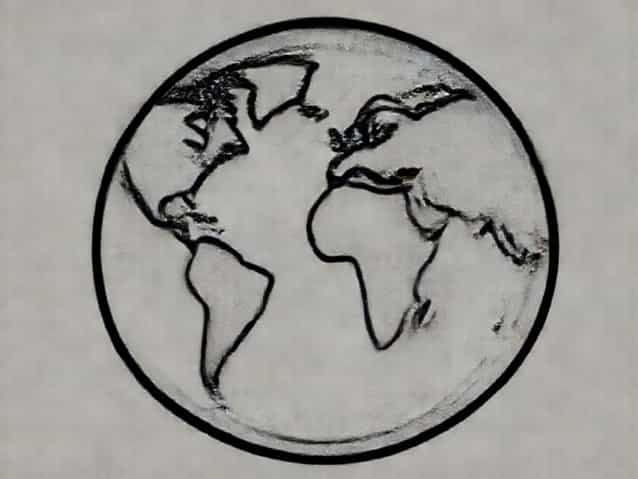
The theory of continental drift revolutionized our understanding of Earth’s surface and the dynamic processes that shape it. Initially proposed in the early 20th century, continental drift suggests that the continents are not fixed in place but slowly move across the Earth’s surface over geological time. This movement explains the distribution of similar fossils across distant continents, the alignment of mountain ranges, and the fit of continental coastlines like puzzle pieces. Continental drift theory laid the foundation for modern plate tectonics and fundamentally altered the study of geology, geography, and Earth sciences.
Origins of Continental Drift Theory
The idea of continental drift was first formally proposed by Alfred Wegener, a German meteorologist and geophysicist, in 1912. Wegener observed that the coastlines of continents such as South America and Africa appeared to fit together remarkably well, suggesting they had once been joined. He also noticed similarities in rock formations and fossil records across continents separated by vast oceans. Wegener proposed that these landmasses had once been part of a supercontinent, which he named Pangaea, and gradually drifted apart over millions of years.
Evidence Supporting Continental Drift
Wegener’s theory was supported by several lines of evidence, ranging from geological to biological. Key pieces of evidence include
- Geometric Fit of ContinentsContinents such as Africa and South America appear to match like pieces of a jigsaw puzzle.
- Fossil CorrelationIdentical fossils, such as the Mesosaurus and Glossopteris, have been found on continents now separated by oceans, indicating they were once connected.
- Rock Formations and Mountain RangesSimilar rock strata and mountain chains are found on continents that are now distant, such as the Appalachian Mountains in North America aligning with ranges in Europe.
- Paleoclimatic EvidenceGlacial deposits and coal beds indicate that continents currently near the equator once experienced climates typical of polar regions.
Challenges and Criticism
Despite strong evidence, Wegener’s theory faced skepticism from the scientific community. One major criticism was the lack of a plausible mechanism for how continents could move. Wegener suggested that continents plowed through the oceanic crust, but this idea seemed physically impossible according to the knowledge of his time. Many geologists argued that the forces required for such movement were too great, and the theory was largely dismissed until the mid-20th century when new evidence emerged.
Developments Leading to Plate Tectonics
The revival of continental drift theory came with the discovery of seafloor spreading and the development of plate tectonics in the 1960s. Scientists such as Harry Hess observed that new oceanic crust forms at mid-ocean ridges and spreads outward, pushing continents apart. Magnetic striping on the ocean floor, which recorded reversals of Earth’s magnetic field, provided additional proof. These findings explained the mechanism that Wegener had lacked the lithosphere is divided into tectonic plates that float on the semi-fluid asthenosphere, allowing continents to drift over time.
Key Principles of Continental Drift
Continental drift theory includes several key principles that are fundamental to understanding Earth’s dynamic surface
- Movement of ContinentsContinents are not stationary; they move slowly across the Earth’s surface over geological time scales.
- SupercontinentsEarth’s continents periodically join to form supercontinents, which eventually break apart, such as Pangaea.
- Evidence Across DisciplinesGeological, paleontological, and climatic evidence all support the movement of continents.
- Implications for Earth ProcessesContinental drift explains the distribution of earthquakes, volcanoes, and mountain-building processes.
Impact on Modern Geology
Continental drift theory was a precursor to modern plate tectonics, which provides a comprehensive explanation for Earth’s lithospheric dynamics. The understanding of continental movement has allowed geologists to predict locations of natural resources, understand seismic activity, and reconstruct ancient climates and ecosystems. It has also influenced other fields such as biology, by explaining how species were distributed across continents, and climatology, by helping scientists model historical climate changes.
Fossil and Biological Evidence
The distribution of plant and animal fossils across continents offers strong support for continental drift. For example, the freshwater reptile Mesosaurus has been found in both South America and Africa, suggesting these continents were once joined. Similarly, the seed fern Glossopteris was widespread across the southern continents, providing evidence for the existence of the supercontinent Gondwana. These discoveries showed that continents separated after species had spread across a continuous landmass.
The theory of continental drift represents a significant milestone in our understanding of Earth’s geological history. From Wegener’s early observations of matching coastlines and fossil distributions to modern evidence from seafloor spreading and plate tectonics, the theory has transformed the way scientists study our planet. By recognizing that continents are mobile and that Earth’s surface is dynamic, geologists can better understand past climates, the formation of natural resources, and the processes that continue to shape the world today. Continental drift theory not only explains the movement of continents but also connects multiple disciplines, highlighting the interwoven nature of Earth’s history and reinforcing the importance of interdisciplinary research in understanding our planet.