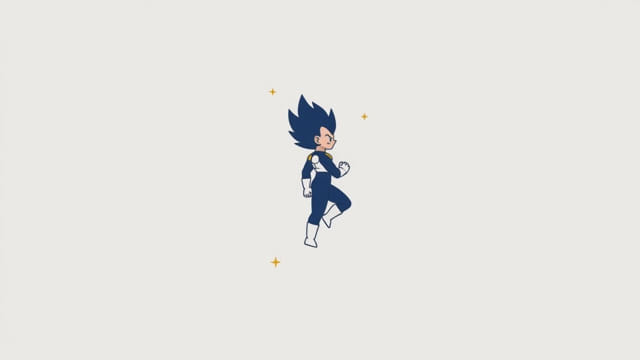
Vegeta, the proud Saiyan prince from the Dragon Ball franchise, has undergone one of the most dynamic and emotionally complex character evolutions in anime history. From ruthless villain to noble warrior, his path is shaped by constant struggle, rivalry, and personal redemption. Over time, he has not only matched Goku’s strength but also carved out his own legacy. In recent Dragon Ball arcs, a new concept has emerged Vegeta ascending to godhood. This transformation goes beyond simple power-ups and represents a spiritual, emotional, and cosmic elevation of his character. Exploring Vegeta’s journey toward divinity sheds light on what it truly means to transcend limits, not only physically but also emotionally and philosophically.
The Path Toward Divine Power
From Super Saiyan to God-Level Strength
Vegeta’s journey through the various Super Saiyan forms is well-documented. After mastering Super Saiyan, he pushed through to Super Saiyan 2, reached Super Saiyan Blue (Super Saiyan God Super Saiyan), and later even surpassed that with new techniques and transformations. However, unlike Goku who trained under Whis and attained Ultra Instinct Vegeta’s growth has taken a different direction.
His pursuit of power is not based on imitation. Instead, Vegeta has sought his own path to god-like abilities, motivated by pride, responsibility, and the desire to protect his family and universe. This divergence is key to understanding his unique ascension.
- Super Saiyan Blue Evolution: A form that demonstrates Vegeta’s ability to push the limits of god ki through sheer willpower and emotional drive.
- Destruction Energy Training: Under the guidance of Beerus, Vegeta begins to tap into Hakai (destruction energy), setting him apart from Goku’s angelic path.
These transformations are more than cosmetic or statistical upgrades they are reflections of Vegeta’s mindset, philosophy, and emotional evolution.
The Role of Beerus and the Gods of Destruction
One of the most significant turning points in Vegeta’s divine journey is his training under Lord Beerus, the God of Destruction. Unlike Goku, who follows the path of the angels with Ultra Instinct, Vegeta begins to embrace the mindset and techniques of a destroyer. This decision is symbolic, as it marks a personal decision to stop following in Goku’s footsteps and forge his own divine path.
Beerus teaches Vegeta that destruction is not inherently evil it is a necessary force in the balance of the universe. For someone like Vegeta, who once destroyed out of rage and ego, learning to wield destruction energy with discipline and purpose is a profound transformation. It forces him to confront his past and repurpose his inner fire into something noble.
Ultra Ego: The Form of a God
Definition and Characteristics
The Ultra Ego form, introduced in the Dragon Ball Super manga, is the most direct representation of Vegeta’s ascension to godhood. Unlike Ultra Instinct, which requires calmness and the ability to move without thinking, Ultra Ego thrives on battle. The more damage Vegeta takes, the stronger he becomes. It is a form built on pride, resolve, and the acceptance of destruction.
- Purple aura and eyesa visual contrast to the silver of Ultra Instinct.
- Massive power amplificationthrough pain and combat intensity.
- A ruthless yet controlled fighting stylethat embodies the spirit of a God of Destruction.
Ultra Ego is a fitting title for Vegeta’s godly transformation. It is not about arrogance, but about embracing who he truly is. It symbolizes a perfect fusion of his prideful past and his righteous present.
Symbolic Meaning of Ultra Ego
More than just a power-up, Ultra Ego represents Vegeta’s acceptance of his identity. In earlier arcs, he struggled with guilt, jealousy, and a need to surpass Goku. Now, he no longer fights to compete with others, but to protect what he loves. His god-like power comes not from detachment, as with Ultra Instinct, but from engagement passion, struggle, and pain.
This transformation mirrors the core of Vegeta’s character. He has always been driven by inner demons and external challenges. Ultra Ego gives those emotions divine purpose. It reflects a god not of peace and balance, but of resolve and personal justice.
Vegeta’s Inner Transformation
From Warrior to Protector
True ascension to godhood is not just physical it requires internal change. Over the years, Vegeta has transformed from a ruthless destroyer into a selfless protector. His motivations have shifted from domination to defense. He fights not to rule, but to protect Bulma, Trunks, and the universe itself.
In many ways, this evolution is more meaningful than any battle transformation. It shows that divinity in Dragon Ball is as much about the heart as it is about strength. Vegeta’s progression reflects a warrior who has found peace without losing his edge, and compassion without sacrificing pride.
Letting Go of Rivalry
One of the most pivotal aspects of Vegeta’s growth is his evolving relationship with Goku. What began as a bitter rivalry has matured into mutual respect. While he still pushes himself to compete, Vegeta no longer defines his self-worth by surpassing Goku.
This subtle change is essential to his spiritual ascension. Letting go of envy and insecurity has freed Vegeta to pursue his own path to unlock his own version of godhood. Ultra Ego, divine training, and his sense of purpose are all the result of this internal shift.
The Future of Vegeta’s Godhood
Potential as a God of Destruction
Many fans speculate that Vegeta could one day become a full-fledged God of Destruction. He already possesses Hakai techniques, has trained under Beerus, and embodies the traits necessary for the role: strength, resolve, and a deep understanding of both power and consequence.
Should the Dragon Ball universe expand into new sagas, Vegeta may eventually take on an official divine role. This wouldn’t be a demotion from his current arc, but rather a culmination of his journey from a prince of a fallen race to a guardian of cosmic balance.
Continued Growth
Despite all he has achieved, Vegeta’s story isn’t over. The beauty of his character is that he continues to grow. Every new challenge, every new threat, and every new insight pushes him further. Whether he perfects Ultra Ego or discovers a completely new transformation, his godhood is not static it’s evolving.
Vegeta ascending to godhood is more than just a new phase in Dragon Ball’s power scale. It’s a reflection of years of narrative development, emotional growth, and philosophical exploration. Unlike traditional gods who rule from distant thrones, Vegeta is a god forged in battle, heartbreak, and personal redemption. His strength lies not just in his fists, but in his ability to change, adapt, and rise above his former self.
In embracing destruction as a force for good, letting go of envy, and finding strength in his emotions, Vegeta has earned his place among the divine. He may not wear a halo, but his presence in the Dragon Ball universe shines with a godlike intensity proud, unwavering, and endlessly evolving.