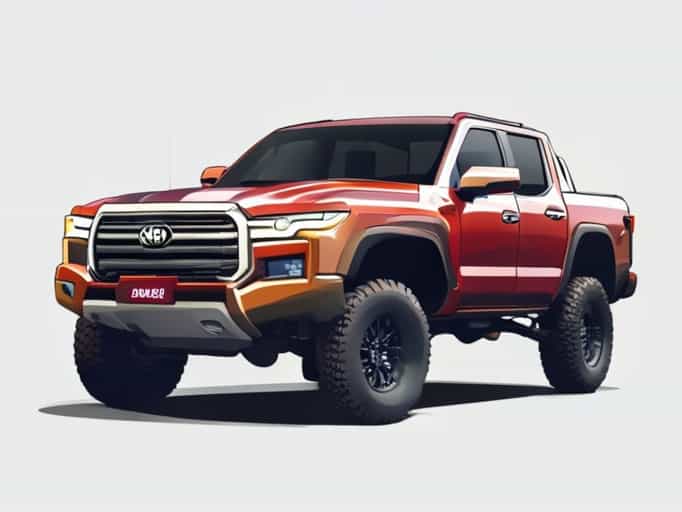
The Toyota Tacoma has long been celebrated for its durability, off-road capability, and reliability. Among its many features, one that often sparks curiosity among truck enthusiasts is the Auto LSD, or Automatic Limited Slip Differential. This technology enhances traction and stability, especially when driving on challenging terrain. Many Tacoma owners wonder how it works, when to use it, and what advantages it offers compared to a traditional locking differential. Understanding Auto LSD in the Toyota Tacoma can make a big difference in maximizing performance, both on and off the road.
What Is Auto LSD in a Toyota Tacoma?
Auto LSD, short for Automatic Limited Slip Differential, is a traction control feature designed to improve wheel grip in low-traction conditions. Unlike a mechanical limited-slip differential that uses gears and clutches, Auto LSD in the Toyota Tacoma is an electronic system that uses the truck’s braking system to simulate the same effect. Essentially, when one of the rear wheels starts spinning on a slippery surface like mud, snow, or gravel, Auto LSD applies braking pressure to that wheel, transferring more power to the wheel with better traction.
This system works only on the rear axle and is available in 2WD Tacomas. It’s important to note that Auto LSD is not a true mechanical differential but an electronic system integrated into the Tacoma’s traction control system. Still, it’s an effective tool for everyday driving and mild off-roading.
How Auto LSD Works
To understand Auto LSD, it helps to look at how it interacts with the truck’s existing systems. When a Tacoma detects that one of the rear wheels is slipping, it uses sensors from the traction control system to identify the difference in wheel speed. The system then automatically applies brake pressure to the spinning wheel while maintaining power delivery to the wheel with grip. This allows the Tacoma to regain stability and continue moving forward even on uneven or slippery terrain.
Key Points About How It Functions
- Auto LSD operates through the braking system, not through a mechanical clutch or gear mechanism.
- It activates only when the vehicle is in 2WD mode, typically below a certain speed.
- Drivers must manually turn off the standard traction control (TRAC) for Auto LSD to engage fully.
- It provides smoother power transfer compared to traditional locking differentials, especially on paved or semi-slippery roads.
How to Use Auto LSD on a Toyota Tacoma
Engaging Auto LSD on a Toyota Tacoma is simple but requires understanding a few key steps. Normally, traction control prevents wheel spin by reducing engine power and applying brakes to maintain stability. However, when you’re stuck or need more aggressive traction, you can activate Auto LSD by pressing and holding the TRAC OFF button on the dashboard. This disables standard traction control while allowing the Auto LSD feature to work independently.
Steps to Activate Auto LSD
- Start your Tacoma and make sure it’s in 2WD mode.
- Press and hold the TRAC OFF button until the TRAC OFF and AUTO LSD lights illuminate on the dashboard.
- Drive normally the system will automatically apply braking power to any slipping rear wheel.
- Once traction is regained, Auto LSD disengages automatically.
This feature is particularly useful when trying to get unstuck from sand, snow, or mud. However, it’s not meant for high-speed off-road use or extreme rock crawling, where a true locking differential would perform better.
Auto LSD vs. Locking Differential
One common area of confusion among Tacoma owners is the difference between Auto LSD and a locking differential. While both improve traction, they work very differently and serve distinct purposes.
Auto LSD Characteristics
- Uses electronic sensors and brakes to simulate limited slip.
- Engages automatically when wheel slip is detected.
- Ideal for mild off-road conditions and daily driving.
- Smoother operation, less wear on drivetrain.
Locking Differential Characteristics
- Mechanically locks both rear wheels together, forcing them to spin at the same rate.
- Best for severe off-road conditions like rock crawling or deep mud.
- Requires manual activation by the driver.
- Not recommended for use on pavement due to potential drivetrain strain.
Essentially, Auto LSD is a more user-friendly feature suited for general conditions, while the locking differential is designed for hardcore off-road situations. Drivers who primarily use their Tacoma for daily commutes, occasional off-roading, or towing will likely find Auto LSD more than sufficient.
Benefits of Auto LSD on a Toyota Tacoma
The Auto LSD system provides multiple benefits that make it a valuable addition to the Tacoma, especially for those who frequently encounter variable driving conditions.
- Improved tractionHelps maintain forward motion when one wheel loses grip, especially on slippery surfaces.
- Enhanced stabilityPrevents excessive wheel spin that can lead to loss of control.
- Ease of useSimple activation without the need for manual locking mechanisms.
- Less mechanical stressSince it relies on braking instead of gears, it reduces drivetrain wear.
- Better fuel efficiencyCompared to full-time 4WD systems, Auto LSD operates only when needed, saving energy.
For many Tacoma drivers, especially those living in regions with occasional snow, mud, or gravel roads, Auto LSD offers a practical balance between control and convenience.
Limitations of Auto LSD
While the system offers several benefits, it’s also important to recognize its limitations. Auto LSD is not a substitute for a 4WD system or a true limited-slip differential. It cannot provide equal power to both rear wheels simultaneously; instead, it modulates power using brakes, which can generate heat during prolonged use. In deep mud or extreme off-road conditions, Auto LSD may struggle to maintain traction compared to mechanical locking systems.
Additionally, Auto LSD only functions when the truck is in 2WD mode. Drivers using 4WD will rely on other traction systems, such as the rear differential lock (available in some Tacoma trims), for more demanding terrain.
When to Use Auto LSD
Auto LSD is best used in specific scenarios where traction is uneven but not entirely absent. For example, it performs well when
- Driving on wet pavement or light snow.
- Crossing gravel or dirt roads.
- Trying to free the vehicle from shallow mud or sand.
- Navigating slight inclines with slippery surfaces.
It’s not ideal for rock crawling or deep off-road trails that require equal power distribution to both wheels. In such cases, drivers should use a 4WD system with a locking differential instead.
Auto LSD in Toyota Tacoma
Auto LSD in the Toyota Tacoma represents a clever integration of electronic technology with traditional off-road engineering. While it’s not a replacement for 4WD or a locking differential, it offers a reliable middle ground that enhances everyday drivability and safety. For most Tacoma owners, especially those who use their trucks for mixed driving conditions, the Auto LSD feature provides peace of mind and improved performance without the complexity of manual systems.
Whether you’re navigating rain-slicked highways, light off-road trails, or uneven gravel roads, the Auto LSD system ensures that your Tacoma remains composed and capable. It’s one of those understated features that highlight Toyota’s thoughtful engineering built not just for adventurers, but for anyone who values control, confidence, and convenience behind the wheel.